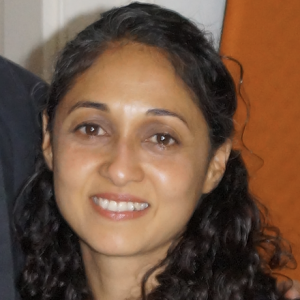
I am a global health researcher focusing on gender inequality in South Asia and Sub-Saharan Africa.
I currently assess gender-related barriers in an integrated child vaccination and nutritional supplementation intervention in Chad and Niger. Previous to this, in the Environmental Health Group, I researched the links between gender inequality, sanitation access and experience and quality of life in Kenya and India.
I also work on adolescent health. I investigate the socio-economic, nutritional and environmental risk factors associated with girls' early marriage and consequences for maternal and child health.
Before joining LSHTM, I worked on a joint University of Cambridge-UCL project investigating maternal and child health and human capital outcomes associated with women’s early marriage in lowland rural Nepal and rural India.
Prior to my PhD, I worked in international gender and education policy for 18 years, with the International Centre for Research on Women, UNESCO amd the World Bank, finishing as Acting Director of ActionAid’s International Education Team. During secondments to Ministries of Education across Sub-Saharan Africa, I integrated gender into national policy, programmes and budgets.
Affiliations
Teaching
I give lectures on adolescent reproductive health, mental health and child marriage; gender inequality in Water, Sanitation and Hygiene; and introductory statistics (geography).
I give interdisciplinary seminars linking global health with girls’ early marriage, education, nutrition, mental health and gender inequality.
I am a primary supervisor on MSc theses in Public Health; Water, Sanitation and Hygiene and Climate Change; and Child and Adolescent Mental Health.
I was a secondary Supervisor for a PhD linking undernutrition and poor growth in early life with educational outcomes in Ethiopia. I currently participate in several PhD Advisory Committee on climate change, undernutrition and One Health. I provide guidance on qualitative methods and gender and feminist theoretical/conceptual frameworks.
Research
I use a range of theoretical and conceptual frameworks to understand how gender inequality shapes:
-improving child vaccination status and undernutrition in Chad and Niger in the OptiMAx project (https://www.lshtm.ac.uk/research/centres-projects-groups/optimax#welcome)
-access and experience of sanitation and it's association with broader quality of life
To investigate differences in adolescent health, I use a bio-social framework to understand:
-the life course emergence of gendered nutritional, economic and educational inequalities
-the impact of adolescent marriage (<18 years) on maternal and child nutritional status, education, mental and reproductive health in South Asia
-the role of climate stress in shaping the timing of adolescent marriage
My research uses a range of methods, from survey and time-use data to qualitative and participatory approaches.
Selected Publications