From Sudan to LSHTM: learning, belonging and empowering - Elshima's story
5 May 2026 London School of Hygiene & Tropical Medicine London School of Hygiene & Tropical Medicine https://lshtm.ac.uk/themes/custom/lshtm/images/lshtm-logo-black.png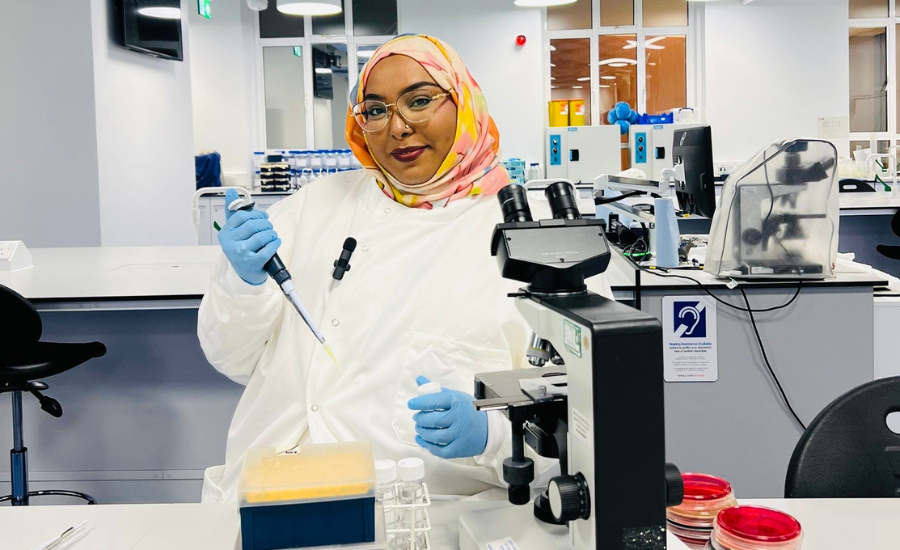
When I first walked through the doors of the London School of Hygiene & Tropical Medicine, I carried more than lecture notes and expectations. I carried a country, a history, and a promise to myself that even in the face of disruption, education would continue.
My journey to LSHTM began in Sudan. Long before I studied global health academically, I understood it personally. Health was never just a topic; it was something woven into daily life, shaped by access, infrastructure, and inequality. Especially growing up in a family of doctors, beginning with my grandfather, Dr Mustafa
When war broke out in Sudan, continuing my academic path felt uncertain. Plans became fragile. The future felt unstable. During that period, my biggest source of strength came from my mother, Amal. Her belief in the value of education never wavered, even when circumstances did. She reminded me that disruption does not have to define direction. Her support became the reason I kept going. In many ways, this journey belongs to her as much as it does to me.
I was also deeply encouraged by my brother, Dr Ahmed. No matter what I chose in my academic or professional path, his support never shifted.
Choosing MSc Medical Microbiology
My decision to pursue an MSc Medical Microbiology was driven by questions as much as curiosity. Why do outbreaks escalate in some regions and not others? Why does early detection remain a challenge in many low-resource settings? What role does laboratory capacity play in health equity?
Medical microbiology offered a lens through which to explore these questions. I became increasingly aware that diagnostics and surveillance systems are not peripheral components of healthcare; they are foundational. Without reliable data, outbreaks move silently. Without laboratory confirmation, the response is delayed. Without surveillance, prevention becomes reactive rather than proactive.
Science, I realised, is shaped by systems. Strengthening those systems is as important as the scientific discoveries themselves.
Feeling supported along the way
Relocating to London was both exciting and overwhelming. The scale of the city, the pace of life, and the transition into a new academic environment required adjustment.
During those first weeks, I was incredibly fortunate to have the support of my cousins, Fatima, Nadia, and Babiker. They helped me navigate the Underground, understand neighbourhoods and adjust to daily life in a new country. Their presence turned what could have been isolating into an experience of gradual confidence.
Alongside them, my aunt Amira gave me something equally important: a sense of home. That sense of belonging beyond the university walls made a profound difference.
From the very beginning, I felt supported by LSHTM itself. The Admissions team were patient, responsive, and genuinely kind throughout the application process. At a time when circumstances in Sudan were already complex, their reassurance and professionalism eased what might otherwise have been an overwhelming transition. That early experience shaped my understanding of LSHTM, not only as a world-leading institution, but as a community grounded in empathy.
When classes began, I felt both privileged and humbled to sit in rooms where global health policies are debated and shaped. There were moments of quiet self-doubt. I wondered whether my background, shaped by a different health system and lived realities, would fit within these discussions. Over time, I began to understand that it was precisely this perspective that mattered.
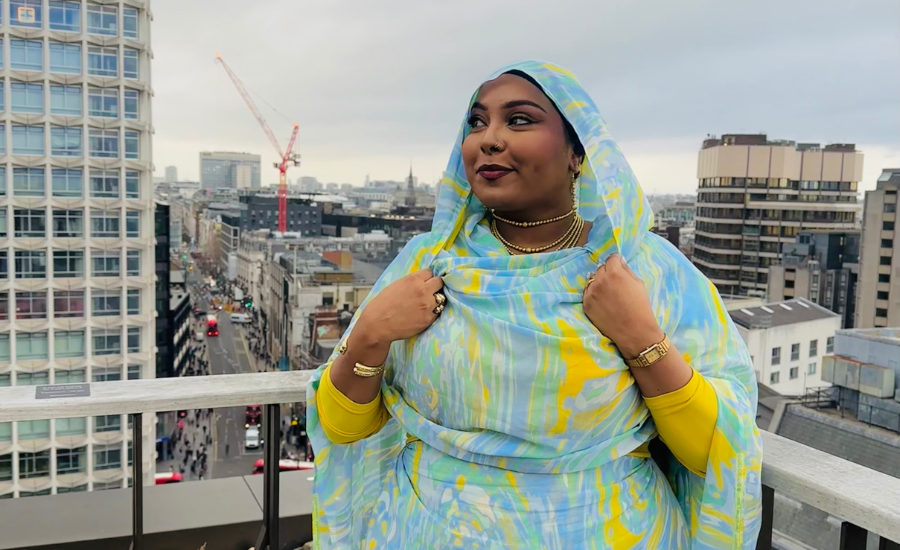
My favourite moments
Studying at LSHTM has been intellectually transformative.
Beyond technical knowledge, I have learned to question assumptions and examine the structural dimensions of health. Discussions with classmates from across the world reinforced how deeply context shapes both challenges and solutions.
One of the most significant reflections during a lecture was on disease surveillance systems. Studying surveillance frameworks in theory was illuminating, and connecting them to the reality of Sudan was confronting. The absence of robust surveillance infrastructure does not simply represent a technical limitation; it represents delayed responses, underreported outbreaks and missed opportunities for prevention.
This realisation reshaped how I see microbiology. It is not confined to the laboratory. It intersects with governance and accountability. Strengthening surveillance is not only about data; it is about protecting communities.
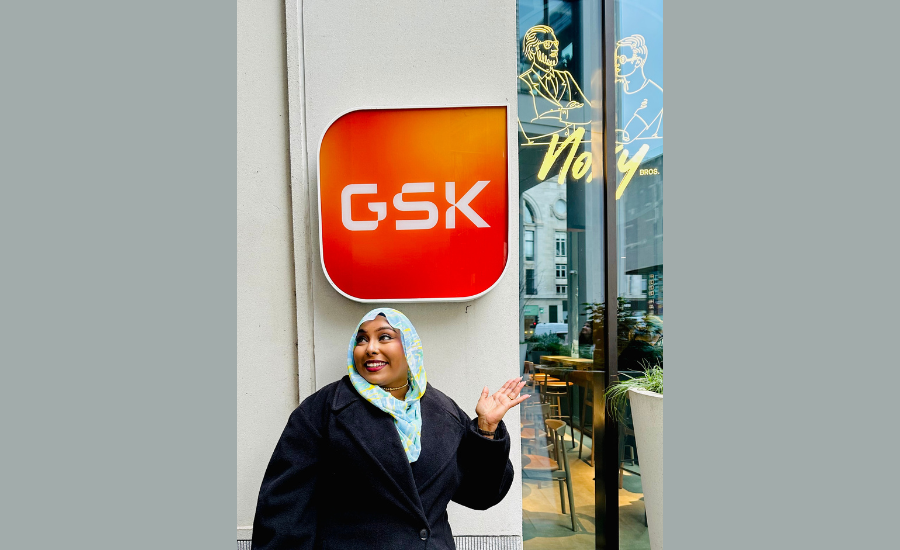
Another pivotal moment came through my experience as a GSK Future Health Leaders Scholar. Visiting GSK headquarters and engaging with the Africa Open Lab provided a powerful perspective on global health innovation.
Learning about GSK’s work in research and development and vaccines, and its commitment to “getting ahead of disease together,” expanded my understanding of partnership. I saw how science, technology, and talent can align across sectors to accelerate progress. The conversations reinforced that sustainable impact requires collaboration between academia, industry, and regional research initiatives.
Throughout this journey, my uncle, Dr Hussein, has been not just family, but a mentor. Our conversations extend beyond coursework, exploring leadership, ethics, and responsibility in global health. His guidance has encouraged me to think critically about long-term impact and the kind of professional I aspire to become.
Reflective discussions with my cousin, Dr Rajaa, have also deepened my perspective. These exchanges have reminded me that growth is not only academic; it is personal and values-driven.
Looking ahead
Over time, I have grown more confident in contributing my perspective within academic discussions. Coming from Sudan offers insight shaped by the lived experience of health system limitations and resilience. I have learned that belonging does not require leaving parts of myself behind. Diverse experiences strengthen global health dialogue. LSHTM has provided a space where I can develop both technical expertise and confidence in my voice.
My journey from Sudan to LSHTM has been shaped by resilience, community, and reflection. It has strengthened my commitment to advancing laboratory capacity, improving surveillance systems, and contributing to equitable global health solutions. If there is one simple piece of advice I would offer, it is this: do not underestimate the power of your story. Your experiences and perspective matter.
Global health requires collaboration, humility, and diverse perspectives. I am proud to be developing mine here.
- Please note that currently (May 2026), the UK government has introduced a “visa brake” to nationals of Afghanistan, Cameroon, Myanmar or Sudan, and LSHTM is therefore unable to sponsor applicants who are nationals of these countries requiring a student visa for study.
- Discover MSc Medical Microbiology.
- You may be interested in: How I mastered my Masters: Ash's year studying MSc Medical Microbiology
- Ready to apply? Acing master’s application in 2026: In-Depth tips from current student Ann Sofie