I found my voice through the skills I gained from the online MSc in sexual & reproductive health - Victorine's story
19 March 2026 London School of Hygiene & Tropical Medicine London School of Hygiene & Tropical Medicine https://lshtm.ac.uk/themes/custom/lshtm/images/lshtm-logo-black.png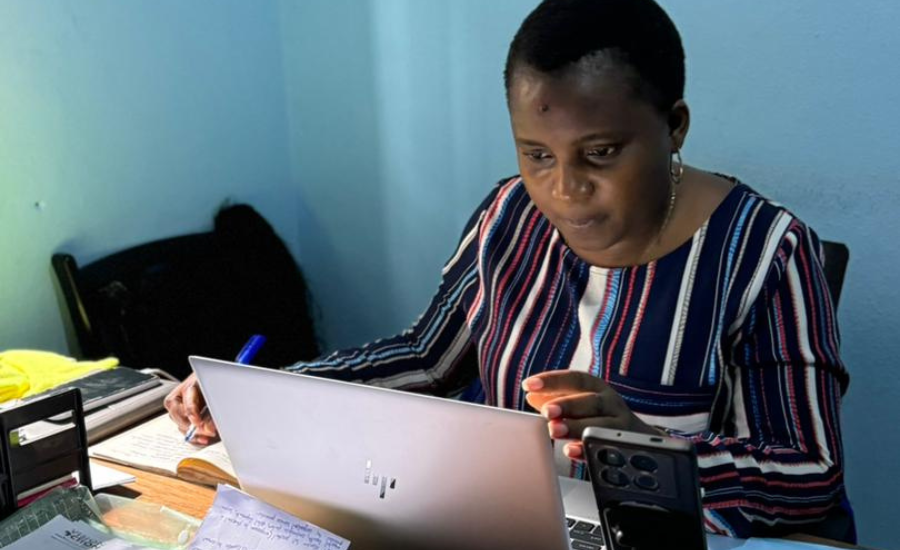
The skills gained to understand reproductive health challenges in a systematic way
I did not anticipate how intense and transformative the programme would be. This was my second attempt at applying, and being accepted with a scholarship rebuilt my confidence. I came in seeking “just” a sexual and reproductive health (SRH) policy degree, but quickly realised LSHTM was preparing me for a much larger mission.
The programme and modules challenged me to think beyond Cameroon and situate SRH within global health systems, law, ethics, and power.
Through the Health Policy and Systems for Sexual and Reproductive Health module, I engaged deeply with the WHO Six Building Blocks framework: service delivery, health workforce, health information systems, access to essential medicines, financing, and leadership/governance.
I began analysing SRHR access in Cameroon not only as a legal issue, but as a breakdown across multiple system components. Understanding that supply chain failures led to contraceptive shortages. Provider stigma became a workforce governance issue. Unsafe abortion data invisibility led to weaknesses in the health information system.
In the Safe Abortion Policy and Programming module, we examined how laws are interpreted in practice, how conscientious objection operates institutionally, and how telemedicine and harm-reduction models function in restrictive settings. Soon, I began mapping our models against global policy frameworks.
The Conflict and Health module deepened my understanding of how SRHR interventions operate in fragile settings. It helped me situate Cameroon’s crisis within broader discussions on displacement, health system fragility, and humanitarian governance.
Equipped to translate thoughts into real policy changes
Despite being an online programme, MSc SRHPP never felt distant. Class discussions connected me to realities across Africa; beyond conflict settings, migrant health issues, and restrictive legal environments that echoed Cameroon’s crisis. Learning alongside peers from different regions expanded my comparative lens and reinforced the idea that reproductive justice is a shared global struggle. That sense of global solidarity transformed my learning from individual achievement to collective growth.
As an SRHR activist, I was used to engaging in community mobilisation, hotlines, and accompaniment. What SRHPP added was rigour through study design and research methods. I developed grant-writing skills and learned how to translate lived realities into structured research proposals. I now understand the theory of change development, indicator selection, and monitoring frameworks. Instead of saying “this model works,” I can now demonstrate how and why it works.
The programme strengthened my ability to balance advocacy with evidence, and urgency with legality. I learned how statutory laws differ from regulatory guidelines, how courts interpret exceptions, and how policy windows emerge. I now analyse legal texts alongside the realities of implementation. This has made my activism sharper and more sustainable. It is now grounded in systems analysis, budgetary considerations, and governance mapping without losing moral clarity.
The Global Health Lecture Series exposed me to cutting-edge interdisciplinary research. Listening to scholars debate implementation science, financing reforms, and global governance sharpened my analytical thinking. Studying online did not mean studying alone. It meant studying within a global intellectual community.
I no longer see SRH challenges as isolated problems; I now see interconnected policy ecosystems.
Self-learning: Organisational management, new AI & digital skills
The opportunity to take up Distance Learning courses beyond core SRHPP courses like Organisational Management and Conflict and Health is helping me navigate programming in crisis-affected Cameroon. I have gained skills that have reshaped my practice: policy analysis, stakeholder mapping, advocacy framing, and monitoring and evaluation. I now design programmes that speak to both communities and funders, to activists and ministries.
I also engaged in AI literacy and digital skills sessions, including advanced Microsoft Office tools for data analysis and programme management. These strengthened my reporting capacity and improved how I manage data and documentation systems.
Support from the Programme Directors
Just before the end of the Welcome Week, I realised that full-time study alongside work and family was unsustainable. With support from Programme Directors, I transitioned to part-time study, a decision that saved my well-being and preserved my long-term commitment.
My days stretched into nights as I studied after work, cooked for my family, and met deadlines. It was exhausting, but necessary. Over time, I built structure, discipline, strategic time management and resilience. The experience taught me that persistence is not about pushing harder, but about adapting wisely.
Bridging my career to the next chapter
Growing up in Cameroon, I lacked access to accurate sexual and reproductive health (SRH) information, and that absence shaped my choices and confidence. Later, in my professional life, I found myself in spaces where my voice did not count. My expertise as a trained nurse was overlooked because I haven't yet held a Master’s degree. When a project director was hired over me, I realised how closely power, knowledge, and credibility are linked. That moment mirrored the reality of adolescents and marginalised communities whose voices are constantly ignored.
I knew I needed more than passion. I needed policy tools.
Studying MSc Sexual & Reproductive Health Policy and Programming was not just an academic decision; it was a strategic one. I wanted to understand how laws are shaped, how health systems allocate power, and how evidence influences funding and governance decisions. I wanted to move from reacting to injustice to redesigning the systems that produce it.
It turns out MSc SRHPP is not just strengthening my CV. It is strengthening my systems thinking, strategic confidence, and capacity to translate justice into policy reform.