Building sexual and reproductive health skills to serve my community: Fatoumatta's story
2 February 2026 London School of Hygiene & Tropical Medicine London School of Hygiene & Tropical Medicine https://lshtm.ac.uk/themes/custom/lshtm/images/lshtm-logo-black.png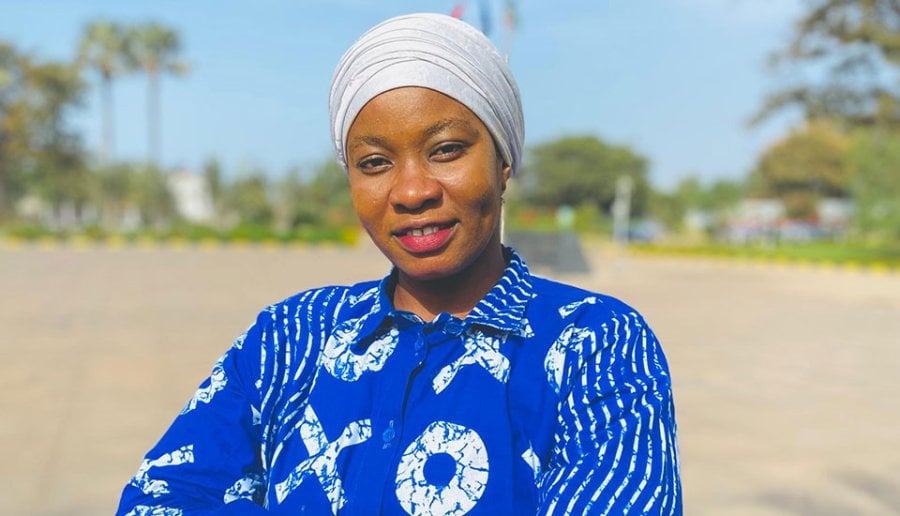
Tell us more about yourself, Fatoumatta.
Hi, I am Fatoumatta. I am from The Gambia and currently work as a Senior Health Promotion Officer at the Ministry of Health. I have previously held roles as a Programme Officer and Public Health Officer. In my role I support national health promotion, school health, and community-based public health initiatives.
What attracted you to the MSc Sexual & Reproductive Health Policy & Programming at LSHTM?
I was drawn to the MSc Sexual & Reproductive Health Policy & Programming course because of LSHTM's strong emphasis on evidence-based, rights-focused policy and programming. My work primarily focuses on adolescent health, school health, and community-level Sexual and Reproductive Health and Rights (SRHR) interventions, and I sought a programme that would strengthen my ability to critically analyse and improve policies and programmes in these areas.
Working closely with communities, particularly mothers' groups and adolescent girls, has highlighted both the potential of community-led action and the persistent gaps in SRHR policy and programme design. The Sexual & Reproductive Health Policy & Programming MSc offered the analytical depth and global perspective I needed to address these challenges more effectively.
The online delivery of the programme also enables me to continue serving my community while learning from world-class experts and engaging with a diverse global cohort.
What is your favourite part of the course?
One of my favourite aspects of the course has been its interactive and reflective learning environment. The seminar sessions and discussion forums encourage critical engagement with SRHR policies and programmes, while learning alongside peers from diverse professional and geographical backgrounds has broadened my perspective on how context shapes health outcomes. I have also valued how the course consistently links theory to practice, allowing me to apply new insights directly to my work. Another rich part of the programme so far for me has been the tutorials from my tutor, Kate. Serving as a Student Ambassador and Programme Representative has further enriched my experience by enabling me to support peers and prospective students, while contributing to a strong and inclusive learning community.
The MSc has strengthened my ability to connect evidence, policy, and practice, allowing me to apply what I learn directly to improving sexual and reproductive health outcomes in my community.
How do you hope the programme will advance your career?
The MSc in Sexual & Reproductive Health Policy & Programming is strengthening my capacity to design and implement gender‑responsive, evidence-informed SRHR policies and programmes that reach underserved populations. I am currently involved in national initiatives, including the School Health Policy, the Health‑Promoting Schools Strategy, the Sahel Women’s Demographic Dividend Plus Project, and broader efforts to strengthen the health system. The skills gained through the programme are directly enhancing my contribution to these works.
In the long term, I aspire to take on more senior leadership roles in SRHR policy development and programme design, contributing to the creation of inclusive, equitable health systems that improve access, quality, and outcomes for women, adolescents, and marginalised communities in The Gambia and beyond.
- Learn more about the Sexual & Reproductive Health Policy & Programming course
- Speak with our student and alumni ambassadors
- Explore scholarships