Pressure points & memory lanes: Chronicles of Feyi's summer project
1 September 2025 London School of Hygiene & Tropical Medicine London School of Hygiene & Tropical Medicine https://lshtm.ac.uk/themes/custom/lshtm/images/lshtm-logo-black.png
At LSHTM, we're expected to come up with our own summer project topics - no pressure, right? But the Programme Directors and Professors, bless them, understand that staring at a blank page can be absolutely paralysing, especially if you're someone like me with interests scattered across every corner of the public health field. So they circulate a curated list of project ideas.
When I first glanced over the suggested dissertation topics, nothing jumped out. Nothing sparked that "yes, this is it!" moment. I've always been fascinated by dementia research -how something so complex can affect not only individuals, but ripple through families, healthcare systems, and entire communities. I also found traumatic brain injuries and their effect on public health interesting.
During my 'Reviewing the Literature' module, I decided to explore the association between traumatic brain injury (TBI) and dementia for my assessment. That's when I stumbled upon an unsettling gap: in Canada, research on TBI and dementia was surprisingly scarce. Most of the evidence came from the US, and I couldn't help but think - what about us?
After completing the module, I wanted to explore other health conditions that might influence dementia risk. Between coffee catch-ups with a PhD friend, epic WhatsApp conversations with my LSHTM partner in crime, Daniel, thoughtful email exchanges with Professor Chen, and my own personal research, one silent, stubborn culprit kept circling back: hypertension. It's common, it's sneaky, and it might be shaping our brain health in ways we don't fully understand. That's how I found myself here: deep in the world of blood pressure readings, memory decline, and the long, winding path between midlife and old age.
LSHTM makes it easy for us to find supervisors. At the start of the programme, we are connected with personal tutors based on our interests. We also have the opportunity to reach out to any of the professors at the school to ask for supervision if our personal tutor is not in the area or field where we intend to do our project.
Life beyond the summer project
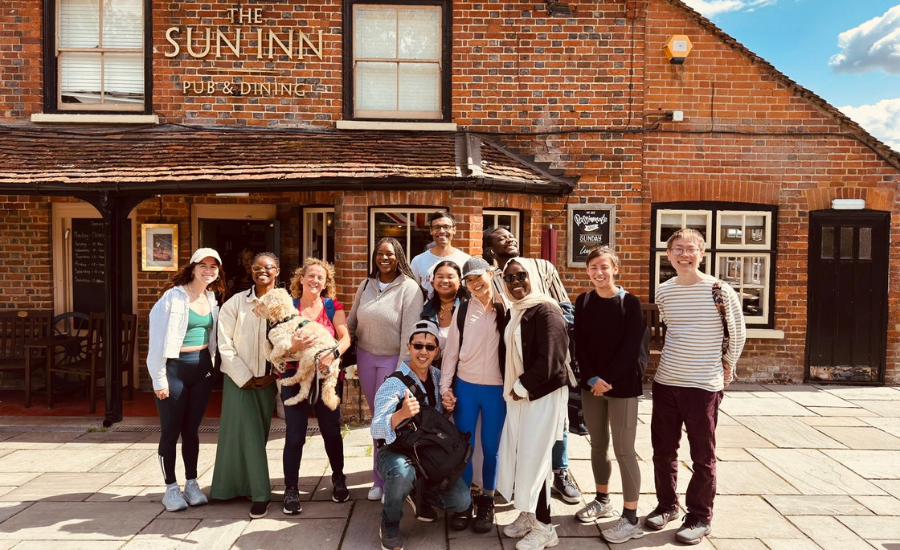
I can't believe the year is almost over! It's been a masterclass in unexpected adventures. Between all the screening, critical appraisal, meta-analysis, and writing, I've somehow found time to explore and chill with friends.
I’ve strolled through the floating gardens of Little Venice (yes, London has a Venice, and no, it’s not trying too hard). My friends and I have debated research methodology between rounds of compatibility games at Folkestone’s mermaid beach. Welwyn Garden City in Hertfordshire was an unexpected gem during a trip with one of our MSc Public Health Programme Directors, Dalya.
I also attended Soul Revolution, a BBC Poem performance at the Royal Albert Hall, presented by Trevor Nelson, where rhythm and joy were woven into every note, wrapping the entire hall in the warmth of soul music. It’s been amazing to watch this research journey unfold alongside my London adventures with friends. From stumbling upon research gaps to uncovering hidden corners of the city, this year has been full of unexpected discoveries.

Advice for prospective students
Dear future students preparing for your summer project, here are some tips to help you navigate the muddy waters.
- No spark yet? Don’t stress. Pick a summer project topic you’ll stay curious about.
- It's okay if your topic is a slow burn rather than love at first sight
- Use informal conversations with tutors, supervisors, or professors to shape your ideas
- Don't suffer in silence—support is everywhere, so reach out to peers, tutors, or professors
- Prioritise your mental health above all else
- Take breaks when you feel stuck—you'll come back refreshed and more productive
- Discover MSc Public Health
- Contact Feyi or our other student and alumni ambassadors.