From Advocacy to Evidence: Deepening My Work on Gender-Based Violence through Research
30 July 2025 London School of Hygiene & Tropical Medicine London School of Hygiene & Tropical Medicine https://lshtm.ac.uk/themes/custom/lshtm/images/lshtm-logo-black.png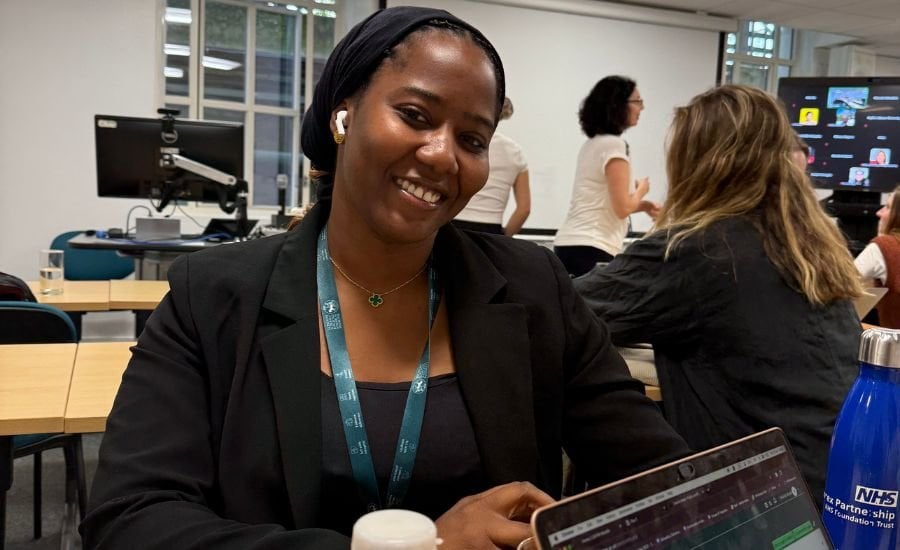
When I came across the Researching Gender-Based Violence: Methods and Meaning short course offered by the London School of Hygiene and Tropical Medicine (LSHTM), I knew immediately that I had to apply. For years, through the work we do at the Anti-Sexual Violence Lead Support Initiative (ASVIOL Support Initiative), I've been committed to ending sexual and gender-based violence. But even in our most determined moments, I've always found myself asking: Why is so much of the data we use coming from the Global North? And how do we ensure that the experiences of survivors in places like Northern Nigeria are not only heard but studied, documented, and used to shape responses that actually work?
It's become clear to me that we need to build ASVIOL Support Initiative into an organisation that doesn't just respond to violence, but also produces credible, context specific research that can inform our work and that of others in similar spaces. This course felt like a timely first step in that direction.
Coming into the course, I brought my perspective as a lawyer and an activist, someone who has always seen gender based violence through the lens of human rights. But working in deeply conservative and patriarchal communities means that language around rights can sometimes be misunderstood or even resisted. So while that framing remains central to my work, I’ve had to constantly navigate how best to speak to different audiences. This course helped me reflect on another critical framing: gender-based violence (GBV) as a public health issue. It’s a lens I hadn’t fully embraced before, but one that’s deeply important in strengthening prevention and response strategies.
The seed of ASVIOL Support Initiative can be said to have been planted in 2018, when I was working with other activists to push for the domestication of the Violence Against Persons Prohibition (VAPP) Act and challenge the silence and stigma surrounding sexual violence. It was during my time at SOAS, University of London, not far from LSHTM, that I made the decision to return home and fully focus on this work.
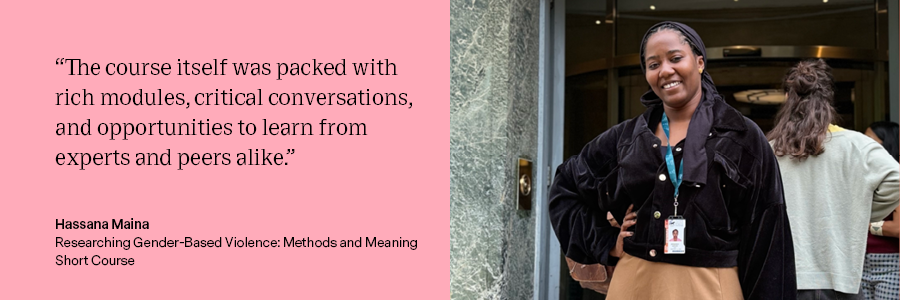
I particularly appreciated the sessions on researching in complex settings, promoting equitable research partnerships, and understanding ethical considerations when working with vulnerable populations. One highlight for me was learning about LSHTM's collaboration with institutions in Uganda, it was encouraging to see what respectful, community-led research partnerships can look like in practice.
Working with my group to design a research proposal gave me the kind of hands on experience I didn't even know I needed. Our topic, "Gender-Based Violence among Women Insurgents in Drought-Stressed Communities in Northeast Nigeria," was rooted in our shared interest in climate, conflict, and the gendered dynamics of survival. The process of building a conceptual framework, defining our methodology, and thinking through the ethical dimensions of such a study gave me confidence to begin exploring research within ASVIOL Support Initiative and maybe even become a researcher myself one day.
Gender-based violence is not just about violence, it's about behaviour, culture, power, age, religion, and systems.
The experience also deepened my understanding of how layered GBV truly is. It's not just about violence, it's about behaviour, culture, power, age, religion, and systems. It exists across all facets of life. And yet, at a time when we need to be scaling up work on GBV, especially in conflict affected regions, funding is shrinking and global attention is shifting elsewhere.
My one week in central London was intense, but I will always remember it as a time of deep learning. Beyond the classroom, I was surrounded by kind classmates, warm conversations, and quiet walks through beautiful parks and vibrant streets.
Looking ahead, I'm more determined than ever to build out a research arm within ASVIOL. We want to better understand issues like technology-facilitated violence, insurgency related GBV, and the implications of rising authoritarianism across the Sahel. There is so much more to uncover, and research will be critical in shaping our strategies and ensuring our work is rooted in evidence, not assumption.
This course gave me tools, clarity, and a renewed sense of responsibility. It reminded me that while the contexts may differ, the fight is connected and so are the people committed to it.
- Discover Researching Gender-Based Violence: Methods and Meaning (taught in-person and online)
- Explore all short courses