

The RESONATE Consortium is a partnership between the LSHTM (UK), the University of Ilorin (Nigeria), and the Armauer Hansen Research Institute (Ethiopia). The RESONATE Consortium works in close partnership with Save the Children to tackle persistent barriers that prevent many children in Ethiopia and Nigeria from receiving routine vaccinations. In places where previous approaches have struggled to reach all children, the Consortium aims to inform new solutions that are both effective and cost-efficient.
To ensure these efforts are data-driven, the Consortium is analysing local vaccination systems, identifying the factors that enable or hinder routine immunisation in intervention areas, and generating evidence on both existing and emerging approaches to reaching underserved communities.
The RESONATE Consortium, in collaboration with our partners at Save the Children, is committed to publishing findings from both the inception-phase research and the implementation-phase evaluation. Publications will be added here as they become available.
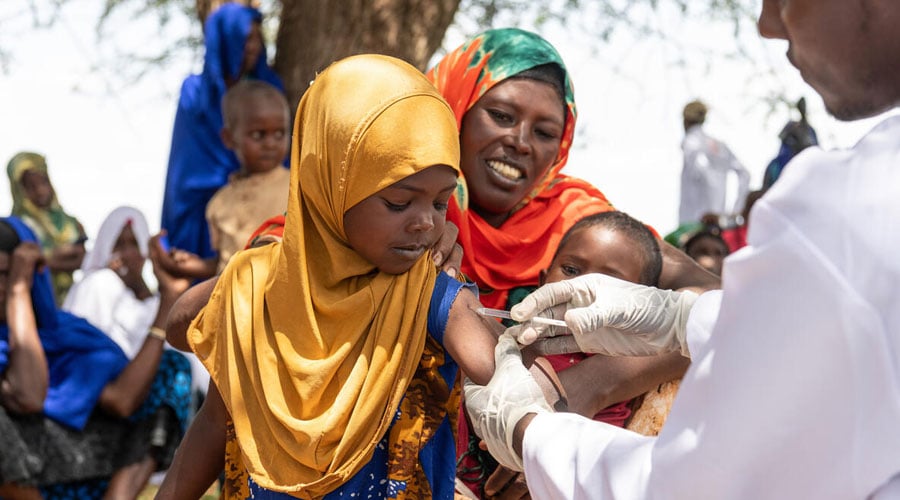
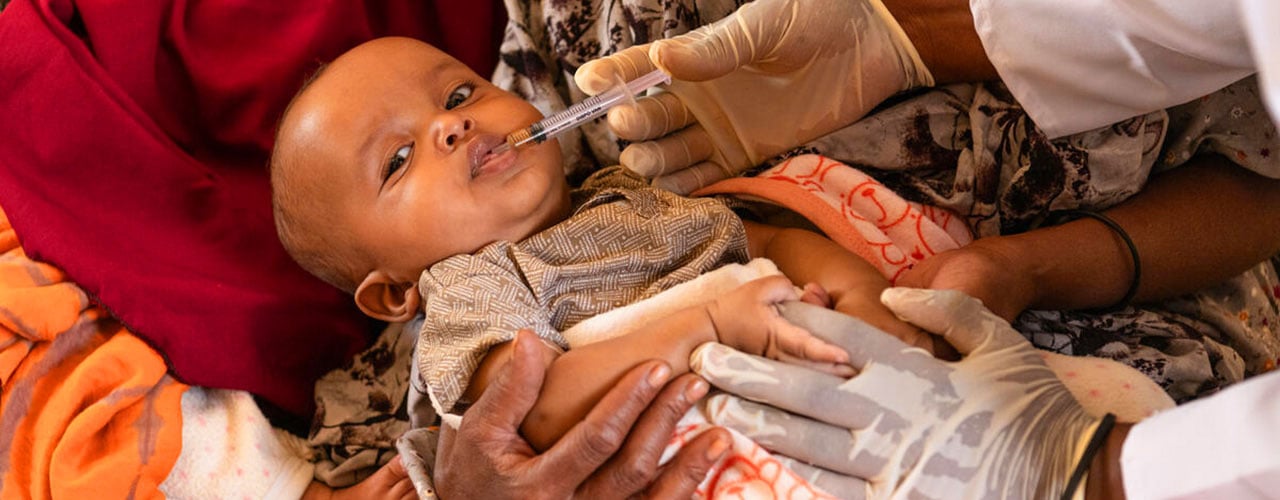
With support from GSK, Save the Children has developed intervention packages aimed at reducing barriers to routine immunisation in Ethiopia and Nigeria. The RESONATE Consortium is supporting this work by conducting research during both the inception phase, to inform the intervention activities, and the implementation phase, to evaluate them.
A pre-intervention mixed-methods study to inform a large-scale programme to increase childhood vaccination in Ethiopia and Nigeria (Inception phase)
The design of the Save the Children intervention packages was informed by robust, context-specific research conducted at national level and within the study sites. The RESONATE Consortium - comprising the London School of Hygiene & Tropical Medicine (LSHTM), the Armauer Hansen Research Institute (AHRI) in Ethiopia, and the University of Ilorin (UoI) in Nigeria - aims to identify and amplify evidence-based, sustainable, and scalable solutions to overcome entrenched barriers that prevent children, including zero-dose and under-immunised children, from being fully immunised. As part of the inception phase, the consortium conducted a series of pre-intervention studies in Ethiopia and Nigeria to inform the design of the intervention packages.
Evaluating a package of integrated interventions to improve uptake of childhood vaccination in Ethiopia (Implementation phase)
In collaboration with partners—including the Armauer Hansen Research Institute (AHRI), Save the Children International’s Ethiopia Country Office (SCI), and Save the Children UK (SCUK)—the RESONATE Consortium will conduct baseline and endline immunisation coverage surveys in the three implementation regions of Amhara, Oromia, and Somali.
The surveys will follow the guidance set out in the WHO Vaccination Coverage Cluster Surveys: Reference Manual and will assess changes in immunisation coverage over the course of the intervention.
In addition, the London School of Hygiene & Tropical Medicine (LSHTM) will conduct a health, economic, and equity impact analysis to assess the broader effects of the intervention package in Ethiopia.
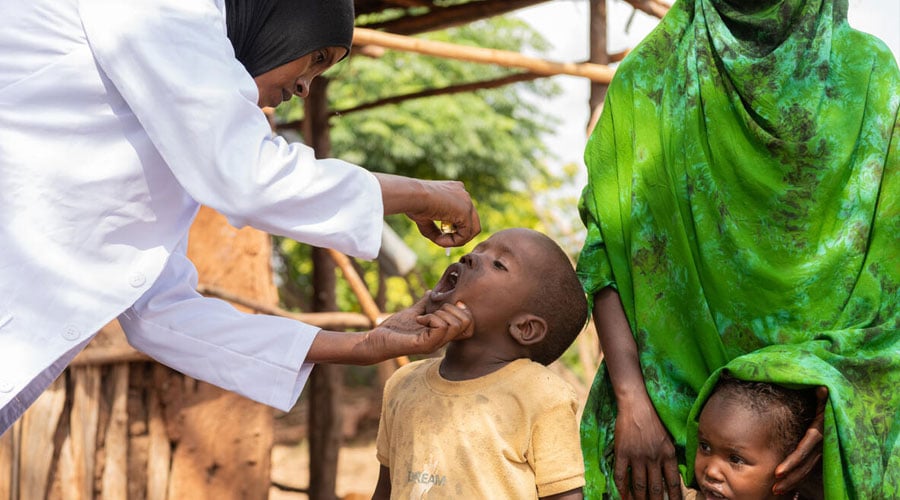
Save the Children’s interventions to reduce zero-dose and under-immunised children in Nigeria (Implementation phase)
Save the Children has developed a package of interventions—known as the Better Opportunities for Optimal Services and Targeted Immunisation (BOOST) programme—to help reduce the proportion of zero-dose (ZD) and under-immunised (UI) children in Kano and Lagos States.
The design of the intervention package was informed by inception-phase research with caregivers and service providers, which identified context-specific social and behavioural barriers and enablers to immunisation service uptake in priority locations.
The RESONATE Consortium is conducting a realist, mixed-methods evaluation of the BOOST programme. The evaluation focuses on four interconnected domains:
- community-led action, engagement, and accountability
- civil society engagement
- health worker capacity building
- improving vaccination service design
The evaluation will monitor a subset of programme data and intervention activities. The evaluation design also includes a participatory component that empowers various program beneficiaries (e.g. caregivers, service users, community leaders, vaccination and other health workers, policymakers, civil society organisations) to take an active role in defining the expected or actual programme outcomes.
In addition, the London School of Hygiene & Tropical Medicine (LSHTM) will conduct a health, economic, and equity impact analysis to assess the broader effects of the intervention package in Nigeria.
Professor Tanimola Makanjuola Akande is a Fellow of the National Postgraduate Medical College of the National Postgraduate Medical College of Nigeria. He has a Master’s degree in Health Planning & Management, and became a Professor of Public Health at the University of Ilorin in 2011. He is a Consultant Public Health Physician with the University of Ilorin Teaching Hospital and a seasoned researcher with decades of experience leading global collaborations.
Dr Yohannes Hailemichael is a senior researcher at the Armauer Hansen Research Institute (AHRI). His research area focuses on economic evaluation of the burden of diseases, children vaccination, neglected tropical diseases of the skin, and mental health economics.
Dr Nada Abdelmagid is a medical doctor and epidemiologist from Sudan with extensive experience in public health programming in humanitarian settings. Dr Abdelmagid has filled a variety of technical advisory and programmatic roles, supporting the design, delivery, and monitoring of health programmes in Jordan, Lebanon, Libya, Palestine, Somalia, Sudan, Syria, and Turkey.
Dr Catherine R. McGowan has a PhD in Public Health from the London School of Hygiene & Tropical Medicine and an MPH from the University of Cape Town. Catherine’s work is currently focussed on conflict-attributable mortality and barriers to childhood vaccination. Catherine worked as a Humanitarian Health Advisor at Save the Children and has been part of emergency response deployments in Bangladesh, DRC, and Sierra Leone.
Dr Maysoon Dahab is an infectious disease epidemiologist and the co-director of the Sudan Research Group. Her research focusses on conflict-attributable mortality and community-led public health interventions.
Read the full publication.