


We study mortality trends and inequalities across populations, using demographic and epidemiological methods to understand changes in life expectancy, lifespan inequality, and the impacts of major shocks, including pandemics and violence.
MIRG brings together staff and PhD researchers working on mortality and inequalities across different contexts. Explore our members’ research interests and outputs.
Updates from MIRG, including new publications, tools and data resources, talks, and upcoming seminars and workshops.
The Mortality and Inequalities Research Group (MIRG) is an interdisciplinary team at the London School of Hygiene and Tropical Medicine (LSHTM) dedicated to understanding the drivers, patterns and consequences of global mortality inequalities. We use demographic, epidemiological and data-driven approaches to examine how social, economic and health-related processes shape mortality trends and disparities globally.
Our research spans both long-standing inequalities and emerging changes in mortality, including the effects of major shocks such as pandemics and violence. We work across the UK and internationally, with a particular focus on settings where data are limited but health challenges are most pronounced.
MIRG is supported by a Wellcome Career Development Award, ESRC UBEL Doctoral Training Partnership (DTP) and LSHTM, and includes PhD projects co-supervised with the Max Planck Institute for Demographic Research.
MIRG contributes to data infrastructure and open science, developing tools and resources that support timely monitoring and subnational analysis of mortality patterns. This includes work on open-access platforms and harmonised datasets that enable comparative mortality research across settings.
- Palestinian infant and child mortality among UNRWA-registered refugees
Location: Gaza Strip; West Bank; Jordan; Lebanon; Syria; Middle East and North Africa
Methods: survival analysis; mortality estimation; routine data analysisViolent conflict disproportionately affects children, yet conflict-affected populations are often under-studied because traditional data collection is difficult. This project uses a uniquely linked administrative dataset of nearly one million Palestinian refugee children born between December 2001 and December 2020 across UNRWA service settings in the Gaza Strip, Jordan, Lebanon, Syria, and the West Bank. We assess data quality using indicators such as age heaping and undercounting, and use survival analysis to evaluate completeness across sociodemographic subgroups. We then estimate infant and child mortality rates, examining variation by geography, time period, and key demographic characteristics. Findings will strengthen guidance on using administrative data in conflict settings and improve evidence on child health outcomes in hard-to-reach populations.
- Drug-related mortality, homicides, and cardiovascular mortality drive racial and ethnic disparities in orphanhood in the USA
Location: USA; North America
Methods: vital registration analysis; routine data analysisWe estimate the number of children in the United States who experienced parental death (orphanhood) between 2000 and 2023. Using vital statistics from death and natality certificates, we quantify orphanhood by child age, parental sex, race and ethnicity, and cause of death. We examine how drug-related mortality, homicide, and cardiovascular mortality contribute to racial and ethnic disparities in orphanhood over time.
- The impact of smoking-related mortality on changes in adult life expectancy in Brazil
Location: Brazil; Latin America and Caribbean
Methods: mortality estimation; life tables; lifespan inequality
Smoking remains a leading risk factor for non-communicable diseases. Despite Brazil’s progress in tobacco control since the 1980s, the contribution of smoking-related mortality to recent changes in life expectancy is not well understood. This study examines how smoking-related mortality influenced changes in life expectancy at age 35 across Brazilian states between 2000 and 2023, highlighting regional and sex differences in adult longevity.
- Mortality and health inequalities between migrants and natives in the UK
Location: England; Wales; Europe; UK
Methods: data linkage; mortality estimation; life tables; lifespan inequality
This project examines mortality and health inequalities between migrants and non-migrants in England and Wales, considering health profiles and cultural contexts linked to country of origin. Using linked census (2011 and 2021) and death registration data, we apply life table approaches to quantify differences in mortality levels and patterns and explore how inequalities vary by migrant group and over time.
- Building a harmonised mortality system for Latin America
Location: Latin America and Caribbean
Methods: data harmonisation; data quality assessment; cause-of-death standardisation; population reconstruction; reproducible workflowsWe are developing an end-to-end workflow to compile, harmonise, and standardise mortality data across Latin America. The pipeline aligns population structures, years, and variable formats, harmonises ICD coding across versions, and applies validation and missing-data checks. The resulting reproducible workflows support comparable cause-specific mortality analyses and feed directly into harmonised datasets and interactive dashboards for cross-country and subnational research.
- Demographic estimation of kinship loss due to violence in Latin America
Location: Latin America and Caribbean
Partners: Max Planck Institute for Demographic Research (MPIDR)
Methods: mortality estimation; survival analysis; vital registration analysisWe develop a dynamic kinship demographic framework to estimate kinship loss due to violence across Latin American countries. Using cause-specific mortality data from vital statistics, we estimate trends in kinship loss over the past decade and compare patterns across countries. The project quantifies how violence affects family structures and bereavement, and how these impacts differ across settings and over time.
- Mapping the mortality impact of drug trafficking in Mexico: fatal overdoses and violence
Location: Mexico; United States; North America; Latin America and Caribbean
Partners: Institut national d’études démographiques (INED); Universidad del País VascoMethods: mortality estimation; small-area estimation; spatio-temporal modelling
Drug trafficking shapes mortality through cartel-related violence in Mexico and drug overdoses in the United States. This project integrates homicide and drug-related mortality at fine spatial scales by analysing municipalities in Mexico and counties in US border states from 2000 to 2023. We use spatio-temporal methods to estimate and map cause-specific mortality risk and examine how patterns evolve geographically over time.
- The hidden toll of violent deaths during pregnancy and the postpartum period: an analysis of Mexican death records
Location: Mexico; Latin America and Caribbean
Methods: mortality estimation; vital registration analysis
Violent deaths during pregnancy and the postpartum period, including suicide and homicide, remain poorly captured in maternal mortality surveillance. This study examines lethal violence during pregnancy and postpartum in Mexico between 1998 and 2024. Using high-quality death registration data, we assess how existing maternal surveillance frameworks can obscure the burden of violent deaths and underestimate the full mortality impact of violence on maternal and perinatal health.
- “Guerra de cifras” and cifras de guerra: Essays on data quality and conflict mortality in Latin America
Location: Colombia; Guatemala; Mexico; Latin America and Caribbean
Methods: mortality estimation; capture–recapture; survey methods
Mortality statistics are central to monitoring conflict impacts, yet the underlying data are often incomplete or contested. This dissertation uses demographic and statistical methods to study homicide mortality in three Latin American conflicts while addressing data quality challenges common in conflict settings. It also critically examines which quantities are typically counted in “war statistics”, arguing for broader approaches to understand violent mortality, its indirect effects, and its social consequences.
- Latin America mortality by cause of death harmonised database
Location: Argentina; Brazil; Chile; Colombia; Costa Rica; Ecuador; Mexico; Uruguay; Latin America and Caribbean
Partners: National statistical officesMethods: population reconstruction; mortality estimation; routine data analysis; life tables and lifespan inequality; small-area estimation
This project compiles and harmonises cause-of-death mortality data from national statistical offices across Latin America to produce comparable mortality indicators by age and sex (approximately 1990 to 2020). Using demographic reconstruction and standardised cause-of-death classifications, the database supports research on mortality inequalities, life expectancy patterns, and temporal change across countries and subnational areas.
- Mortality data systems in humanitarian crises, 2018-2025
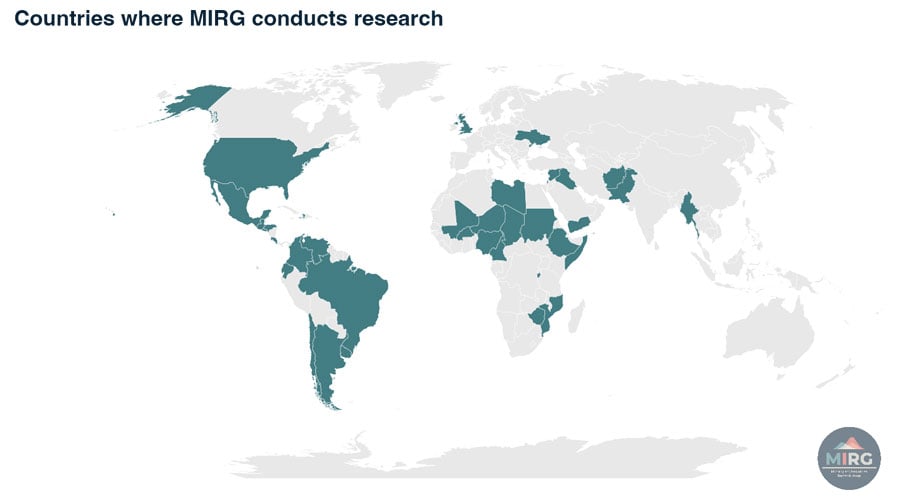
Location: Afghanistan; Bangladesh; Burkina Faso; Cameroon; Central African Republic; Chad; Colombia; Democratic Republic of the Congo; Ethiopia; Haiti; Iraq; Libya; Mali; Mozambique; Myanmar; Niger; Nigeria; Palestine; Pakistan; Somalia; South Sudan; Sudan; Syria; Ukraine; Venezuela; Yemen; Zimbabwe
Methods: evidence synthesis; data mapping; routine data analysis; information quality scoring; data linkage
This project systematically maps and assesses population-level mortality data produced for humanitarian crises with activated coordination mechanisms between 2018 and 2025. Drawing on humanitarian repositories, academic databases, cluster websites, and direct outreach to information management focal points, the study compiles available estimates of crude mortality rate, under-five mortality rate, maternal mortality ratio, and cause-specific mortality. A composite information score evaluates each record across accessibility, timeliness, methodological transparency, and equity-relevant disaggregation, identifying gaps in whose deaths are counted and how mortality data systems serve affected populations. The resulting database and scoring framework support evidence-based recommendations for strengthening transparency, equity, and coordination in humanitarian mortality data governance.

José Manuel
Aburto
Associate Professor in Demography - Brass Blacker

David
Leon
Professor of Epidemiology

Selin
Köksal
Assistant Professor in Demography

Julia
Almeida Calazans
Research Fellow

Yu
Chen
Research Fellow

Rahaf
Abu Koura
Research Assistant

Yunxiang
Wan
Research Assistant

Maria
Gargiulo
Research Student - MPhil/PhD - Epidemiology & Population Health
