
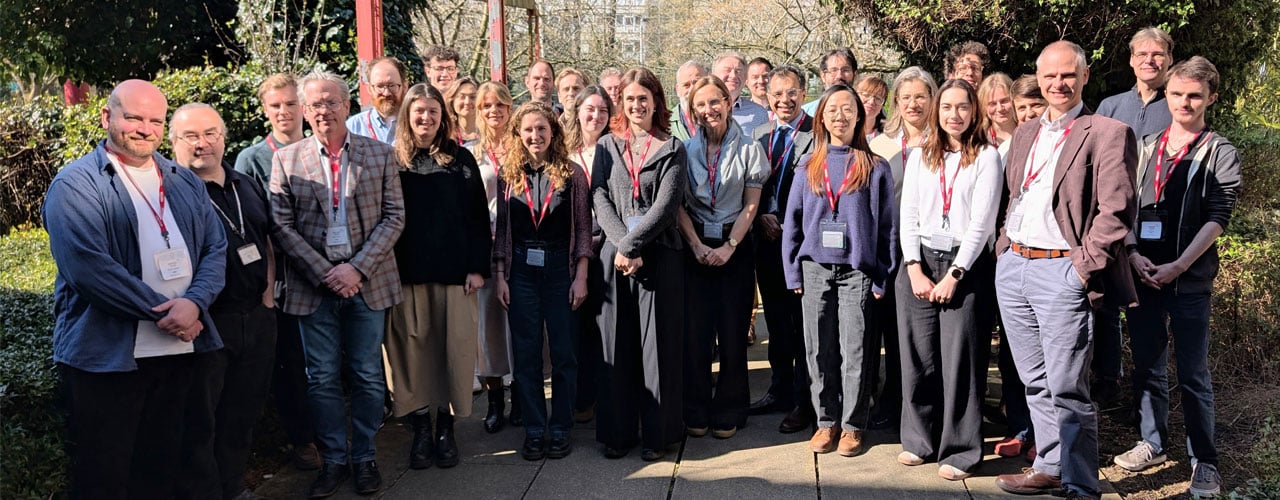


Health Protection Research Units (HPRUs) are funded by the National Institute for Health and Care Research (NIHR) and undertake high quality research that enhances the ability of the UK Health Security Agency (UKHSA) to protect the public’s health and minimise the health impact of emergencies. HPRUs focus on collaboration and knowledge sharing, and play a pivotal role in maintaining and growing UKHSA’s scientific expertise and future workforce. The multidisciplinary centres of excellence also deliver responsive research to tackle emerging or potential public health emergencies.
The NIHR HPRU in Health & Analytics Modelling is one of 13 HPRUs across England, part of an £80 million investment by the NIHR to protect the health of the nation. Our HPRU is a partnership between UKHSA and the London School of Hygiene & Tropical Medicine, in collaboration with Imperial College London.
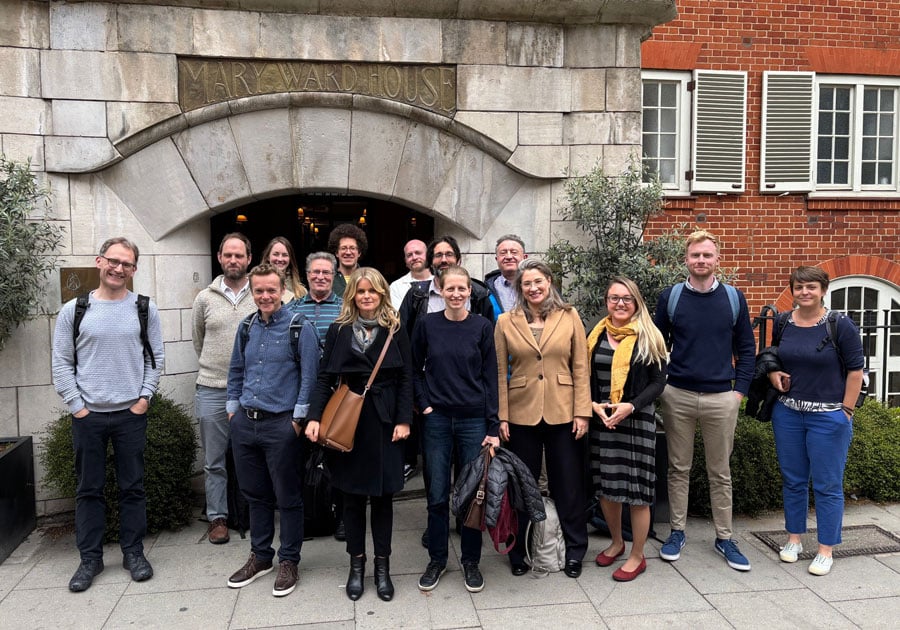
The HPRU in Health & Analytics Modelling covers a wide spectrum of thematic areas, with many allied and overlapping researchers contributing their time in-kind to help it achieve its objectives. Our Directors are:
- Sebastian Funk (LSHTM)
- Peter White (UKHSA)
- Neil Ferguson (Imperial)
- Who we are
Name Institution Role Primary theme Sebastian Funk LSHTM Unit Director, Theme Lead Health Forecasting & Scenario Analyses Andrew Hayward UKHSA Theme Lead Health Equity & Inclusion Health Roz Eggo LSHTM Theme Co-Lead Health Equity & Inclusion Health Elizaveta Semenova ICL Theme Co-Lead Health Equity & Inclusion Health Anne Cori ICL Theme Lead Health Forecasting & Scenario Analyses Edwin van Leeuwen UKHSA Theme Co-Lead Health Forecasting & Scenario Analyses Katharina Hauck ICL Theme Lead Pandemic Preparedness Thomas Finnie UKHSA Theme Co-Lead Pandemic Preparedness Adam Kucharski LSHTM Theme Co-Lead Pandemic Preparedness Helena Wehling UKHSA Theme Lead Patient & Public Involvement & Engagement Neil Ferguson ICL Unit Lead All themes Peter White UKHSA Unit Lead All themes Andrew Carey LSHTM Project Manager All themes Steven Saunders LSHTM Project Administrator All themes John Edmunds LSHTM Knowledge Mobilisation Co-Lead All themes
Our analytical research priorities range across a wide range of disease areas, with many cross-cutting methodologies and challenges; integration and analysis of diverse surveillance data; statistical methods for estimating unknown model parameters; genetic analysis of whole genome sequence data; and the development of simulation tools.
The HPRU in Health & Analytics Modelling facilitates translation of its research into sustained gains in UKHSA’s capacity to collect, analyse, model and interpret diverse datasets by developing robust easy-to-use computer software for use by non-modellers and via a comprehensive training and capacity building programme.
- Health Equity and Inclusion Health
Infectious disease outbreaks cause substantial burden in communities and healthcare settings. More generally, unpredicted surges in healthcare demand (due to both infectious and non-infectious causes) require allocating expensive spare capacity, risk compromising patient care and impose extreme pressures on the NHS. This theme will elucidate key drivers of outbreak spread and healthcare demand surges, integrating these insights into forecasting and modelling/evaluation of mitigation approaches. By combining mathematical and statistical approaches with novel data sources, we will characterise the relative contributions of vaccination coverage, prior infections, outbreak response, and social behaviour to outbreak frequency and dynamics. We will also estimate the contribution of both infections and non-infectious causes (e.g. temperature fluctuations, exacerbated by climate change) to pressures on health care systems and model how these systems can be optimised. With Theme 3 we will estimate the cost of demand surges and mitigation measures. This will deliver more accurate, timely, and relevant public health forecasting.
- Health Forecasting and Scenario Analyses
The UK is experiencing long-term changes in the burden of both infectious and non-communicable disease, with the ageing population (and consequent increased frequency of co-morbidities) and environmental change being key drivers. This theme will develop methods to synthesise evidence from empirical studies, surveillance, and electronic health records (EHRs), using big data to better-understand changes in the aetiology and epidemiology of disease – including interactions between environment, climate, chronic and infectious disease. It will elucidate drivers of disease trends, and design and assess cost-effectiveness of interventions to improve health and reduce inequalities in a changing world.
- Pandemic preparedness
This theme's objectives are to investigate the implications of methodological choices in economic evaluations of public health interventions; conduct a systematic assessment to understand the behavioural data requirements of health protection modelling; explore modelling and health economic analyses to respond to UKHSA's needs during the ongoing COVID-19 pandemic; analyse data from the contact-patterns survey for use in transmission models; explore changes since the previous POLYMOD study; explore public health interventions (e.g. COVID-19 non-pharmaceutical interventions, antibiotic use) which are beneficial in some groups but detrimental in others, and investigate vaccine hesitancy; conduct a large-scale, UK population-based survey of social mixing patterns relevant to infectious disease spread; develop models around public values, predictors and economic impacts of behaviour change; develop methods and pilot studies for collecting social contact data from target groups, including those in closed settings (e.g. hospitals, nursing homes); link contact-pattern data with Theme 1 to better-understand dynamics of outbreaks, and behavioural surveys to understand behavioural change drivers during outbreaks.
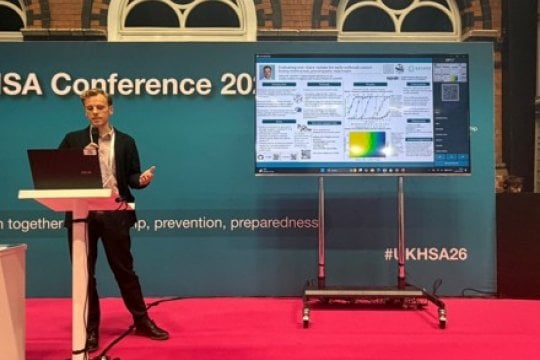
On 22-23 September 2026, our Theme 3 Research Fellow, Joshua Lambert, attended the UK Health Security Agency (UKHSA) conference in Manchester for the first time. The theme of the 2026 conference was: Securing health together: Partnership, prevention, preparedness. He has reflected on his time attending the conference, with some highlights and learnings, and influences on his ongoing work.
Personal highlights
Pegasus
The opening session of the first day, titled Exercise Pegasus: How do we use science to create a real test of pandemic preparedness, was illuminating. In September and October 2025, the UK Government ran a (tier 1) pandemic simulation: Exercise Pegasus. I was fortunate to be able to join some of the Pegasus meetings and see how pandemic decision making under the UK’s SPI-M-O system operates. The conference session covered the breadth and aims of the simulation exercise, the Red team-Blue team structure, the modelling to simulate the outbreak, the behavioural survey work and the post exercise evaluation. Across the six speakers there was a detailed, while understandable breakdown of the exercise components. With Richard Amlôt highlighting the importance of evaluation by stating that completing the simulation exercise response is 50% of the work, likening it to getting to the top of the mountain, with evaluation being the descent back down. A couple of pertinent points were: Freya Mills discussing the importance of real-time outbreak behaviour data and integrating this into modelling, and Matt Hoy reflecting on how the exercise did not incorporate misinformation and media pressure which would almost certainly circulate in an actual pandemic.
A talk from Paul Birrell on the morning of the second day nicely complemented this by providing a deep-dive into the individual-based disease transmission model used in Exercise Pegasus. Presenting in the same session as Paul, this provided an interesting juxtaposition to my work on developing a different class of transmission models for early outbreak response. I feel it showcased the plurality of models that go into outbreak response and consensus decision making.
Partnership and collaboration
The emphasis on working in partnership was clear. Several talks touched on the need for collaborative work and information sharing for effective evidence-based public health improvements. The session Can global research collaboration accelerate pandemic preparedness was especially strong on this point. Delegates from the World Health Organization (WHO), in this and other sessions, stated the WHO’s role as global convener of the excellent work already being conducted, adopting a Hub-and-spoke model. Additionally, several points highlighted the UK’s role in public health partnership, with reinvestment in CEPI, collaboration with WHO initiatives, and support for ongoing outbreak response (e.g. Bundibugyo Ebola), to mention a few.
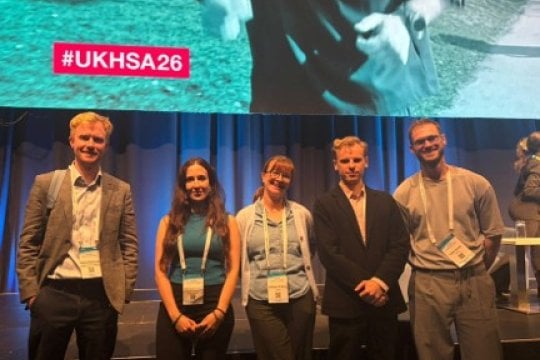
A session on What does a culturally competent outbreak response look like? showed that just as academics and public health professionals collaborate, so do those in public health and the local community. Speakers in this session explained how understanding the ethnic and cultural aspects of the local community is important in effective engagement, with infectious disease outbreak response touched on. As my work is often modelling at a high-level, the session showcased tailored local engagement and is something I will keep in mind going forward with my own work.
As a member of a Health Protection Research Unit, a project that aims to connect UKHSA with academic partners to advance health security, the prominence of collaboration was encouraging. Perhaps one point of improvement from the perspective of a Research Fellow is it can sometimes be difficult to create new connections and build collaborative networks, and some actionable advice for how working in partnership could be enhanced for early career attendees would have been helpful. That being said, the conference was well set up to meet new people and strengthen existing collaborations. The attendance of several members of different HPRUs and the ability to discuss in-person how projects intersect, and opportunities for collaboration was a key benefit of the conference in my opinion. Discussions with those attending my presentation also catalysed new connections and elucidated some unexpected ways that my research could be applied.
Misinformation and behaviour meets biology
As someone that does not work on behavioural or psychological aspects of public health or outbreak response, I found the session Foolproof health: The science behind prebunking misinformation to be engaging and thought-provoking. Panellists’ discussions on ‘prebunking’, the psychology of changing people’s minds even after they have their information corrected, and the need for large organisations to humanise themselves to gain public trust were some of the topics that although not directly related to my work will provide food for thought when it comes to delivering understandable and robust conclusions from my research.
Artificial intelligence
Artificial intelligence (AI) was covered in several sessions and, to me, remains unknown in its long-term impact on public health and research. One frustration is how overloaded the term has become, with most people using it to refer to large language models (LLMs). I hope that a refinement in terminology will help articulate the various ways it can be deployed, from radiology scans to data science and coding tasks. Adam Kucharski provided nuanced insights into using AI. One particular insight was keeping humans in the decision making loop, not only decisions from results, but also when designing studies and carrying out analyses. A concept of ‘claude creep’ whereby automation of decision making in workflows leads to the loss of expertise in the design and execution of research.
Concluding remarks
Returning from the conference in Manchester I thoroughly enjoyed my time at the 2026 UKHSA conference. In my view it demonstrates the UK’s aim to be a collaborative leader in public health, both domestically and internationally. Diving back into my research I have made connections that will refine my work to tackle policy-relevant questions in outbreak response and pandemic preparedness.
The quarterly NIHR-funded HPRU in Health Analytics & Modelling newsletter (Autumn 2026) is now available.
We are pleased to announce that we have recruited five further PhD students to our Unit. They have just started working with us on the following projects:
- Yumi Naito: Incorporating stratification by ethnicity in mathematical models of respiratory virus transmission in England (Theme 1, LSHTM)
- Joel Heller: Environmental and personal determinants of heat-related health risks (Theme 1, Imperial)
- Lila Goodwin: Improving Infectious Disease Forecasts and Forecast Evaluation (Theme 2, LSHTM)
- Peter Roche: Surveillance systems, value of information and decision making under uncertainty (Theme 3, LSHTM)
- Rebecca Mann: The health, economic and educational impacts of respiratory pandemics in the UK (Theme 3, Imperial)
You are invited to attend our upcoming interactive workshop: Proposing Solutions: Shaping A New Pandemic Decision-Support Tool.
In this 1 day workshop we will introduce, propose, a web application to assist infectious disease outbreak response decision making. The workshop will include:
- A demonstration on how to use the app
- Showcase potential uses for infectious disease outbreaks
- Hands-on testing of the app
- User-feedback session to adapt the application to your team’s needs
If you or members of your team are public health professionals, policy-makers, technical advisors or practitioners that want to use epidemiological modelling to evaluate emergency response strategies to infectious disease outbreaks, this workshop will provide a tool that will be beneficial to you.
This workshop is designed specifically for potential stakeholders to help us develop a leading tool for outbreak response without requiring you to write a single line of code.
Event Details:
- Date: 13th July 2026
- Time: 9:30 – 16:30 [UK time (BST)]
- Location: London School of Hygiene and Tropical Medicine (LSHTM) and online (hybrid)
- LSHTM Address: Keppel St, London WC1E 7HT. Room G08.
- Zoom link: https://lshtm.zoom.us/j/86968173813
- Hosted by: Professor Sir John Edmunds, Joshua W. Lambert, Jiaxin Zhou and Jack Ward
- Catering: Lunch and refreshments will be provided
- Cost: Free to attend
What we will cover:
- Discover propose: Learn about the new decision support tool, developed by epidemiologists, to model early outbreak response scenarios for outbreak control.
- Interactive session on outbreak response: An opportunity to troubleshoot your specific challenges.
- Collect participant feedback: We are openly developing this application in collaboration with stakeholders. This workshop will offer a forum to provide feedback on tailoring the tool to your needs.
How to Register: If you would like to attend in-person please confirm your attendance by emailing [email protected].
The quarterly NIHR-funded HPRU in Health Analytics & Modelling newsletter (Summer 2026) is now available.
On 12th June, three LSHTM-based HPRUs held a joint Knowledge Mobilisation and Academic Career Development workshop. This workshop brough together PhD students and early career researchers to discuss their projects in relation to Knowledge Mobilisation. A panel session was also held to discuss career development.
Participants were encouraged to think about how their research could have impact in practice, and who their work will benefit in the future.
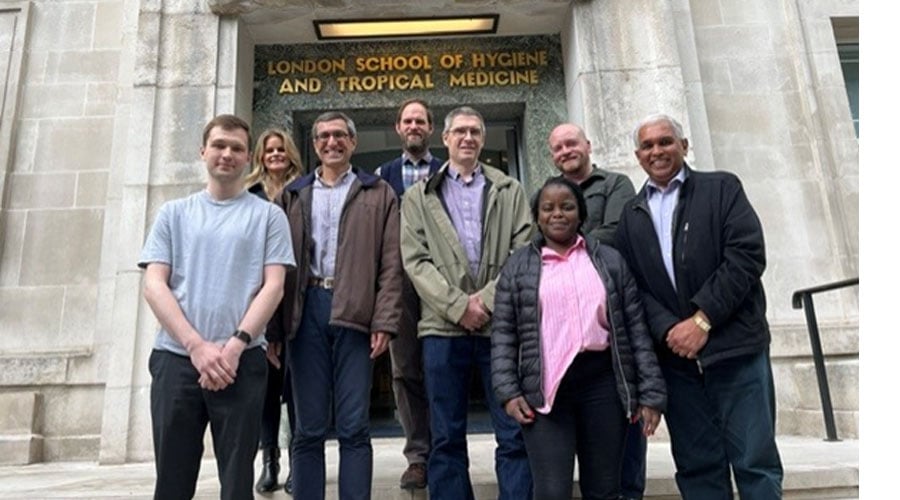
The HPRU in Health Analytics and Modelling (HAM) held its first in-person meeting with its newly established Public Advisory Group on 18th May. The session served as an induction and onboarding event, introducing panel members to the HPRU’s work and priorities.
The meeting opened with a welcome and overview of the HPRU from Director Sebastian Funk, followed by an accessible introduction to modelling delivered by Theme 3 Lead, Dr Thomas Finnie. Panel members also took part in a group discussion exploring what meaningful and effective PPIE should look like across HPRU activities.
We look forward to working closely with our PPIE panel over the next years.
The quarterly NIHR-funded HPRU in Health Analytics & Modelling newsletter (Spring 2026) is now available.
The Health Analytics and Modelling (HAM) Health Protection Research Unit (HPRU) is a collaboration between the UK Health Security Agency (UKHSA) and London School of Hygiene and Tropical Medicine (LSHTM) funded by the National Institute for Health and Care Research (NIHR).
We are seeking Expressions of Interest from Voluntary, Community or Social Enterprise (VCSE) organisations who are sex-worker led or who have expertise in working in partnership with sex workers to work with us to help inform approaches to reduce health protection inequalities affecting sex workers. Applications from a collective of organisations are also welcome.
The VCSE (or collective), will lead engagement with sex workers to explore:
- how to improve data collection and evidence building on sex worker populations and needs
- what priority health protection interventions UKHSA/HPRU should focus on to best meet sex worker needs
We are looking for this engagement, through facilitated discussions or workshops, to be with a diverse range of sex workers, across at least two geographical regions, working with UKHSA and HPRU leads.
Read further details, including how to submit your expression of interest by 24 April 2026.
If you would like to discuss submitting an expression of interest, please contact [email protected] or [email protected].
A new PPIE initiative - led by the HPRU’s Health Equity & Inclusion Health Theme - is planned for later this year. This will a series of workshops with sex workers delivered in partnership with the charity organisation National Ugly Mugs. The workshops will explore ways to reduce inequalities faced by sex workers in relation to protection from infectious diseases, including identifying priority interventions and collaborative approaches to building on current evidence.
The HPRU in Health Analytics & Modelling officially held their first Annual Meeting on Thursday 19th March 2026. Thank you to everyone who attended and contributed. It was a great opportunity for our new PhD students to introduce their respective projects to the network. We were also delighted to be joined by members of our Steering Committee and representatives from the Department of Health & Social Care. We are already looking forward to the 2027 meeting at Imperial College London!
The quarterly NIHR-funded HPRU in Health Analytics & Modelling newsletter (Winter 2025) is now available.
In September 2025, we welcomed two new research fellows, Jiaxin Zhou and Joshua Lambert to Theme 3 (pandemic Preparedness).

Joshua Lambert is based at the London School of Hygiene & Tropical Medicine. His research interests are in outbreak analytics and understanding the effectiveness of public health interventions in the first 100 days of an epidemic or pandemic. Currently, Joshua is developing an open-source modelling framework for evaluating the effectiveness and optimising the deployment of non-pharmaceutical interventions for a variety of epidemic/pandemic-potential pathogens, as well as approaches for improving the application of epidemiological parameters in outbreak modelling tasks. Joshua also maintains several (Epiverse) open-source software tools for outbreak analytics.

Jiaxin Zhou is also based at LSHTM. Her research integrates mathematical modelling with immunological, virological, and epidemiological data to explore how previous infections and vaccinations shape immune responses to influenza and SARS-CoV-2, and to investigate how antibody markers are associated with protection against infection. She obtained her PhD in Epidemiology from Fudan University, China, and undertook an internship at Institute Pasteur, France. Her research interests lie in linking biomarker data with infectious disease dynamics to understand how immunity shapes infection risk.
The HPRU has recruited its first PhD students who will work across our research themes. Based at both LSHTM and Imperial College London, they will work with researchers based at each of our partners.
- Wendy Sharpe (Theme 1 - LSHTM): Infection clustering: Detecting socioeconomic and ethnic gradients in infection burden using OpenSAFELY
- George Young (Theme 1 - Imperial): Optimising vaccination to combat outbreaks and AMR in sexually-transmitted infections
- Luke Burton (Theme 3 - LSHTM): Understanding and predicting behavioural drivers of epidemic dynamics
- Emilia Wilkins (Theme 3 - Imperial): Design of genomic surveillance systems
HPRU research was presented at the recent IDDconf 2025, a conference in infectious disease dynamics held in Ambleside, UK. Lucy Goodfellow and Alexis Robert showcased recent work on the Reconnect contact survey that is partially supported by the HPRU. Lucy’s work shows lower social contacts after the pandemic with heterogeneity between occupation groups [1]. Alexis has focused on differences in social contact patterns by ethnicity.
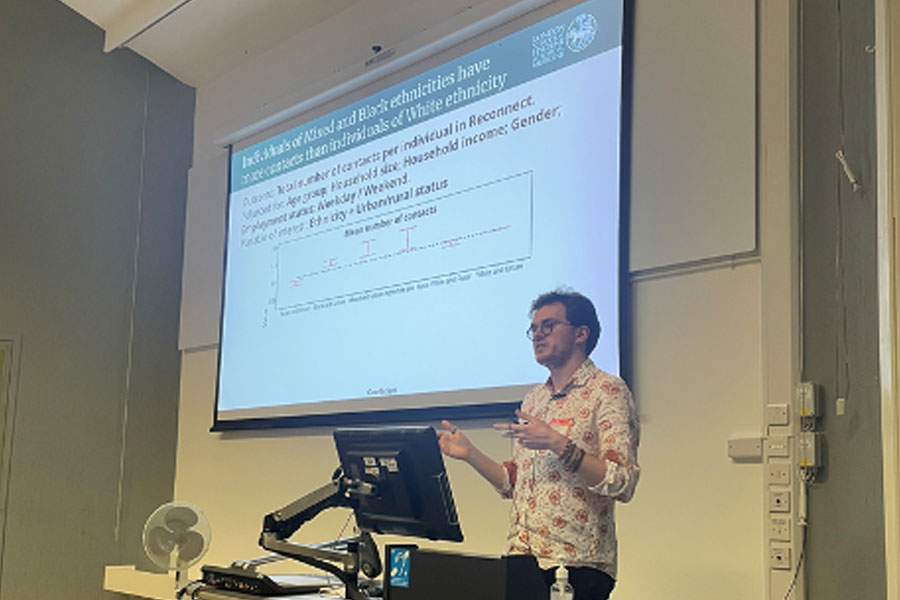
There were great opportunities for networking and formation of collaborations at IDDconf, and we are looking forward to the next one!
1. https://www.medrxiv.org/content/10.1101/2025.08.13.25333584v1.full.pdf
The quarterly NIHR-funded HPRU in Health Analytics & Modelling newsletter (Autumn 2025) is now available.
We are delighted to be working with two new Research Fellows, Jiaxin Zhou and Joshua Lambert, who have joined our Theme 3 team at LSHTM. These posts involve combining mathematical and statistical methods with epidemiological and behavioural data sources to inform pandemic preparedness. This will include estimation of key epidemic parameters and processes relevant for transmission and control, as well as integration of methods with wider modelling tools for policy planning, and evaluating generative AI for improving the efficiency of common epidemic analysis tasks.
The post-holder will be supervised by Prof Adam Kucharski in collaboration with UKHSA and Imperial College London. They will join a successful and supportive modelling centre at LSHTM working on a range of infections, including influenza and SARS-CoV-2, with scope to develop their own research within the field, in collaboration with colleagues at LSHTM and external partners.
The London School of Hygiene & Tropical Medicine (LSHTM), Imperial College London and the UK Health Security Agency (UKHSA) are pleased to invite applications for two PhD studentships in real-time infectious disease modelling, as part of the NIHR funded Health Protection Research Unit (HPRU) on Health Analytics, Epidemic Modelling and Health Economics. The studentships will start in January 2026 and comes with 3.5 years of funding.
The awards will cover a tax-free stipend of £22,780 per year, tuition fees at home rates and research and travel expenses.
The HPRU in Health Analytics and Modelling brings together three of the world’s leading groups in infectious disease analytics and modelling (at Imperial College, LSHTM and UKHSA). It will create an unparalleled environment for research degree students to thrive, being supervised by leading experts in their fields. These two studentships will be based within LSHTM’s Faculty of Epidemiology and Population Health but will be jointly supervised by a team representing each of the three institutions. All three institutions are multi-disciplinary encompassing epidemiologists, data scientists, mathematical modellers, health economists and public health practitioners.
The exact focus of each PhD will be developed with the successful candidate and will depend on their interests and prior expertise. Applicants are asked to contact the project supervisors for an informal discussion prior to applying.
Please see the two example projects for the type of research that these projects involve.
Eligibility requirements
Applicants must hold, or expect to obtain before the start of the PhD, a relevant Master’s Degree awarded with good grades, or have a combination of relevant qualifications and experience which demonstrates equivalent ability and attainment.
Applicants must meet the criteria for home fees to be eligible to apply. Your fee status is determined in accordance with the Fee Assessment Policy of LSHTM and regulations defined by the UK Government.
The PhD programme
Students will be mentored by their supervisory team made up of academics/public health specialists from each of the three institutions. They may also have a wider Advisory Committee who can help with specific issues. Students are expected to take part in the academic life of their institution and help create a strong cohort of early-career researchers across the three institutions within the HPRU. LSHTM students may join relevant Academic Centres, such as the Centre for the Mathematical Modelling of Infectious Diseases. Imperial College has the MRC Centre for Global Infectious Disease Analysis and WHO’s Collaborating Centre for Infectious Disease Modelling. Both universities have several other NIHR Health Protection Research Units. Research seminars and journal clubs in the three collaborating institutions will be open to PhD students from this scheme. Students are also able to take Master’s level study modules within either academic institution, subject to approval from their supervisors.
Support for research students’ future career development is covered through the supervision process, the transferable skills programmes and careers services within each institution. As the students will work with individuals from all three institutions they will gain excellent opportunities to network and establish professional contacts across both academia and public health. They will also have the opportunity to attend national and international conferences.
How to apply
Further information about research degree study at LSHTM as well as application guidance and a link to the portal, can be found on the School’s Research Degrees and Doctoral College pages. Applicants should submit an application for research degree study via the portal. Please write “PhD Studentships Health Analytics and Modelling HPRU” in the funding Section on the application form.
Clearly identify the specific project (or projects) that interests you from the list of projects provided. In your application, please expand on how you might address your chosen research project, using a maximum of 2 pages. You may want to expand on the background information and motivation as well as outline an appropriate research methodology by which the question can be addressed.
Project titles
- Improving Estimation and Analysis of Epidemiological Delays for Infectious Disease Outbreaks
- Improving Infectious Disease Forecasts and Forecast Evaluation
Applications for these projects will only be reviewed and processed after the deadline. All complete applications that are submitted before the deadline will be considered equally, regardless of submission date.
Only applications in the correct format will be considered.
The London School of Hygiene & Tropical Medicine has been awarded £5.5 million by the National Institute for Health Research (NIHR) for continued support of the Health Protection Research Unit (HPRU) in Health Analytics & Modelling (HAM), in collaboration with the UK Health Security Agency and Imperial College London.
Professor Louise Kenny, Executive Pro-Vice-Chancellor for the Faculty of Health and Life Sciences, said: “We are delighted to have received funding to support the continuation of the HPRU in Emerging and Zoonotic Infections. The work of this unit, which draws on significant strengths from the across the University of Liverpool and our national and international partners, was critical in our response to the COVID-19 pandemic and we look forward to continuing our world-leading work in health protection.”
A total of 13 new HPRUs were announced recently by NIHR, as part of a £80 million research investment to keep the public safe from current and emerging public health threats. The HPRUs, which are all partnerships between top universities and UKHSA, will launch in April 2025 and run for five years.
Our Academic Career Development Programme ensures the translation of our quantitative, model-based understanding of the drivers of public health threats into operationalised tools. These tools will need to be sufficiently robust for routine application by frontline professionals and national-level decision-makers. We will recruit up to 15 Early Career Researchers who will be provided with specific training to support their professional development. More details on upcoming training workshops will be shown here.
Knowledge Mobilisation and Academic Career Development Joint workshop
12 June 2026
On 12 June, three LSHTM-based HPRUs held a joint Knowledge Mobilisation and Academic Career Development workshop. This workshop brough together PhD students and early career researchers to discuss their projects in relation to Knowledge Mobilisation. A panel session was also held to discuss career development.
Participants were encouraged to think about how their research could have impact in practice, and who their work will benefit in the future.
Patient and public involvement and engagement, often abbreviated to PPIE, is all about including public contributors throughout the research cycle in a meaningful way. Public contributors are not study participants, but people who provide input and feedback based on their lived experience in the condition or status that a researcher is investigating. The word 'public' can refer to patients, potential patients, carers and people who use health and social care services, members of organisations that represent people who use services as well as members of the public.
Read our Research Inclusion strategy.
Public and Community Involvement, Engagement and Participation – October 2026 update
We are pleased to share that our PCIEP Lead Helena Wehling has been appointed as the UKHSA lead for the PCIEP Theme within the new NIHR Health Protection Research Unit Network. The theme aims to strengthen public and community involvement across HPRUs by promoting shared learning, collaboration, capacity building, engagement with underserved communities, and innovative approaches to involvement in health protection research.
The Network will officially launch in November, with a launch meeting bringing together Network leads, HPRU Directors, research leads and key stakeholders from across the HPRUs.
Work is also continuing on our sex workers PCIEP project, which is being delivered in partnership with National Ugly Mugs (NUM). NUM has facilitated several engagement sessions with sex workers to explore health protection priorities, barriers and opportunities for future action. The project is currently still ongoing, and findings will help inform future UKHSA and HPRU work to address health protection inequalities experienced by sex workers.
Events and workshops
The HPRU PPIE (Patient and Public Involvement and Engagement) Lead, Helena Wehling, hosted a workshop on 11 September 2025, giving theme leads the chance to gather early input to help shape their research plans. Eight public contributors took part. The session opened with an introduction from the HPRU Director, followed by three presentations from theme leads outlining their research and planned PPIE activities.
Each session included lively discussions and valuable feedback from public attendees, which will inform the HPRU’s evolving PPIE workplan, developed in collaboration with public contributors. A panel of up to 12 lay members will be set up to monitor activities during the programme.
2026
- The potential global health impact and net monetary benefit of programmatic use of improved influenza vaccines: a mathematical modelling study
- Potential changes in disease transmission and age distribution of cases
- Classifying and Differentiating Individuals with Respiratory Syncytial Virus Influenza, and COVID-19 Cases in OpenSAFELY
- Post-pandemic social contact patterns in the United Kingdom: the Reconnect survey
- Health inequalities in infectious disease modelling
2025
- The transmission dynamics of Norovirus in England: A genotype-specific modelling study
- The global return-on-investment of COVID-19 vaccines in the first year of the vaccination programme
- A vision for estimation of the instantaneous reproductive number
- A systematic review of Zika virus disease: epidemiological parameters, mathematical models, and outbreaks
- A systematic review of Nipah virus disease epidemiological parameters, outbreaks and mathematical models
- Social mixing and time use throughout the year: Potential changes in disease transmission and age distribution of cases
- One Health Criteria to support decision-making on antimicrobial resistance interventions
- Modeling gonorrhea vaccination to find optimal targeting strategies that balance impact with cost-effectiveness
- Why are gonorrhea case rates declining in the US? A research agenda