Typhoid fever still affects millions in India, new study warns
26 January 2026 London School of Hygiene & Tropical Medicine London School of Hygiene & Tropical Medicine https://lshtm.ac.uk/themes/custom/lshtm/images/lshtm-logo-black.png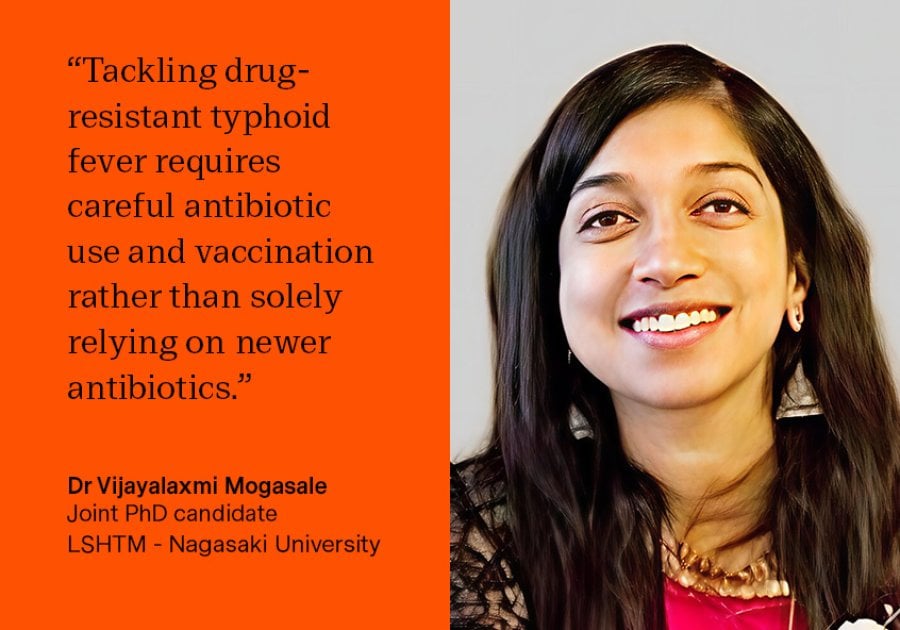
Typhoid fever caused an estimated 4.9 million cases and nearly 8,000 deaths in India in 2023, according to a new modelling study published in The Lancet Regional Health – Southeast Asia. The research highlights the continuing impact of the disease, particularly among children, and raises concerns about growing resistance to commonly used antibiotics. The authors hope that their insights will inform targeted vaccine strategies against typhoid fever.
Using national surveillance data and published evidence, researchers estimated how many people fell ill with typhoid fever last year, how many required hospital care, and how many died. They also examined how antimicrobial resistance is shaping outcomes, finding that a large proportion of infections are now resistant to fluoroquinolones, one of the main classes of antibiotics used to treat the disease.
The study estimates that approximately 4.7 million people sought treatment for typhoid, resulting in approximately 730,000 hospitalisations. While overall death rates remain relatively low, the researchers found that patients who did not receive treatment faced a much higher risk of dying, underscoring the importance of timely access to care.
Antimicrobial resistance emerged as a major concern. The researchers estimate that more than two-thirds of typhoid cases in India are resistant to fluoroquinolones, limiting treatment options and increasing the risk of complications.
Resistance varied across states and age groups, suggesting the need for targeted public health responses rather than a one-size-fits-all approach. Specifically, the authors recommend prioritising states with the highest number of typhoid cases – Delhi, Maharashtra, and Karnataka – as well as vaccination under national programmes for children under five-years old, the age group that had the largest share of cases for hospitalisation and death.
The findings come at a critical moment for India’s immunisation policy. In 2022, national advisers recommended the introduction of the typhoid conjugate vaccine (TCV) into the Universal Immunisation Programme. The authors argue that their estimates provide important evidence to support vaccine rollout strategies, particularly in high-burden states and among younger age groups.
Dr Vijayalaxmi Mogasale, Joint PhD Candidate at the London School of Hygiene & Tropical Medicine and Nagasaki University said: "Drug-resistant typhoid fever remains a serious public-health threat in India, with implications beyond national borders. Tackling this problem does not lie solely in moving to newer antibiotics, but calls for timely preventive action, including responsible antibiotic use and the introduction of the typhoid vaccine into the national immunisation programme, prioritising high-burden age groups and regions.”
Dr Arindam Ray, Gates Foundation, India added: “As the Government of India is poised to introduce the typhoid conjugate vaccine, our national estimates show that, in the absence of a vaccine, every month around 60,000 additional typhoid hospitalisations and ~650 deaths continue unchecked, with antimicrobial resistance as the driver. Reliance on antibiotics alone is thus no longer a safe strategy. We remain optimistic and committed to the accelerated introduction of TCV in the country.”
Dr Kaja Abbas, Associate Professor of Infectious Disease Epidemiology and Dynamics at the London School of Hygiene & Tropical Medicine and Nagasaki University explains: “Typhoid vaccines add value beyond the direct protection against typhoid fever and are effective interventions in reducing antimicrobial resistance in India and beyond."
If you enjoyed this article and would like to build a career in global health, we offer a range of MSc programmes covering health and data, infectious and tropical diseases, population health, and public health and policy.
Available on campus or online, including flexible study that works around your work and home life, be part of a global community at the UK's no.1 public health university.