Six scientists recognised as the Unit strengthens research training excellence
25 February 2026 London School of Hygiene & Tropical Medicine London School of Hygiene & Tropical Medicine https://lshtm.ac.uk/themes/custom/lshtm/images/lshtm-logo-black.png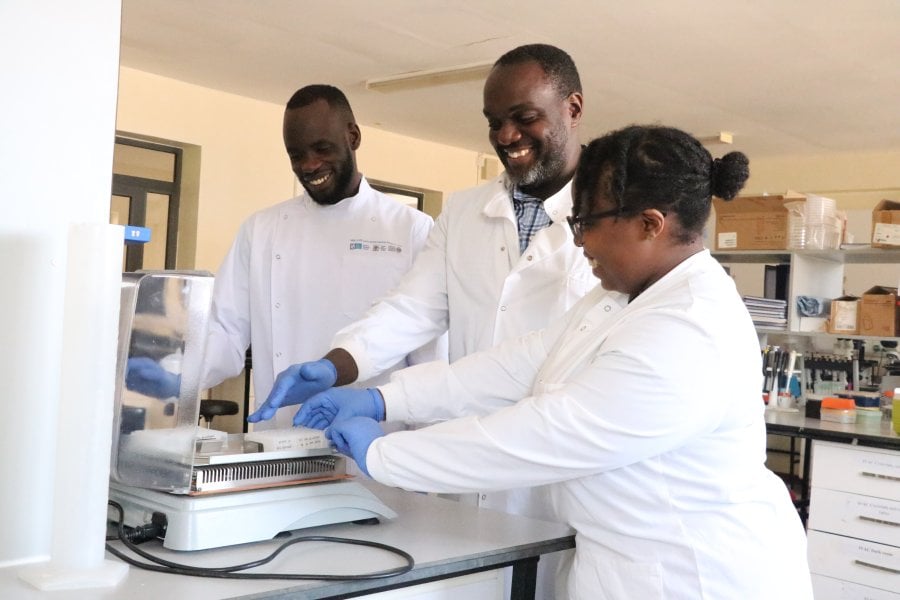
Through the Postgraduate Certificate in Learning and Teaching (PGCiLT) programme at the London School of Hygiene and Tropical Medicine, four staff members, Dr Nicholas Bbosa, a molecular virologist, Dr Allan Kalungi a psychiatric geneticist, Dr Achilles Kiwanuka, a digital health and capacity strengthening specialist and Dr Andrew Ssemata, a clinical neuropsychologist, wereawarded Associate Fellowship of the Higher Education Academy (HEA). Dr Sheila Balinda a molecular virologist and Dr Yunia Mayanja, an HIV epidemiologist achieved Fellowship status, recognising sustained leadership in academic practice and mentorship.
The six scientists represent diverse research areas across the Unit, spanning vaccine research, viral pathogen discovery, non-communicable diseases and social science.
Fellowship and Associate Fellowship of the Higher Education Academy are internationally recognised benchmarks of teaching and learning excellence. The awards signal formal alignment with global standards in academic practice, supervision, and structured researcher development.
“Our goal at the Unit is not only to produce high-quality research, but to build a sustainable pipeline of African research leaders. Professionalising teaching practice is central to that ambition,”said Dr. Achilles Kiwanuka, HEA Associate Fellow and Unit Head of Training.
For the Unit, this recognition extends beyond individual achievement. It strengthens internal capacity to support postgraduate students, research fellows and early-career scientists through structured, reflective and high-quality mentorship. In a research environment where scientific outputs are highly visible, investing in teaching excellence ensures that researcher development is intentional, measurable and aligned with international standards.
“This recognition has pushed me to move from informal mentorship to structured development planning. I want the students I supervise to leave not only with data, but with clarity, independenceand leadership skills,” noted Dr. Nicholas Bbosa, HEA Associate Fellow and Project lead of the viral pathogen surveillance and discovery research at the Unit.
“When more colleagues are formally recognised in teaching excellence, it signals a shift in institutional culture. It means we are taking researcher development as seriously as we take research outputs,” said Dr. Sheila Balinda, HEA Fellow and Deputy Head of vaccines research at the Unit.
By investing in professional development in teaching and learning, the Unit continues to strengthen its academic leadership and long-term capacity-building mandate, ensuring that excellence in research is matched by excellence in developing the next generation of scientists.
If you enjoyed this article and would like to build a career in global health, we offer a range of MSc programmes covering health and data, infectious and tropical diseases, population health, and public health and policy.
Available on campus or online, including flexible study that works around your work and home life, be part of a global community at the UK's no.1 public health university.