From Pharmacy shelf to ICU: Indonesia’s quiet AMR crisis
27 March 2026 London School of Hygiene & Tropical Medicine London School of Hygiene & Tropical Medicine https://lshtm.ac.uk/themes/custom/lshtm/images/lshtm-logo-black.png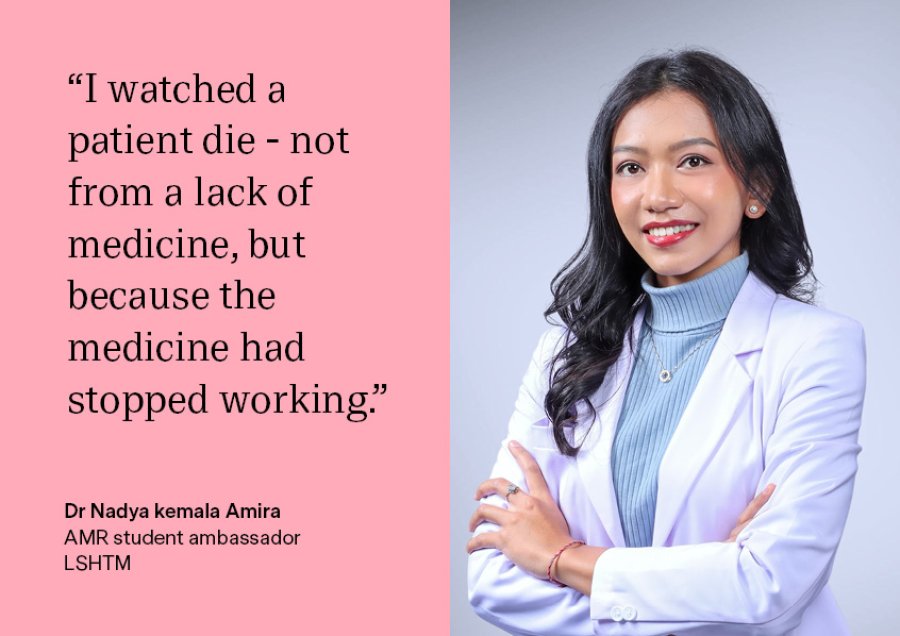
It was a routine shift in an intensive care unit in Indonesia. A patient arrived with a serious infection. We had antibiotics. We used them. The bacteria did not respond. We escalated treatment, but still nothing. Days later, the patient was gone.
Not because we lacked effort or resources, but because the drugs that should have saved them no longer worked.
I have carried that moment with me ever since. Over time, first as a general practitioner across Indonesian hospitals and clinics, and now as a health policy student, I have come to understand that what I witnessed was not an isolated tragedy. It was the predictable outcome of a system that, at every level, is feeding the very crisis it should be fighting.
What is AMR, and why does it matter here?
Antimicrobial resistance (AMR) occurs when microbes evolve to survive the drugs designed to kill them. Every misuse of antibiotics accelerates this process. Over time, routine infections become harder, and sometimes impossible, to treat.
This is not a distant threat. In Indonesia, According to the Institute for Health Metrics and Evaluation (IHME), AMR is already linked to over 40,000 deaths each year. Without meaningful intervention, that number could rise to 182,000 annually by 2030, equivalent to losing an entire mid-sized city every year to infections that were once easily treatable.
At the same time, antibiotic consumption in Indonesia is rising rapidly, placing the country among those at highest risk of accelerating resistance.
Three floors of the same broken system
What makes AMR in Indonesia particularly alarming is that it is not confined to one part of the health system. It is happening everywhere, all at once.
At the community level, misuse is widespread. During my undergraduate research on antibiotic use among university students, I found that many were taking antibiotics for colds and flu, viral infections for which these drugs have no effect. Even more concerning, many obtained them directly from pharmacies without prescriptions. There was no diagnosis and no clinical oversight, just easy access to powerful drugs with long-term consequences.
At the clinical level, prescribing reflects systemic constraints. As a GP, I often saw broad-spectrum antibiotics prescribed without laboratory confirmation of bacterial infection. In busy, under-resourced settings, this is understandable. Diagnostic tests take time, results are not always accessible, and patients expect immediate treatment. However, each unnecessary prescription creates another opportunity for resistance to develop.
At the hospital level, the consequences become stark. In the ICU, I saw patients arriving with infections already resistant to first- and second-line treatments. Clinicians are left choosing between limited options or none at all. These are not abstract statistics. They are people, with families waiting outside.
Policies exist, so why are they not working?
Indonesia is not starting from zero. National Action Plans on AMR have been developed, antibiotic stewardship programmes exist, and prescription-only regulations are in place.
The problem is implementation.
Evidence shows that enforcement of antibiotic regulations remains weak, surveillance systems are limited, and many frontline health workers are not fully supported to follow stewardship guidelines. Policies exist on paper, but they have yet to consistently shape what happens in clinics, hospitals, and pharmacies.
This implementation gap is critical. It creates the appearance of progress while allowing the underlying problem to worsen.
The data gap further compounds this issue. Until recently, Indonesia lacked comprehensive national surveillance on AMR. The launch of a national survey on bloodstream infections in 2024, covering 80 hospitals across 16 provinces, is an important step forward. However, it also highlights how long the system has operated without a clear picture of the scale of the problem.
AMR does not stop at the clinic door
AMR is not just a healthcare issue. It is a One Health challenge.
Antibiotics are widely used not only in human medicine, but also in livestock, aquaculture, and agriculture, often with limited oversight. In some cases, antibiotic residues and resistant bacteria can enter waterways, allowing resistance to spread from farms into community environments.
In a country as large and complex as Indonesia, home to over 270 million people spread across more than 17,000 islands, this creates a deeply interconnected problem. Addressing it requires coordination across human health, animal health, and environmental sectors.
That level of coordination is not yet fully in place.
Where do we go from here?
There is reason for cautious optimism. Renewed policy momentum, growing international engagement, and improved surveillance efforts all signal progress. However, progress will depend on turning plans into practice.
Four priorities are critical:
- Enforce prescription-only antibiotic sales consistently across all settings
- Expand access to reliable and timely diagnostic testing
- Build integrated, real-time AMR surveillance systems
- Invest in large-scale public awareness and behaviour change
That last point is especially important. The student who buys antibiotics for a cold is not acting irresponsibly. They are responding rationally to a system that makes misuse easy and accessible. Changing behaviour means changing that system, so that correct antibiotic use becomes the default, not the exception.
A crisis we can no longer ignore
The patient I lost in that ICU did not die from a lack of medicine. They died because that medicine had been quietly eroded, misused and overused long before it ever reached them.
AMR is often described as a silent crisis. But in Indonesia, it is already speaking, through hospital wards, pharmacy counters, and communities.
The question is whether we are listening.
If you enjoyed this article and would like to build a career in global health, we offer a range of MSc programmes covering health and data, infectious and tropical diseases, population health, and public health and policy.
Available on campus or online, including flexible study that works around your work and home life, be part of a global community at the UK's no.1 public health university.