Malaria drug resistance more complex than previously understood, study finds
27 April 2026 London School of Hygiene & Tropical Medicine London School of Hygiene & Tropical Medicine https://lshtm.ac.uk/themes/custom/lshtm/images/lshtm-logo-black.png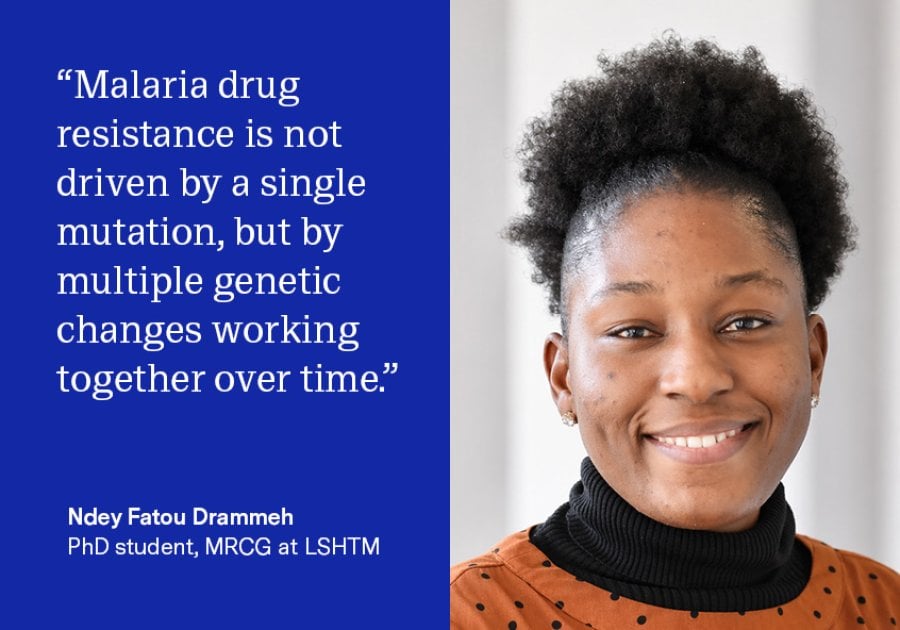
A study of Plasmodium falciparum parasites from The Gambia has found that genetic markers of past drug resistance continue to influence how malaria responds to both older and newer treatments, helping parasites adapt and persist despite changes in drug use.
Published in ScienceDirect, the study shows that malaria parasites rely on multiple genes working together to survive drug treatment, highlighting that malaria drug resistance is more complicated than a single “resistance gene,” challenging previous assumptions of resistance driven by a single genetic change.
Researchers at the Medical Research Council Unit The Gambia at the London School of Hygiene & Tropical Medicine, and partners analysed samples collected in The Gambia from the 2022 malaria season. The study shows that different versions of a key parasite gene linked to chloroquine resistance are tied to distinct patterns of response to both older antimalarials and modern artemisinin‑based combination therapies (ACTs). It also reveals that, beyond this well‑known resistance gene, other genes contribute to how parasites withstand treatment.
The researchers identified two main parasite types, each defined by a different mix of genetic changes: one remains highly resistant to chloroquine, while the other is less sensitive to some ACT partner drugs.
The findings highlight how combinations of mutations across several loci can interact to maintain drug‑tolerant parasite populations, even as treatment policies change. This multi-locus perspective helps explain why resistance can persist in low transmission settings and underscores the need for ongoing molecular surveillance to guide malaria control strategies in West Africa.
Ndey Fatou Drammeh, a PhD student at LSHTM and lead author of the study said: “Our findings show that malaria drug resistance is not driven by a single mutation, but by multiple genetic changes working together over time. By analysing three decades of data, we have been able to see how these adaptations emerge, spread and persist even when drug use changes, highlighting the need for sustained surveillance and more adaptable treatment strategies.”
Publication:
Drammeh ND, Bojang F, et al. Chloroquine resistance transporter drives divergent multilocus drug resistance genetic backgrounds and susceptibility in Gambian Plasmodium falciparum. ScienceDirect, 2026. DOI: https://doi.org/10.1016/j.jgar.2026.04.003
If you enjoyed this article and would like to build a career in global health, we offer a range of MSc programmes covering health and data, infectious and tropical diseases, population health, and public health and policy.
Available on campus or online, including flexible study that works around your work and home life, be part of a global community at the UK's no.1 public health university.