Housing modification shows promise for equitable malaria control strategy
16 January 2026 London School of Hygiene & Tropical Medicine London School of Hygiene & Tropical Medicine https://lshtm.ac.uk/themes/custom/lshtm/images/lshtm-logo-black.png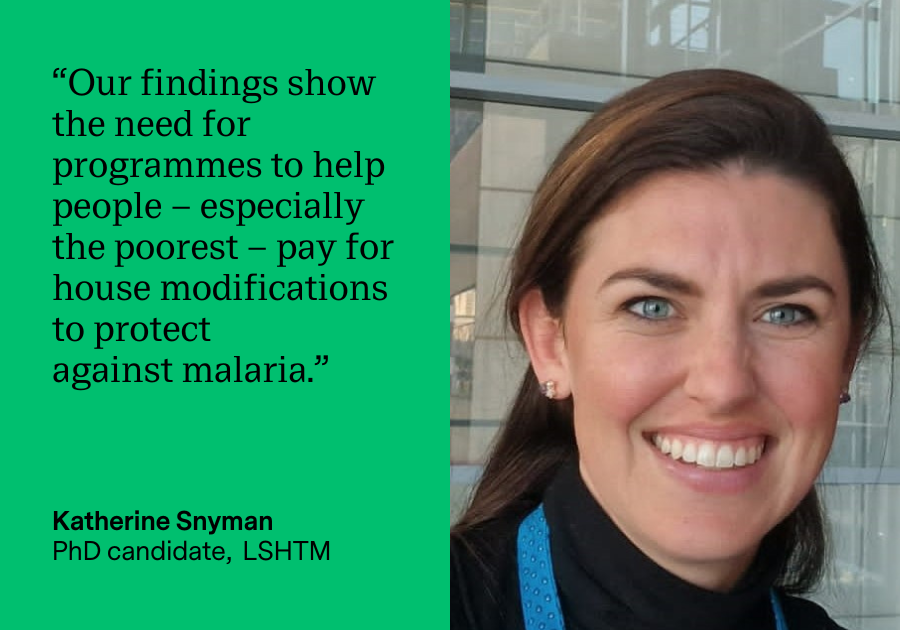
Researchers from the London School of Hygiene & Tropical Medicine looked at the cost for households to install screening and eave tubes to protect against malaria, and surveyed how willing households were to pay these costs as part of a cluster controlled trial in Uganda.
Housing modification is increasingly recognised as a promising intervention for malaria control, particularly as resistance to insecticides and antimalarial drugs grows. However, until now, little evidence has existed on how much these interventions cost or whether households can realistically afford them.
The study found that screening cost at an average of $116 per house, and eaves tubes at a $50 per house. Although these costs translate to relatively modest annual costs per person protected when spread over time, the upfront investment required is substantial for most households. Importantly, installation costs were roughly three times lower in poorer households than in wealthier ones.
When members of households were interviewed about these costs, the authors found that over 75% of people were willing to pay something toward housing modification. However, these contributions represent small fraction of the total costs; this problem was magnified in poorer and more vulnerable households.
Katherine Snyman, PhD student at LSHTM, said: “Housing modification is a promising and potentially equitable malaria intervention, but our findings show a clear financing gap. Expecting households—especially the poorest—to fully self-finance these interventions is unlikely to be feasible.”
The authors conclude that large-scale implementation of housing modification for malaria control will likely require innovative financing approaches, including public or donor funding, targeted subsidies, and co-payment or blended financing models. While some household contribution may be feasible, particularly among wealthier households, ensuring equitable access will require policies that prioritise protection for the most vulnerable.
While these findings and recommendations are tailored to Uganda, the authors note that the advice could inform strategies in other malaria-endemic countries exploring housing-based interventions as part of integrated malaria control strategies.
Read the full paper: Snyman K et al. Housing modification to prevent malaria in Uganda: an analysis of costs, willingness to pay, and equity. Malaria Journal, 2025. DOI: https://doi.org/10.1186/s12936-025-05757-0
If you enjoyed this article and would like to build a career in global health, we offer a range of MSc programmes covering health and data, infectious and tropical diseases, population health, and public health and policy.
Available on campus or online, including flexible study that works around your work and home life, be part of a global community at the UK's no.1 public health university.