World Sepsis Day 2025: 5 Facts x 5 Actions to tackle sepsis and antimicrobial resistance
10 September 2025 London School of Hygiene & Tropical Medicine London School of Hygiene & Tropical Medicine https://lshtm.ac.uk/themes/custom/lshtm/images/lshtm-logo-black.png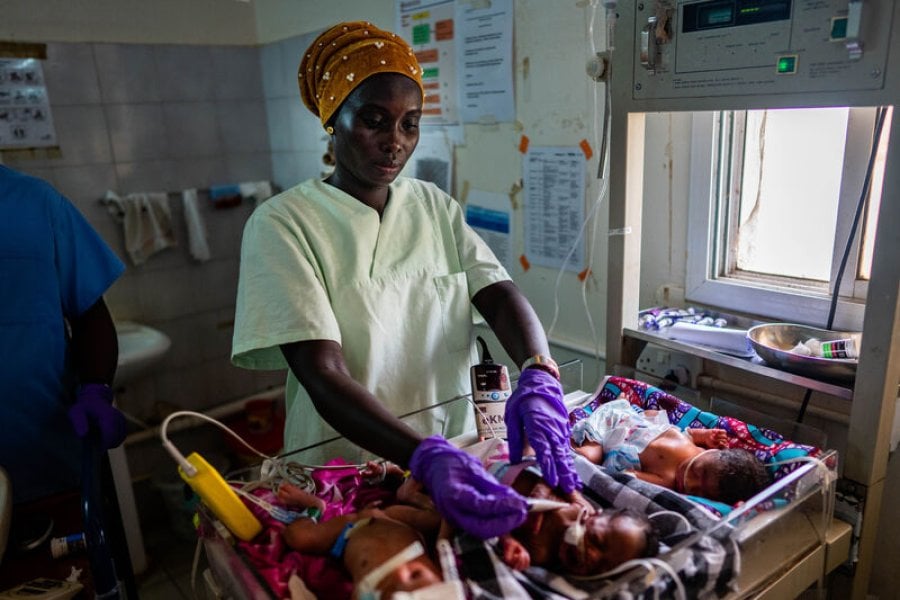
Every three seconds, somewhere in the world, someone dies from sepsis
Yet mention the condition in general conversation in most settings and you may get some blank stares. This disconnect between impact and awareness is not just a communications failure; it is costing millions of lives.
As we mark World Sepsis Day on 13 September, the Global Sepsis Alliance's theme "5 Facts x 5 Actions" highlights five essential truths about the global burden of sepsis and five concrete actions we need to implement urgently.
Sepsis is a medical emergency. It occurs when the body’s response to an infection becomes uncontrolled and starts to damage its own organs. Sepsis develops from infections acquired through various pathways. Newborns face particular risk ranging from mother-to-child transmission during delivery to healthcare-associated infections in neonatal units, where multidrug-resistant organisms increasingly circulate.
Community-acquired pneumonia, urinary tract infections, and wound infections (including at surgical sites) remain common triggers across all ages. Regardless of source, without urgent and appropriate treatment, sepsis can rapidly progress to organ failure and death.
The resulting numbers are staggering: 49 million cases annually, with at least one in every five deaths linked worldwide. Children under five comprise 40% of cases, with the heaviest burden in low- and middle-income countries. Survivors often face lasting physical and cognitive impairments affecting wider economic growth and development.
Yet despite this scale, most deaths are entirely preventable with existing interventions.
Why sepsis and AMR must be tackled together
For those of us working in antimicrobial resistance (AMR), sepsis can represent the ultimate failure point in the health system. It's where multiple factors, such as delayed diagnosis, inadequate infrastructure, and rising resistance, converge with deadly consequences. When antibiotics fail, sepsis kills.
The relationship between sepsis and AMR creates a vicious cycle. The underlying threat of sepsis drives antibiotic overuse through empirical treatment and prophylaxis, potentially accelerating resistance. In turn, resistant infections make sepsis harder to treat, increasing mortality and healthcare costs. Each hour of delayed effective treatment raises the risk of death, and when first-line antibiotics fail, the search for alternatives eats up precious time. In settings where reserve antibiotics are unavailable or unaffordable, these delays become death sentences.
The Institute for Health Metrics and Evaluation and University of Oxford's latest data demands urgent attention: of the estimated 21 million sepsis-related deaths in 2021, approximately 4 million were directly attributable to AMR. Sepsis and AMR are part of the same crisis and must be addressed together. Behind these numbers are devastating realities: newborns dying from multidrug-resistant Klebsiella outbreaks in overcrowded neonatal units, mothers developing untreatable post-partum infections, elderly patients facing life-threatening complications from what should be routine procedures.
The geography of this crisis reveals deep inequities. Recent research from the Mapping Antimicrobial Resistance and Antimicrobial Use Partnership (MAAP) found that 136 million people across 11 Sub-Saharan African countries lack access to antimicrobial susceptibility testing. Without these essential diagnostics, clinicians are forced to prescribe blindly. As resistance patterns evolve and spread, this diagnostic gap transforms from a capacity limitation into a fundamental threat to effective treatment.
Five facts we cannot ignore
1. Sepsis is a leading cause of death worldwide
WHO conservatively estimates 11 million deaths annually, while IHME data suggests the figure approaches 21 million when accounting for sepsis-related deaths. To put this in perspective, that's more than the populations of London and New York City combined, gone every year. Yet sepsis attracts a fraction of the attention given to other major killers.
2. Sepsis strikes the most vulnerable hardest
Twenty million children under five develop sepsis each year, with newborns at particular risk. Pregnant women, elderly individuals, and immunocompromised patients also face disproportionate danger. Critically, 85% of cases occur in low- and middle-income countries, where health system constraints, limited diagnostic capacity, and barriers to accessing care compound the challenge.
3. Most sepsis deaths are preventable
Sepsis prevention does not require breakthrough science. Vaccination, clean water, sanitation, and infection control dramatically reduce risk. When sepsis does occur, rapid detection, appropriate antibiotics and supportive care save lives. In many cases it is the gap between what we know works and what we actually do that drives mortality.
4. National-level plans and local clinical protocols are lacking
Over 180 countries have AMR National Action Plans, but only 15 have national sepsis policies. This fragmentation means we're fighting related battles with uncoordinated strategies, missing opportunities for coordinated interventions.
5. A stronger sepsis response is essential for global health
How a country manages sepsis can reveal the strength of its health system - from vaccine delivery and infection prevention to emergency care and intensive treatment. Improving sepsis outcomes means strengthening laboratory networks, supply chains, workforce capacity, and emergency response systems. This can make sepsis both a marker of health system performance and a pathway to achieving many Sustainable Development Goals.
Five actions that could save millions
1. Prioritise and fund national sepsis responses
Governments need comprehensive sepsis strategies embedded within universal health coverage reforms and aligned with AMR plans. This is not about creating another vertical programme but integrating sepsis prevention and management into existing health system strengthening efforts, with dedicated funding and clear accountability.
2. Equip and train healthcare workers at every level
Evidence-based guidelines, including first-hour care bundles, should be implemented at every level of care, not just tertiary hospitals. This means training all healthcare workers, from community health workers who might first identify warning signs to intensive care specialists. Point-of-care diagnostics (particularly for vulnerable populations like newborns) could transform early detection. Protocols must be adapted to local contexts and resource availability.
3. Invest in science, diagnostics and surveillance
Beyond developing new vaccines and therapeutics, the urgent need is to deploy existing diagnostic tools where the burden is the highest. Funders should further prioritise strengthening global microbiology capacity, implementing rapid diagnostics, and building surveillance systems that generate actionable data. These investments enable targeted treatment and evidence-based public health responses.
4. Raise public and professional awareness
Sepsis must become a household word globally. Public health campaigns should mirror successful stroke and heart attack awareness efforts, teaching communities to recognise warning signs and seek immediate care. For healthcare professionals, single training sessions aren't enough; continuous updates on local resistance patterns and evolving protocols are essential. The message to both groups is clear: antibiotics save lives in sepsis today, but misuse threatens our ability to treat it tomorrow.
5. Embed sepsis in pandemic and emergency preparedness
Sepsis surges during every crisis, whether a pandemic, conflict, or natural disaster. Preparedness plans must anticipate this, ensuring uninterrupted access to antibiotics, diagnostics, and critical care capacity.
Moving forward together
On this World Sepsis Day, the path forward is clear. The five actions outlined above, from integrating national sepsis policies with AMR strategies to building diagnostic capacity where the burden is greatest, provide a roadmap that could save millions of lives. We have the evidence and many of the tools. What we desperately need is renewed political momentum and sustained investment in implementation, including the research to adapt solutions to local contexts.
The convergence of sepsis and AMR isn't just another global health challenge; it's an opportunity to strengthen health systems at every level.
The clock keeps ticking. Three seconds just passed, another preventable death.
The question isn't whether we can address this crisis, but whether we will.
The time for action is now.
Further reading and references at Global Sepsis Alliance's "5 Facts x 5 Actions" Policy and Media Brief
If you enjoyed this article and would like to build a career in global health, we offer a range of MSc programmes covering health and data, infectious and tropical diseases, population health, and public health and policy.
Available on campus or online, including flexible study that works around your work and home life, be part of a global community at the UK's no.1 public health university.