Why the Unit’s General Population Cohort Matters for the Next Decade of Global Health Research
16 December 2025 London School of Hygiene & Tropical Medicine London School of Hygiene & Tropical Medicine https://lshtm.ac.uk/themes/custom/lshtm/images/lshtm-logo-black.png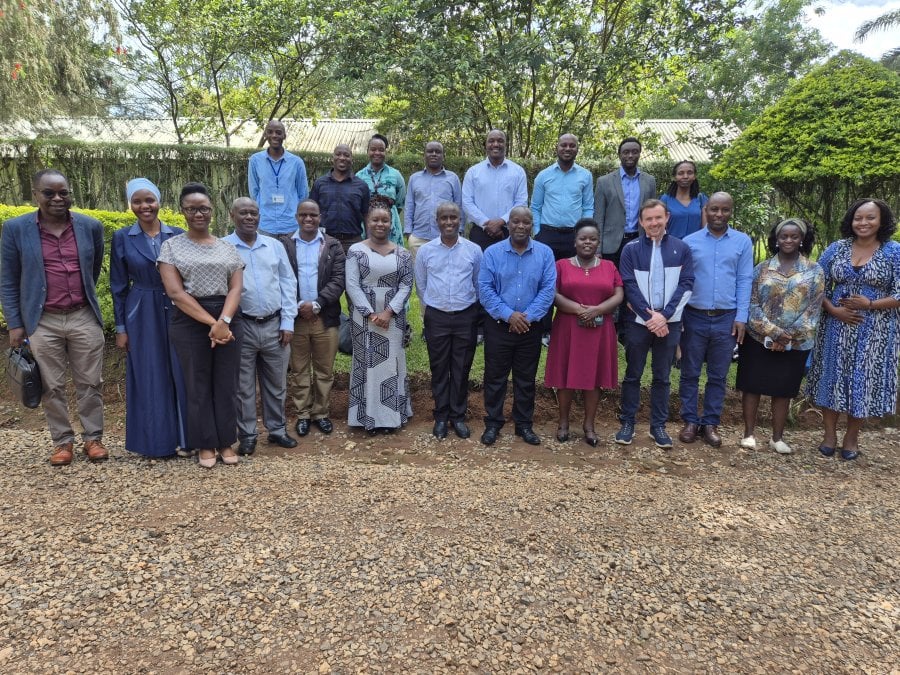
Research leaders and research teams at the MRC/UVRI and LSHTM Uganda Research Unit gathered in Kyamulibwa, Uganda, at a pivotal moment for one of Africa’s longest-running population cohorts. As fieldwork for GPC Round 28 entered its final phase, attention turned firmly to the future, and how to design Round 29 in ways that strengthen the scientific value, accessibility and global relevance of the General Population Cohort (GPC).
Rather than focusing on operational detail, the workshop set out to position the GPC as a world-class, multi-disciplinary research platform that can support researchers seeking high-quality longitudinal data from sub-Saharan Africa.
A rare population resource with global relevance
The GPC is among a small number of longitudinal population cohorts worldwide that follow entire communities over multiple decades. Unlike disease‑specific or age‑restricted studies, it captures health, social and behavioral change across the life course, supported by repeated surveys, clinical measurements and a growing biobank.
Over the years, this platform has facilitated major advancements in HIV research, vaccine and non‑communicable disease studies, attracting substantial international investment. As health priorities evolve, the GPC is increasingly positioned to support research beyond HIV, including diabetes, cardiovascular disease, mental health, climate‑related health risks and emerging infections.
The value of the cohort lies not only in its scale and duration, but in its flexibility. New scientific questions can be layered onto a stable longitudinal backbone, allowing both trend analysis and innovation.
HIV research in a changing epidemic
HIV surveillance remains a core strength of the GPC. Preliminary findings from Round 28 show sustained declines in incidence over time, alongside persistent vulnerabilities that demand renewed attention. New infections continue to affect particular demographic groups, especially young women, while gaps in viral suppression among men highlight ongoing treatment and prevention challenges.
Round 29 planning reflects this changing epidemic. Researchers are expanding focus beyond traditional prevention approaches to include partner notification strategies, HIV self‑testing, and the growing role of pre‑exposure prophylaxis (PrEP), including long‑acting injectable formulations. There is also renewed emphasis on understanding mother‑to‑child transmission pathways, where longitudinal data can provide insights that cross‑sectional studies cannot.
The GPC offers a unique opportunity to examine how prevention technologies are understood, accessed and used in rural settings.
Expanding research opportunities
The workshop highlighted the cohort’s expanding contribution to non‑communicable disease research. Large‑scale diabetes screening has revealed substantial levels of undiagnosed disease and pre‑diabetes, while ongoing studies are exploring African‑specific metabolic profiles, cardiovascular risk and eye health.
Vaccines represent another strategic growth area. With clinical trial capacity already demonstrated and complementary social science research underway, the GPC is increasingly positioned as a platform for studying vaccine development, uptake and decision‑making across diverse communities.
To support long‑term comparability, Round 29 will maintain a small set of core health indicators collected consistently over time, while allowing targeted expansion through funded research partnerships. This balance protects the cohort’s longitudinal value while remaining responsive to emerging global health priorities.
Addressing contemporary areas of research
Looking ahead, the GPC is preparing to engage more systematically with areas that are rising rapidly on the global research agenda. Plans are underway to strengthen population‑level evidence on mental health and its interaction with chronic disease, livelihoods and social change.
Climate and environmental health also featured prominently in discussions. By linking long‑term health data with environmental and climate monitoring, the cohort can help answer pressing questions about how heat, rainfall variability and extreme events affect disease patterns, nutrition and wellbeing.
All expansion into sensitive research areas will be guided by strong ethical frameworks and community partnerships, ensuring that scientific ambition is matched by responsibility.
A platform designed for collaboration
A key theme of the workshop was making the GPC easier to engage with for external partners. Ongoing investments in data systems and biobanking aim to ensure that survey data, clinical information and biological samples can be accessed efficiently and reliably for approved research.
For researchers and students, this means clearer pathways to secondary data analysis, doctoral and postdoctoral projects, and collaborative grant applications. It also strengthens the cohort’s role as a sustainable research infrastructure that can support multiple studies over time.
The GPC is actively seeking partnerships that prioritise shared scientific leadership, skills development and long‑term capacity, ensuring that collaboration leads to enduring impact, not just individual projects.
Working with communities, shaping the future
At the heart of the GPC are the communities that have participated for decades. Plans for Round 29 place renewed emphasis on engagement, feedback and transparency, sharing findings in accessible formats and strengthening dialogue with local leaders and participants.
As Round 28 concludes and Round 29 takes shape, the Kyamulibwa workshop marked a clear shift in direction from maintaining a successful cohort to fully realising its potential as a global public health research platform.
The General Population Cohort is not only a record of past health trends, it is a living resource, designed to answer the next generation of questions shaping health in Africa and beyond.
If you enjoyed this article and would like to build a career in global health, we offer a range of MSc programmes covering health and data, infectious and tropical diseases, population health, and public health and policy.
Available on campus or online, including flexible study that works around your work and home life, be part of a global community at the UK's no.1 public health university.