Study reveals widening heart disease inequalities in England after the COVID-19 pandemic
10 November 2025 London School of Hygiene & Tropical Medicine London School of Hygiene & Tropical Medicine https://lshtm.ac.uk/themes/custom/lshtm/images/lshtm-logo-black.png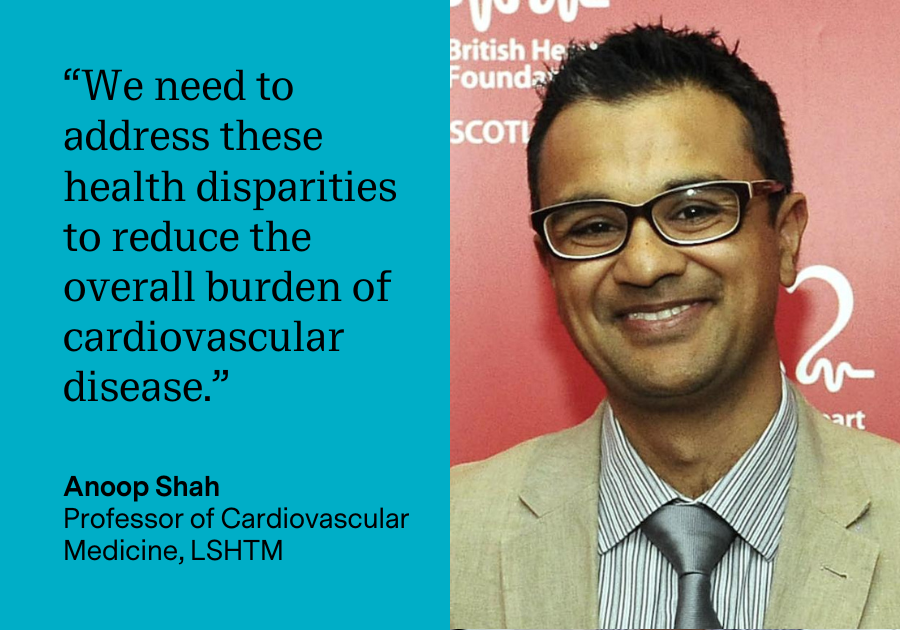
The study was funded by the British Heart Foundation Data Science Centre and is published in The Lancet Public Health.
Led by researchers at the University of Edinburgh, UCL and the University of Cambridge, along with other institutions including the London School of Hygiene & Tropical Medicine (LSHTM), the study looked at anonymous electronic health records for 57 million people living in England from 2020 to 2024.
They included 79 common and rare cardiovascular diseases, analysing the number of new and existing diagnoses, the rate of heart attacks and strokes, and the number of deaths.
The COVID-19 pandemic resulted in disruption to routine care for heart conditions. The data reveals an increase in the risk of complications, including ischaemic stroke and heart failure, among those with existing conditions following the pandemic, as well as higher rates of new cases of cardiovascular disease compared to before the pandemic.
The study found that new diagnoses of heart conditions dropped during the first COVID-19 lockdown in 2020. During this period, people who were diagnosed were more likely to die than at other times between 2020 and 2024. The study did not investigate reasons behind these trends, but the authors suggest this may be because health services were under extreme strain, and only those who were severely unwell sought medical help.
The researchers found higher burdens of cardiovascular diseases among men, people with multiple long-term conditions, and Asian or Black ethnicities. Geography and deprivation also influenced cardiovascular health, with higher death rates from heart attacks and strokes observed in the North, Midlands, and parts of the South, as well as in some coastal areas of the East.
Professor Anoop Shah, Professor of Cardiovascular Medicine at LSHTM and a co-author on the paper, said:
“This study highlights how patterns of cardiovascular disease shifted in England during and after the COVID-19 pandemic. Notably, the burden of major cardiovascular conditions was higher among individuals from disadvantaged socioeconomic backgrounds and certain ethnic minority groups. We need to address these health disparities to reduce the overall burden of cardiovascular disease.”
Dr Elias Allara, Clinical Research Fellow at the University of Cambridge and lead author of the study, said:
“This study paints England’s burden of cardiovascular disease in unprecedented detail, and research like this is only possible at low cost by leveraging and linking health data on a whole population scale. By revealing where the biggest gaps are in cardiovascular diagnosis and care, our findings lay the groundwork for action to tackle these important inequalities.”
A dashboard to help researchers, policymakers and the public access and better understand the findings will be available on the BHF’s Data Science Centre’s website.
The authors acknowledged limitations in their research including the short 4.5-year period of the dataset which restricted their ability to observe long-term trends, particularly those that started before the COVID-19 pandemic.
This story is based on an original press release Health Data Research UK.
Publication
Allara et al. Burden of cardiovascular diseases in England (2020–24): a national cohort using electronic health records data. Lancet Public Health. DOI:10.1016/S2468-2667(25)00163-X
If you enjoyed this article and would like to build a career in global health, we offer a range of MSc programmes covering health and data, infectious and tropical diseases, population health, and public health and policy.
Available on campus or online, including flexible study that works around your work and home life, be part of a global community at the UK's no.1 public health university.