Spotlight: Uchenna Ebenezer
24 November 2025 London School of Hygiene & Tropical Medicine London School of Hygiene & Tropical Medicine https://lshtm.ac.uk/themes/custom/lshtm/images/lshtm-logo-black.png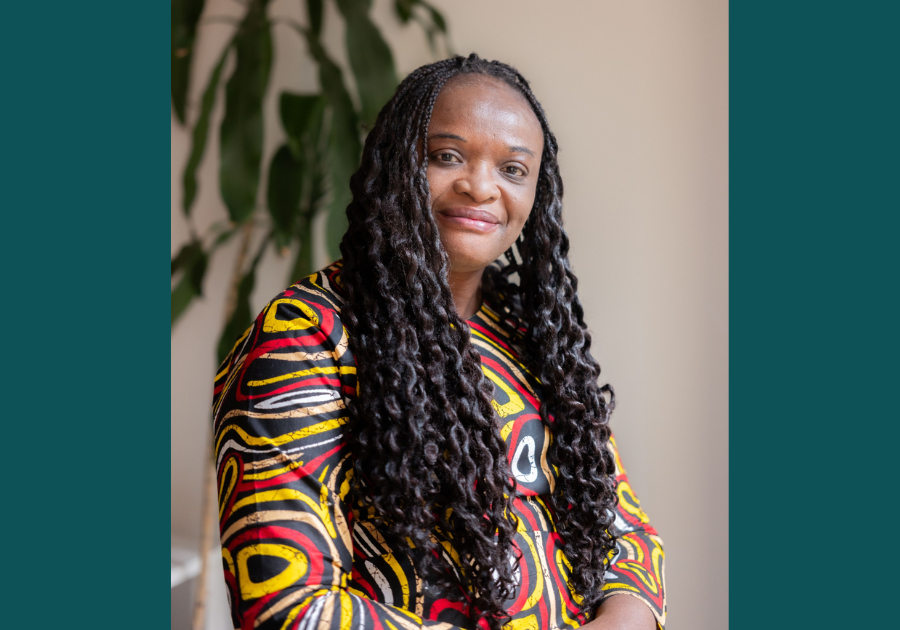
Uchenna Ebenezer is a PhD student at the London School of Hygiene & Tropical Medicine (LSHTM), and new Student Centre Ambassador for its Centre for Evaluation. In her ambassador role, Uchenna helps to organise events and initiatives for, and represent the views of Research Degree Students to, the Centre.
In this interview, we asked Uchenna about her journey to LSHTM, her current PhD research and why she thinks evaluation methods are essential for public health research.
Tell us about your background, and how you came to study at LSHTM
I’m originally from Nigeria. I hold a bachelor’s degree in pharmacy from the University of Nigeria, Nsukka as well as dual master’s degrees: a Master of Science in Health Economics, Management, and Policy, and a Master of Public Health (Epidemiology). I have a civil society background and have worked in many projects within the Nigerian health system across many indigenous and international development organizations.
My interest in health economics, and specifically health financing, started when I led the capacity building component of the USAID funded Malaria Action Program for States (MAPS) in Ebonyi State, South-East, Nigeria. I led the process of developing and reviewing Annual Operational Plans (AOPs) for malaria elimination at the state level and navigating the contextual resource-constrained environment to drive its funding and implementation. During that period, I also came top in the health financing course in my MSc cohort.
Interestingly, nearly all the papers and frameworks we reviewed during the MSc programme were written by authors at the London School of Hygiene & Tropical Medicine. When I saw this, it confirmed to me that LSHTM was the right place for my PhD. I’ve been able to start my PhD fellowship with support from the European and Developing Countries Clinical Trials Partnership (EDCTP) funded West African Network for HIV, TB and Malaria (WANETAM) - TALENT Programme. So far, it’s been an awesome experience of new learning, unlearning and relearning.
What made you interested in joining the Centre for Evaluation and become one of its Student Centre Ambassadors?
I have led and co-led the design and implementation of many public health interventions in my home country. The interventions all had some form of baseline, process and endline evaluation but what I found most interesting was the process evaluation. For the baseline and process evaluation, I had some direct involvement via my role as an implementer, and I was able to adopt the findings to improve project performance.
I’ve had a long-standing interest in evaluation methods. When I discovered the Centre’s activities through the Centre’s school-wide emails and Chariot Newsletter, I saw it as an opportunity to contribute my experience and also learn new ideas and skills in evaluation, particularly end- of- project evaluation.
What would you like to do/achieve as a Student Centre Ambassadors for the Centre?
I want to be able to contribute to the Centre’s activities by participating in the design and/or implementation of any project and use it as a platform to showcase the valuable contribution of research degree students. I also want to leave the Centre equipped to explore international consultancy assignments in evaluation after my PhD programme.
Could you summarise, in your own words, why you think the work of the Centre for Evaluation is so important?
The work of the Centre is important because evaluation summarily reveals whether an intervention has worked (based on established outcome/impact indicators), why it has worked (context), and how it can be sustained or reproduced.
With the current dwindling global funding climate, the Centre’s activities have become increasingly important, especially in low- and middle-income countries (LMICs). Collectively, we need to evaluate previous externally funded projects to understand how domestic resources could be leveraged more to sustain existing gains and surpass originally set targets. An important means of achieving this is through the deployment of rigorous evaluations of the public health interventions promoted by the Centre. Ideally, these assignments will be collaborative, integrating diverse skill sets from across geographic contexts.
Tell us a bit about your current research, and how it relates to the Centre.
My current research examines how pandemics affect the functions and coverage of social health insurance in LMICs. Specifically, it investigates how pandemics such as COVID-19 disrupt key financing functions - revenue raising, pooling, and purchasing - alongside service coverage, financial risk protection, and population coverage within the social health insurance ecosystem.
A central focus of my project is understanding the impact that COVID-19 may have had on social health insurance in Nigeria, at the national and the sub-national levels. I’m specifically exploring relationships with financing mechanisms and COVID’s consequences for service coverage and financial risk protection among enrolees. The research contributes to the Centre’s work in understanding how interventions work, the impact of COVID-19 on interventions and its broader implications for global health.
How does the Centre support your research and work?
Part of my learning process within the Centre will be to sharpen my skills in critiquing project reports and research articles, which is a necessity for experts involved in evaluation. I am also eager for some technical support from the outstanding team of experts within the Centre as I conduct my research.
Where do you think your research will take you and what are your next steps?
Before my PhD, a huge part of my global picture has been to lead the design and implementation of related multi-country health financing and health systems strengthening interventions.
With the universal health coverage (UHC) 2030 milestone approaching, I hope that my experience and research will position me to contribute to the expansion of social health insurance programmes in LMICs. Ultimately, my goal is to support progress toward UHC in LMICs, even amid the likelihood of future pandemics. As I transition into a postdoctoral role, I also intend to pursue a blend of industry and academic work, depending on where opportunities arise.
What are some of the broader, real-life implications of your work?
As a female African scientist, there are challenges facing the female gender in our context towards achieving professional and academic dreams. These cannot be overlooked, swept under the carpet or seen as the usual rhetoric. They are real! From the family to the workplace and the larger societal expectations, the African female scientist must navigate all of that to succeed. Where I am coming from is largely male dominated across all spheres, and as a female, it takes a lot of courage to keep pushing to the end.
Tackling challenges in LMICs such the duo of pandemics and health financing requires recognizing that global health issues know no borders. While many leadership roles are based in high-income countries, hands-on field experience in LMICs is essential for balance. My work combines extensive and fulfilling field experience with rigorous academic training at LSHTM, a combination that is vital in today’s constrained funding landscape to improve access to equitable healthcare particularly in LMICs.
What do you like doing outside of LSHTM and your PhD/studies?
I have a lovely small nuclear family, so I value our time together: cooking, travelling and bonding as one. I am a Christian, so I enjoy reading my Bible and Christian blogs from my favourite speakers. I also play technical advisory roles in community-based organisations -implementing interventions in HIV and AIDS, Tuberculosis and Malaria.
What advice do you have for your fellow students?
Do not just pass through LSHTM as a student without contributing to the LSHTM community! Ensure you take all you can from LSHTM before you graduate and maintain the connections thereafter.
If you enjoyed this article and would like to build a career in global health, we offer a range of MSc programmes covering health and data, infectious and tropical diseases, population health, and public health and policy.
Available on campus or online, including flexible study that works around your work and home life, be part of a global community at the UK's no.1 public health university.