Researcher spotlight: Desta Debalkie Atnafu
10 October 2025 London School of Hygiene & Tropical Medicine London School of Hygiene & Tropical Medicine https://lshtm.ac.uk/themes/custom/lshtm/images/lshtm-logo-black.png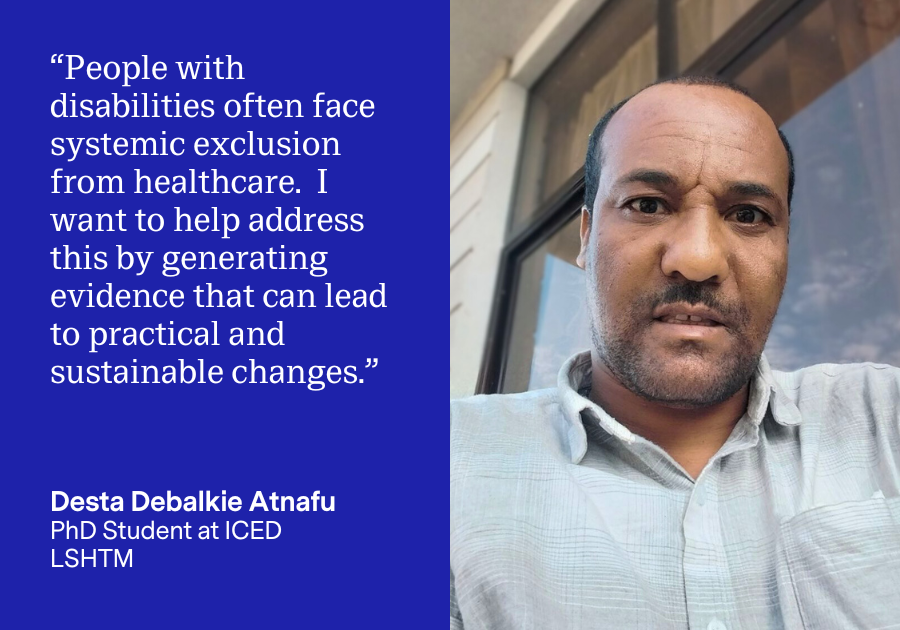
What is your role at LSHTM and ICED?
I’m currently in the fourth year of my PhD study at ICED, LSHTM, supervised by Professor Hannah Kuper and Dr Femke Bannink Mbazzi. My research explores access to healthcare for people with disabilities in Ethiopia.
Alongside this, I am also a fellow with the Missing Billion Initiative, where I am supporting efforts to document exemplary best practices for disability inclusion in Ethiopia’s health sector, which can also serve as an example for inclusive initiatives on a global scale.
Tell us about yourself and your background
I was born and raised in the rural highlands of northwestern Ethiopia, in a low-income family without formal education. At a very young age, I developed a mobility impairment due to poliomyelitis, which resulted in restricted anatomical functioning of my left leg.
I didn’t start attending school until I was nine years old because it was so far away from home. Even then, going to school meant walking at least 20 kilometres each day, often without family support or enough food. Life was difficult, but I was determined to pursue my education.
I have faced discrimination at many points throughout my life, most notably in my academic and professional journey. As an undergraduate, although I was initially placed in the nursing programme, I was redirected to environmental health because of my disability. I was told I would be unable to perform certain clinical tasks such as wound care. Later, I was accepted into a Master’s programme in field epidemiology, but the opportunity was revoked over assumptions about the fieldwork requirements, which they claimed I could not fulfil as a person with a disability. Despite scoring the eighth-highest mark out of 1,500 candidates in the national medical school entrance exam, I was denied admission to medical school – and with it the right to be a medical doctor – solely because of my disability.
Despite all these setbacks, I won a scholarship from Sida (The Swedish International Development Cooperation Agency) and earned a Master's degree in Health Management from Addis Ababa University. After that, I worked as an academic and lecturer at the University of Gondar and later joined Bahir Dar University, where I’ve been a faculty member in the School of Public Health since 2016 and am currently based. Since then, I have worked as an academic and researcher, publishing more than 30 articles in peer-reviewed journals. Currently, I am also pursuing my PhD in Epidemiology and Population Health at LSHTM, having been awarded the Younger Family Foundation Scholarship to support my studies.
Tell us about your research
My PhD work brings together five interlinked components:
- First, I reviewed global research to compare life expectancy among people with and without disabilities in low- and middle-income countries (LMICs).
- Next, I used national survey data to examine inequalities in health and healthcare use in Ethiopia.
- I also carried out interviews to understand what helps or hinders people with disabilities from accessing healthcare, with the results recently published in PLOS Global Public Health.
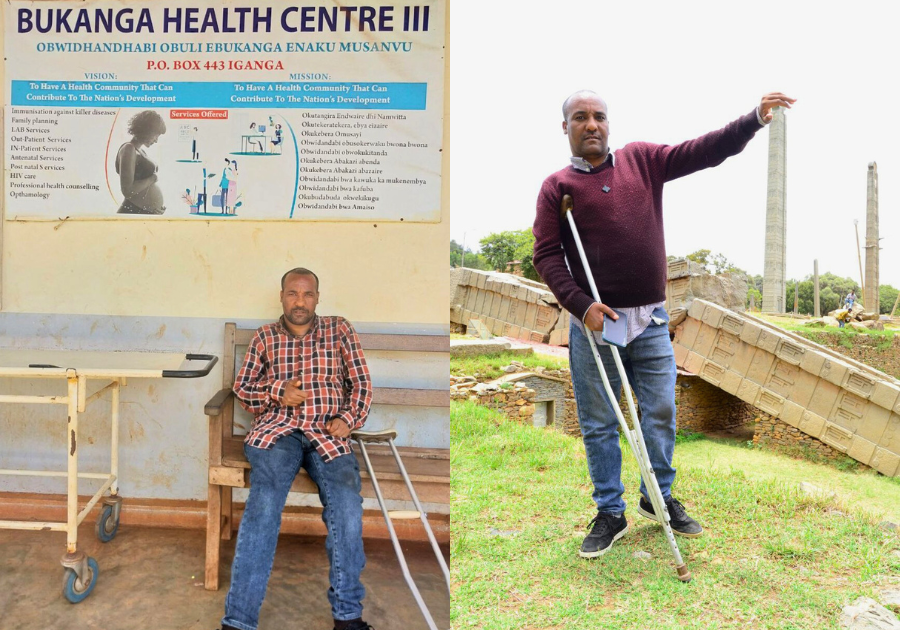
- In addition, I carried out an accessibility assessment of primary healthcare facilities in Bahir Dar.
- I am now conducting a policy analysis of how disability is represented in both mainstream and disability-specific national healthcare strategies in Ethiopia.
Overall, my research spans health systems and policy, health economics, healthcare financing, and human resources for health. But disability research, especially access to healthcare for people with disabilities in LMICs, is where my heart lies. This research is more than academic for me – it’s deeply personal. It reflects my lived experience as a disabled person navigating an often inaccessible health system, and my commitment to ensuring future generations don’t have to face the same barriers.
What impact do you hope your research will have?
My hope is that my research can inform policy and practice in Ethiopia and beyond, particularly in LMICs where research outputs on disability and healthcare access are very limited. People with disabilities often face systemic exclusion from healthcare, and I want to help address this by generating evidence that can lead to practical and sustainable changes.
Ultimately, I want this research to influence national health policy so that disability inclusion becomes a central feature of Ethiopia’s health system and serves as a best practice for other countries striving for equity in healthcare access.
What do you like to do in your free time?
When I’m not working or studying, I enjoy visiting nearby tourist sites like Lake Tana and spending time near the water to appreciate the beauty of nature. I also like visiting my family in the countryside whenever I get the chance. I attend church ceremonies, read the Holy Bible and enjoy watching TV to relax. I also enjoy cooking simple, common Ethiopian dishes. These moments allow me to reflect, recharge, and return to my research with a renewed sense of purpose.
Where do you take inspiration from?
My greatest source of inspiration has always been my upbringing. Growing up in a low socio-economic environment, I quickly learned that hard physical labour was my family’s primary means of survival, and that education was my only pathway to a different future. As my father told me: “If you can’t survive through physical work, you must survive by learning.” For this, I am deeply grateful to my family, my broader community, my school mentors, and the church scholars who shaped my early education.
If you enjoyed this article and would like to build a career in global health, we offer a range of MSc programmes covering health and data, infectious and tropical diseases, population health, and public health and policy.
Available on campus or online, including flexible study that works around your work and home life, be part of a global community at the UK's no.1 public health university.