Research Consortium showcases power of evidence on school meals at 2nd Global Summit of the School Meals Coalition
19 September 2025 London School of Hygiene & Tropical Medicine London School of Hygiene & Tropical Medicine https://lshtm.ac.uk/themes/custom/lshtm/images/lshtm-logo-black.png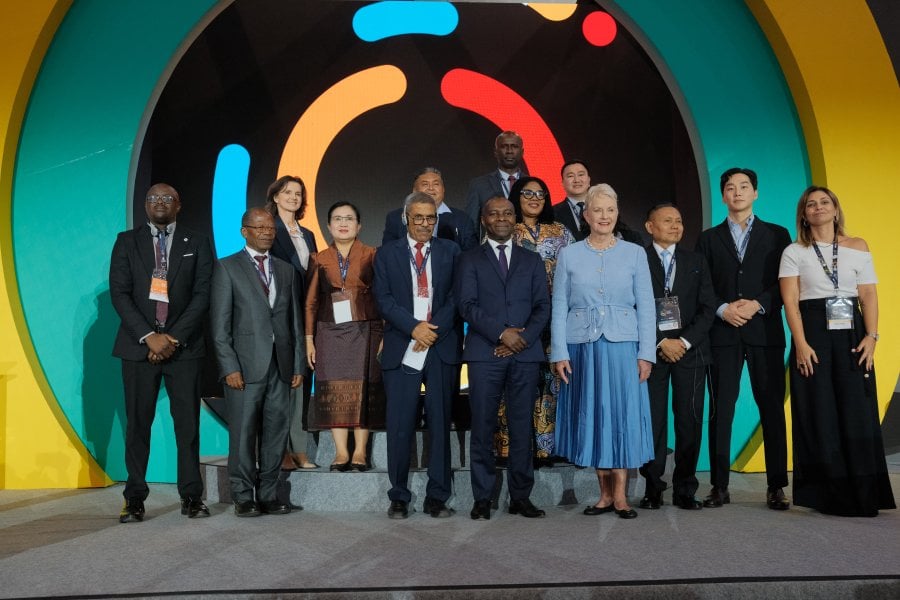
The Research Consortium for School Health and Nutrition played a central role at the 2nd Global Summit of the School Meals Coalition (SMC), demonstrating how independent evidence is driving the expansion of school feeding programmes that now reach 466 million children daily worldwide.
Hosted in Fortaleza under the presidency of President Lula da Silva, the Summit brought together governments, researchers, and practitioners. Two new countries joined the Coalition, raising membership to 111 committed to ensuring every child receives nutritious meals by 2030.
Science Day: Global Evidence in Action
The Consortium opened the Summit on 17 September with International School Meals Science Day, drawing 324 participants from 82 countries.
- Value for money: Professor Stéphane Verguet, from Harvard University, presented analysis showing school meals consistently benefit the poorest populations, with transfers representing up to 9% of household expenditures for the most vulnerable families. Dr. Fentabil Getnet presented Ethiopia's national value-for-money study, demonstrating that every dollar invested yields $4 in benefits.
- Good practice: Professor Sylvie Avallone from L’Institut Agro Montpellier reported 55 national case studies are now underway to capture best practices across SMC member states, with plans to produce one with every SMC member state and analyse findings for peer-to-peer learning.
- Planet-friendly meals: Professor Marco Springmann from the EAT-Lancet Commission presented modelling showing that universal provision could cut undernourishment by 20% in low-income countries while reducing environmental impacts. He also previewed a new sustainability toolkit that will be available to governments to help identify the most effective country-specific approaches to improving the environmental impact of their national programmes.
- Growing Cross-Sectoral Recognition: The event demonstrated school meals' recognition as mainstream public policy across sectors. UNESCO's Manos Antoninis presented joint research on the symbiotic relationship between education and nutrition, while World Bank's Luis Benveniste emphasized school meals as strategic development investments. Professor Dean Jamison from the World Bank's Disease Control Priorities series highlighted school-age children as critical for reducing long-term population health inequalities.
- Brazil spotlight: Researchers, policymakers, and practitioners from Brazil shared the role of evidence in guiding Brazil’s exemplary PNAE programme, which is the second-largest in the world, feeding 39 million children every day, enshrined in the constitution and requiring 30% of procurement from smallholder farmers.
Watch the Science Day recording
Summit Session 2: Using What Works
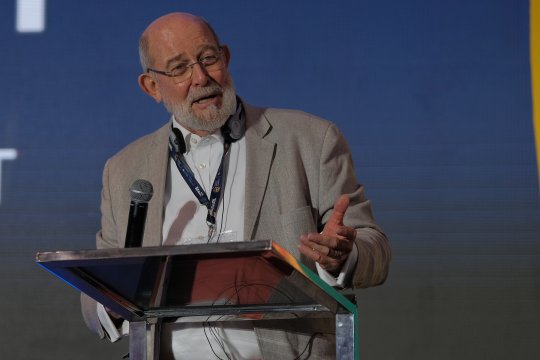
On 18 September, the Consortium hosted “Using What Works—Stronger Evidence to Support Decision-Makers.” Professor Donald Bundy set the stage with a global briefing on school meals’ transformative role in human capital and planetary health.
Government leaders then shared evidence-driven successes:
- Brazil uses data tracking for procurement transparency and cost efficiency.
- Mozambique applied value-for-money analysis to strengthen implementation across education, health, agriculture, and social protection.
- Bangladesh scaled its programme to 3.1 million children after WFP studies supported expansion.
- Ghana grew from 10 schools in 2005 to over 12,000 today, serving 4.2 million children thanks to evidence-based targeting.
- African Union expanded daily meals from 13 million children in 2013 to 87 million today, nearly all domestically funded.
Longstanding programmes in South Africa, Sweden, and Japan also shared how continuous evaluation keeps them effective.
Summit Session 4: Food Systems for the Future
On 19 September, Professor Bundy joined WFP Assistant Executive Director Valerie Guarnieri for a fireside chat on school meals and sustainable food systems. Drawing on the Consortium’s 2023 white paper, he outlined short-term policy levers – nutritious local menus, clean cooking, waste reduction, and food education – alongside longer-term reforms to embed sustainability in food standards.
Country Successes and Global Momentum
Countries across sessions highlighted how evidence has fuelled progress: China reached 38 million students, boosting farmer incomes by 45%; Canada secured permanent funding for its new national programme; South Africa tracks 50,000 school visits annually; and Ukraine expanded coverage to 1.6 million children despite conflict.
The Summit closed with strong momentum for evidence-led expansion of school meals, affirming the Research Consortium as the scientific backbone of the Coalition and a trusted partner to all 111 member states.
Publications launched at the Summit
- Annual Research Statement to the Global Summit of the School Meals Coalition 2025
- Research Consortium Global Evidence Brief 2025
- School Meals Case Study: Brazil (Working Paper)
- Disease Control Priorities: Fourth Edition, Chapter 20 "Cross-National Experiences on Child Health and Development during School Age and Adolescence: The Next 7,000 Days"
- Springmann et al. The health, environmental, and cost implications of providing healthy and sustainable school meals for every child by 2030: a global modelling study The Lancet Planetary Health
- State of School Feeding Worldwide 2024
If you enjoyed this article and would like to build a career in global health, we offer a range of MSc programmes covering health and data, infectious and tropical diseases, population health, and public health and policy.
Available on campus or online, including flexible study that works around your work and home life, be part of a global community at the UK's no.1 public health university.