A hotter, more disease-prone world: Why COP30 must put children’s health first
14 November 2025 London School of Hygiene & Tropical Medicine London School of Hygiene & Tropical Medicine https://lshtm.ac.uk/themes/custom/lshtm/images/lshtm-logo-black.png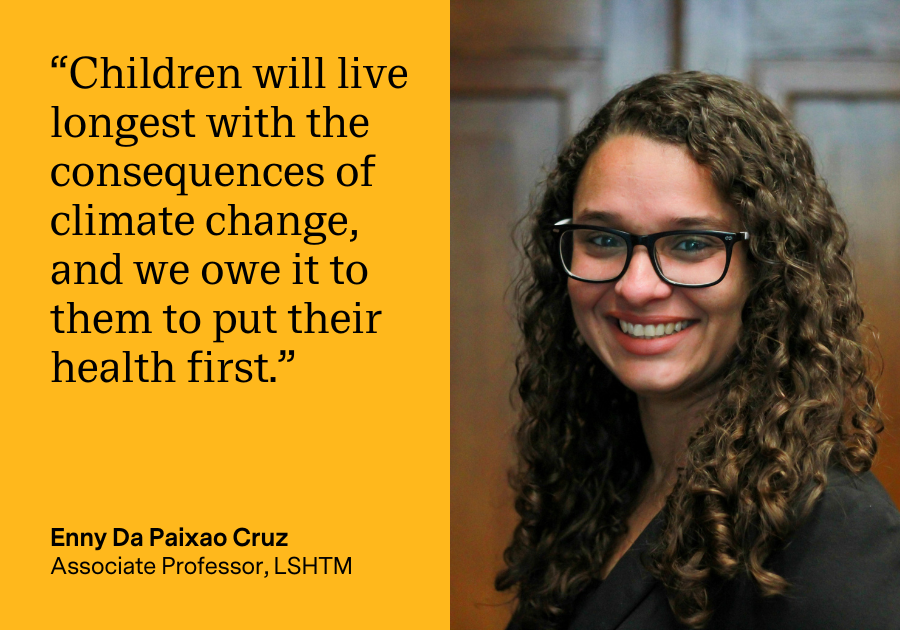
Record-breaking dengue epidemics year after year, chikungunya emerging in regions where it was previously unseen; rising temperatures are driving major shifts in infectious disease patterns.
But not enough attention is being given to how these shifting dynamics are damaging children’s health.
The sad truth is that children conceived and born today in an ever hotter, more disease-prone world, will face challenges that begin before birth and persist throughout their lives.
With COP30 happening now in Brazil – a country of vast ecological diversity, home to the Amazon rainforest, and endemic for several vector-borne diseases such as dengue, Zika and chikungunya – this is a pivotal moment. We have a unique opportunity to advance this research agenda.
During my career, I’ve worked across a range of infectious diseases in various capacities, focusing particularly on their harmful effects during pregnancy and the lasting consequences for both mothers and their children. Having studied climate-sensitive diseases such as dengue and Zika, I am acutely aware of how new and emerging infections can profoundly impact some of the most vulnerable groups in society – especially children, unborn babies, and pregnant women.
Climate change has become one of the greatest threats to human health, with growing evidence that a warming climate is increasing the risk of many infectious diseases I have researched and remain deeply interested in. I believe this represents one of the most significant challenges children will face in the future, and it is something we can no longer afford to overlook.
I am now combining my expertise in infectious disease epidemiology with research on environmental exposures – including those influenced by climate change – to better understand how these early-life exposures affect child health and development. These two areas are deeply interconnected, as one of the key consequences of a warming world is the increasing burden of infectious diseases. Studying these threats will provide a more comprehensive understanding of the challenges to child health in a changing world.
My research so far has used a linked data resource, the CIDACS Birth Cohort, to investigate the long-term impacts of early-life exposure to infectious diseases. Using this platform, I have shown that exposure to dengue, Zika, and chikungunya viruses before birth increases the risk of adverse birth outcomes, as well as hospitalisation and death in early life.
Building on this work with colleagues at the Center for Data Integration and Knowledge in Health (Centro de Integração de Dados e Conhecimentos para Saúde, CIDACS), we are now expanding the potential of this data platform by developing a comprehensive climate–health infrastructure that combines environmental and climate variables, such as temperature and rainfall, with our existing cohort data, which includes rich health and social information.
We want to understand how growing up in a warming world affects people’s health by examining both the immediate impacts of environmental changes and their long-term effects throughout life, and explore how infectious diseases might influence these outcomes. This work will also help identify who is most affected by climate-related health risks, highlighting the periods of greatest vulnerability and the communities experiencing poverty, where existing inequalities further amplify the effects of climate change.
Recent research from Brazil shows that high temperatures increase the risk of deaths among children under five, including from infectious causes.
In time for COP30, we have also contributed new data on the future impacts of climate change on child health in Brazil to an LSHTM led white paper that presents the latest global evidence on climate-related threats to maternal, newborn and child health.
Taken together, the combined pressures of rising temperatures, shifting infectious disease patterns, and early-life vulnerability threaten child health in ways that can reverberate across generations. Robust evidence on how warming temperatures and climate-sensitive infections affect children must now be translated into concrete public health action to ensure that adaptation strategies protect the youngest and most vulnerable.
As we approach Children and Youth Day at COP30, there is a timely opportunity to bring these issues to the forefront of the global climate agenda. Hosting the conference in Brazil, where climate change, infectious diseases, and social inequalities intersect most sharply, provides an ideal setting to elevate child health in climate discussions and to catalyse commitments that drive meaningful change.
Children will live longest with the consequences of climate change, and we owe it to them to put their health first.
If you enjoyed this article and would like to build a career in global health, we offer a range of MSc programmes covering health and data, infectious and tropical diseases, population health, and public health and policy.
Available on campus or online, including flexible study that works around your work and home life, be part of a global community at the UK's no.1 public health university.