Global plastics treaty talks stall – but health focus fuels new momentum
29 August 2025 London School of Hygiene & Tropical Medicine London School of Hygiene & Tropical Medicine https://lshtm.ac.uk/themes/custom/lshtm/images/lshtm-logo-black.png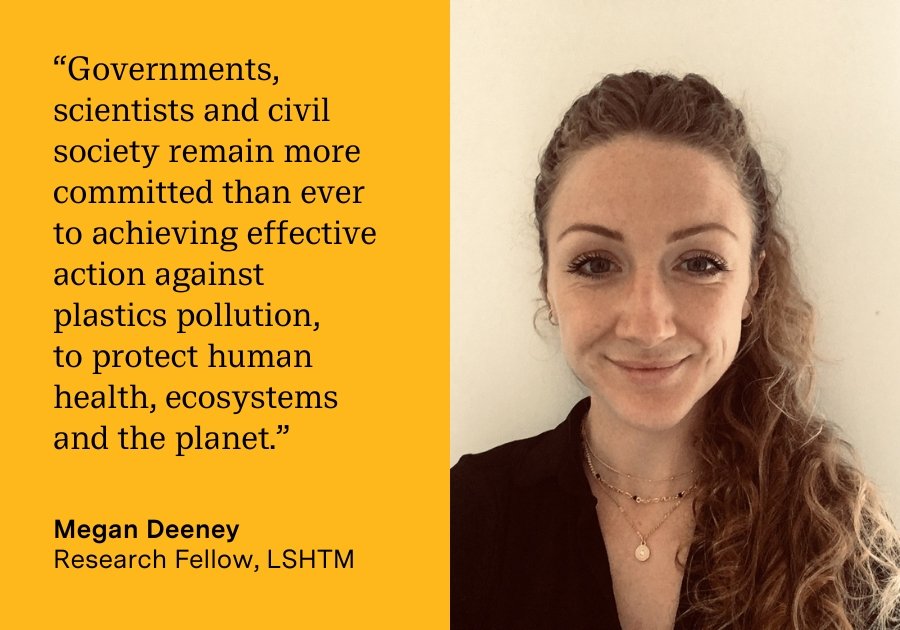
The latest round of United Nations negotiations towards a global plastics treaty ended in a stalemate this month, after delegates from 183 countries failed to agree a path forward.
The Intergovernmental Negotiating Committee (INC-5.2) met in Geneva from 5-15 August 2025, with the goal of finalising a legally binding treaty to tackle plastics pollution across its entire life cycle.
While a majority of countries supported measures to cut plastics production, regulate harmful chemicals and recognise health impacts, a small group of states blocked progress, rejecting proposals to for production limits, and resisting the inclusion of chemicals found in plastics in the treaty.
Megan Deeney, Research Fellow and doctoral student in the Innovative Methods and Metrics for Agriculture and Nutrition Actions (IMMANA) programme at the London School of Hygiene & Tropical Medicine (LSHTM), attended the talks alongside Joe Yates, Co-Director of LSHTM’s Agriculture, Nutrition & Health (ANH) Academy as part of the Scientists Coalition for an Effective Plastics Treaty.
Reflecting on the outcome, Deeney said: “It is deeply distressing to witness the sabotage of this collective commitment from countries around the world, who have dedicated precious time, expertise and resources to try to build bridges between their national concerns to address the global plastics crisis, with the aim of protecting our shared environment, health and wellbeing.”
Despite disappointment, Deeney highlights renewed ambition and the powerful partnerships emerging at the intersection of plastics and health.
She said: “Human health is now at the centre of driving ambition and so many countries are supporting its inclusion in the treaty. This convergence to protect health is deeply inspiring and hopeful.
“The treaty process itself has convened many powerful and committed groups of actors, working closely together over the last two years, which has stimulated collaborations at the science-policy interface that will endure - generating new scientific evidence and streamlining knowledge translation to policy.”
Just days before negotiations began, The Lancet launched the ‘Countdown on Health and Plastics’, a global initiative to track the links between plastics and health and publish regular reports to inform future policy and hold governments and industry accountable.
The initiative is led by an international collaboration of researchers that aim to provide independent, policy-relevant data on four domains: plastic production and emissions; human exposures; associated health impacts; and the effectiveness of interventions and policy.
The launch of the new Countdown was marked by an inaugural report, which provides an up-to-date assessment of the links between health and plastic pollution, underscoring the urgency of the crisis.
An estimated 8 billion metric tonnes of plastic waste now pollute the planet, according to the report, and the production, use and disposal of plastic cause disease, disability, and death at every stage of the plastic lifecycle.
Communities living near production facilities are exposed to hazardous chemicals and fine particulate pollution, while microplastics and associated substances have been detected in human blood, breast milk and placental tissue.
Deeney, co-author on the paper and member of the Countdown, said: “From the deepest ocean trenches to Mount Everest, including places with no human activity, plastic pollution is everywhere – transported through soils, waters, in the air and in our foods. But it’s no longer just out there, it’s inside us, and inside the next generation, before they have even had a chance to play with a plastic toy, to drink from a plastic bottle, to sleep on a plastic mattress.”
The first full Countdown report is expected in 2026.
Though the treaty setback underlines the scale of the political challenge, it also highlights growing momentum around health as a unifying priority.
Looking to the next steps, Deeney said: “Far from over, discussions are already taking place for how to move this process forwards. Governments, scientists and civil society remain more committed than ever to achieving effective international action against plastics pollution, to protect human health, ecosystems and the planet.
“The negotiations may have stalled, but science is advancing rapidly. By placing health at the centre of plastics policy, research is helping to shape the conditions for more effective agreements in the future.”
For LSHTM, engagement in these processes underlines a commitment to convening expertise and advancing evidence on the health impacts of environmental change, and solutions to protect health and the planet. This commitment is reflected in our MSc in Climate Change & Planetary Health, which aims to equip the next generation of researchers and policymakers to tackle interconnected global crises like plastics, climate and health.
If you enjoyed this article and would like to build a career in global health, we offer a range of MSc programmes covering health and data, infectious and tropical diseases, population health, and public health and policy.
Available on campus or online, including flexible study that works around your work and home life, be part of a global community at the UK's no.1 public health university.