Five Insights Shaping the Future of School Meals
28 November 2025 London School of Hygiene & Tropical Medicine London School of Hygiene & Tropical Medicine https://lshtm.ac.uk/themes/custom/lshtm/images/lshtm-logo-black.png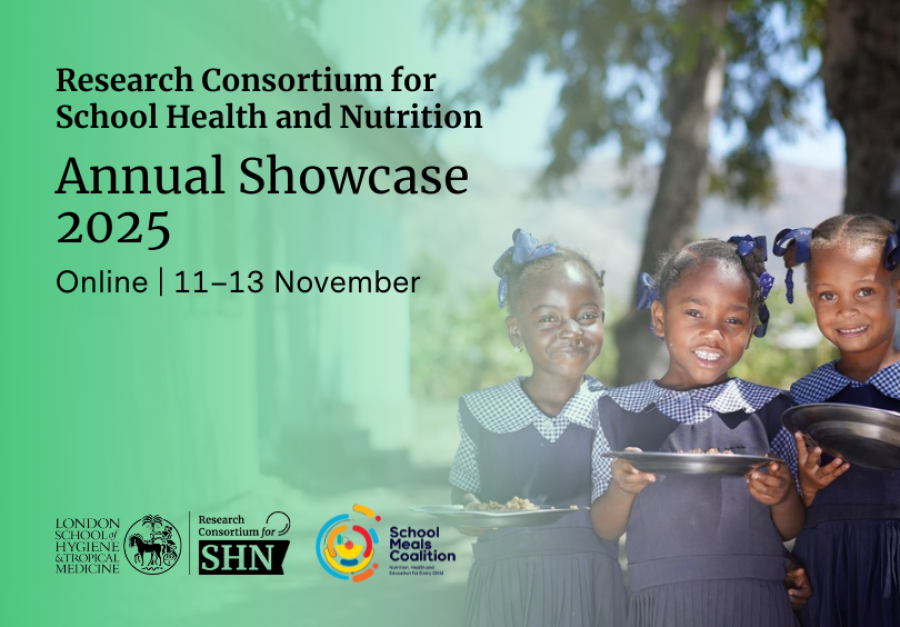
Between 11-13 November 2025, the Research Consortium for School Health and Nutrition – as the independent evidence-generating initiative of the School Meals Coalition – held its 4th Annual Showcase, exploring the latest evidence shaping the future of school meals.
Bringing together more than 350 researchers, policymakers, and practitioners from 71 countries for three days of discussion, the Showcase examined a central question: what does the evidence tell us about how school meals programmes can contribute to a healthier, fairer, more prosperous future for all?
Throughout the week, a clear picture emerged: we are seeing a paradigm shift in the way school meals are understood. Having once been seen primarily as a hunger alleviation method, school meals programmes are increasingly being viewed by both researchers and governments alike as a sound investment in the health and wealth of nations.
Discover the five strategic insights that emerged from the 4th Annual Showcase…
1. The “next 7,000 days” are becoming a defining public health priority
The “first 1,000 days” will remain a cornerstone of global nutrition policy, but evidence presented throughout the Showcase highlighted a growing consensus: the school-age years – or the “next 7,000 days” – are equally critical for shaping growth trajectories, cognitive development, metabolic health, and long-term opportunity.
Speakers emphasised that:
- middle childhood and adolescence offer real potential for catch-up growth,
- nutrition at this stage directly influences both learning and attendance,
- this is a formative window for establishing lifelong dietary habits.
In short, school-age nutrition is emerging as the next major frontier in public health, securing early gains and providing a critical window of opportunity to shape long-term health and education outcomes.
2. School meals are a public investment – not a fiscal cost
In the week’s first “fireside chat” – a conversation between Research Consortium Director Professor Donald Bundy and a leading expert in the field – renowned health economist Professor Dean Jamison reframed the economics of school feeding. He argued that school meals function as productive transfers – offsetting household food costs while generating substantial long-term returns in learning, health, and human capital.
Professor Jamison said: “The bulk of these programmes are not what economists believe to be a cost; it’s a transfer. It’s the movement of resources from one part of society to another, not a utilisation – a consumption – of those resources. As a rough rule of thumb, you could estimate that the real costs are maybe in the order of a tenth of the total costs that actually have to be paid by the programme. I think that message is underappreciated in the health finance community.”
This perspective elevates school meals from a welfare programme to a strategic, cost-effective national investment in the health and prosperity of populations.
3. National leadership drives successful implementation – and countries are proving what works
On Day 2, Ms. Carmen Burbano, Director of the School Meals Impact Accelerator, underscored that the most resilient school meals programmes share one essential characteristic: strong government ownership. Reflecting on the recent report by the UN World Food Programme that 466 million children are now receiving a meal at school – and 99% of those programmes are domestically funded – she said:
“It is very rare to see a success story as large as this one. This scale of growth, the political will, is something really extraordinary. The fact that governments have pooled together and said this is important, and that we are actually counting more children receiving school meals means we are actually changing the world.”
She emphasised the importance of embedding school meals programmes into national legislation, coordinating across ministries, and securing long-term domestic financing.
Her message was clear: school meals succeed as domestic public policy, not as donor-driven projects.
Speakers from across regions reinforced this point, showing how national leadership translates into effective, long-term implementation:
- Finland: a universal, legislated model that has delivered decades of social cohesion and educational equity.
- South Africa: one of the world’s largest school feeding programmes, integrating nutrition education and local agriculture.
- Indonesia: strengthening decentralised delivery and local procurement in a diverse, rapidly changing context.
- Japan: a curriculum-integrated system where meals reinforce learning, culture, and food literacy.
Regional bodies echoed these lessons:
- The African Union highlighted continent-wide political momentum for expansion.
- The European Union shared experience on governance, nutritional standards, and sustainable procurement.
- Central Asian countries illustrated rapid system-building amid demographic and economic transition.
Together, these examples show that effective implementation is achievable – and that national leadership remains the decisive factor in success.
4. School meals are a pillar of equitable public health systems
On the third and final day of the Showcase, attention turned to the future. Guest speaker Sir Michael Marmot, Director of the UCL Institute of Health Equity, positioned school meals within the broader agenda of health equity. He emphasised that inequalities in nutrition, growth, and opportunity at school-age are only exacerbated throughout life if not met with early intervention – and that universal school meals offer an opportunity to close these gaps.
In particular, he raised the idea of “proportionate universalism” – a concept in which everyone accesses a service, but it is delivered with greatest intensity where the need is greatest.
“Health runs along a social gradient – not just the poorest, but everyone below the top faces worse outcomes. If we target only the poorest for free school meals, we miss most of the gradient, we stigmatise children, and we complicate delivery. Universal school meals are fairer, simpler, and far more effective. A nutritious meal for every child is one of the most powerful ways to interrupt the cycle of poor diet, childhood obesity, and future disease.”
His perspective framed school meals not just as a nutrition intervention, but as a structural tool and moral imperative for improving fair life chances and reducing health inequity.
5. A generational window: shaping lifelong, planet-friendly eating habits
A cross-cutting theme across sessions was the opportunity to align school meals with healthier, more sustainable food systems. The school-age years represent a critical window to:
- build lifelong preferences for nutritious, minimally processed foods
- promote sustainably-sourced, climate-friendly menus
- support local farmers through sustainable procurement
- reduce reliance on carbon-intensive supply chains and delivery methods
- embed food literacy into the curriculum
Speakers emphasised that school meals programmes that integrate nutrition, climate, and education priorities can deliver long-term health benefits, support local economies, and accelerate national food system transformation.
A growing consensus
The 4th Annual Showcase illustrated a field moving decisively from “whether” school meals work to how to implement them effectively, sustainably, and at scale.
Insights from this year’s Showcase point to a clear conclusion: school meals are a high-return investment in children, societies, and the future of food systems.
If you enjoyed this article and would like to build a career in global health, we offer a range of MSc programmes covering health and data, infectious and tropical diseases, population health, and public health and policy.
Available on campus or online, including flexible study that works around your work and home life, be part of a global community at the UK's no.1 public health university.