First survey reveals Gaza’s critical medicine shortage
9 October 2025 London School of Hygiene & Tropical Medicine London School of Hygiene & Tropical Medicine https://lshtm.ac.uk/themes/custom/lshtm/images/lshtm-logo-black.png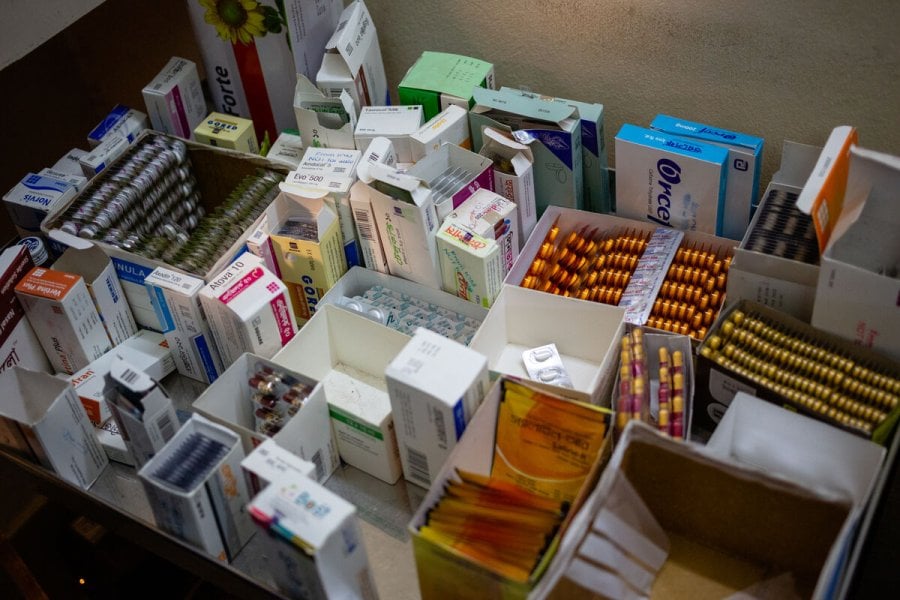
The survey results, published in The Lancet as a research letter, assessed the availability of 25 essential medicines, including antibiotics and cardiovascular drugs, between May and July 2025. One healthcare professional completed an online survey in each of the operational facilities they selected, which included public hospitals and health centres, humanitarian/relief centres and private pharmacies.
We spoke to the lead author, Saleh Aljadeeah, a pharmacist and researcher at Institute of Tropical Medicine (ITM), Antwerp, and one of the co-authors, Sali Hafez, a Doctorate of Public Health (DrPH) student at London School of Hygiene & Tropical Medicine (LSHTM).
1) Can you start by telling us about your research backgrounds? What drew you to focus on Gaza, and specifically on medicine availability?
Saleh: I’ve been conducting research on access to medicine in humanitarian settings for about ten years, mostly focusing on conflict-affected areas in northern Syria. I’m particularly interested in developing methods to assess medicine availability, affordability, quality and appropriate use in these contexts. I was attending the Global Symposium on Health Systems Research in Japan in 2024, where I connected with Sali. We began working together with a team including researchers from Palestine to measure medicine availability in Gaza and the wider destruction of their health system.
Sali: My DrPH research focuses on health systems in fragile and conflict-affected settings in Kurdistan, Iraq. When Saleh and I connected, I decided to take this on as a side project. It builds on my previous work in Palestine where I have looked at health workforce reforms and access to sexual and reproductive health services.
2) This work highlights a severe shortage of essential medicines in Gaza. What are the main factors driving this?
Sali: We found low availability of essential drugs in northern Gaza and concluded that the Israeli blockade and systematic destruction of Gaza’s health system are the main reasons for this shortage. The World Health Organization (WHO) has reported that over 94% of the health system has been damaged. Damage to roads also disrupts the transport of medicines as well as healthcare workers having to risk being targeted and in some cases unable to travel to work. The IDF have recently placed even stronger restrictions on what emergency medical doctors can bring into Gaza – extending to even basic items such as gauze, classifying them as ‘dual-use’ materials with potential military applications.
3) Since the start of the current conflict, how has the availability of medicines changed?
Saleh: Even before October 2023, the availability of essential medicines in Gaza was 55%, far below the WHO standard of 80%, in part due to an existing blockade on goods since 2007. Since then, systematic monitoring has been absent, leaving us reliant on scattered reports of shortages.
Sali: This monitoring is often deprioritised in conflict zones when compared with health facility assessments. There are also indications that since the start of a major ground invasion in Gaza City in September 2025, medicine availability and the ability of healthcare facilities to function in northern Gaza has worsened.
Saleh: Given that the Israeli blockade on Gaza resumed in March 2025, we can only assume that the availability of medicine we observed between May and July 2025 continues to worsen.
4) What are the health risks created by this shortage?
Saleh: For practical reasons, we focused our research on medicines the WHO says are essential and found a striking shortage of diabetes and epilepsy medicines. None of the 14 health facilities we looked at had any supply of these, which I’ve never observed in other conflict settings. Many of these medicines, like insulin, are lifesaving and lack of access undoubtedly causes deaths, even in the short term. These may not be included in the death counts from war but are a nonetheless non-direct impacts and loss of life from the conflict.
5) You’ve also noted that even when medicines are available, affordability can prevent people accessing them. Why is this?
Saleh: Even if medicines are available, we have previously found that their price is driven up by shortages during conflict. Smuggling, poor storage and disrupted supply chains can also lead to poor quality medicines. In Gaza, where there is near universal poverty, high cost of medicines is almost certainly preventing people from accessing the care they need.
Sali: Our emerging analysis in Iraq and Syria shows that affordability becomes a serious barrier to accessing healthcare during conflicts. This is both due to the price of medicines rising as well as indirect increases in costs like transportation to reach pharmacies. Unfortunately, we couldn’t assess affordability in this study but it’s a priority for future research.
6) What actions would you most like to see from sharing this data?
Saleh: In our previous research on medicine availability in Syria, we noticed that even in the most complex phase of the war there, there was a UN resolution to intervene and provide medicines to northern Syria through a ‘humanitarian corridor’. This shows how the UN and the international community do have tools and interventions available, however their attempts in Gaza have been unsuccessful to date.
Sali: On behalf of all the authors, we are calling for an immediate ceasefire, restoration of health facilities, and urgent strengthening of Gaza’s pharmaceutical system. The UN has found that restricting access to basic supplies, including essential medicines, constitutes a violation of international humanitarian law and conditions for genocide, and states and humanitarian actors must act urgently to reinstate the supply chain.
Read more from their research letter in The Lancet.
If you enjoyed this article and would like to build a career in global health, we offer a range of MSc programmes covering health and data, infectious and tropical diseases, population health, and public health and policy.
Available on campus or online, including flexible study that works around your work and home life, be part of a global community at the UK's no.1 public health university.