Expert Comment – Slower improvements in reducing global NCD deaths
12 September 2025 London School of Hygiene & Tropical Medicine London School of Hygiene & Tropical Medicine https://lshtm.ac.uk/themes/custom/lshtm/images/lshtm-logo-black.png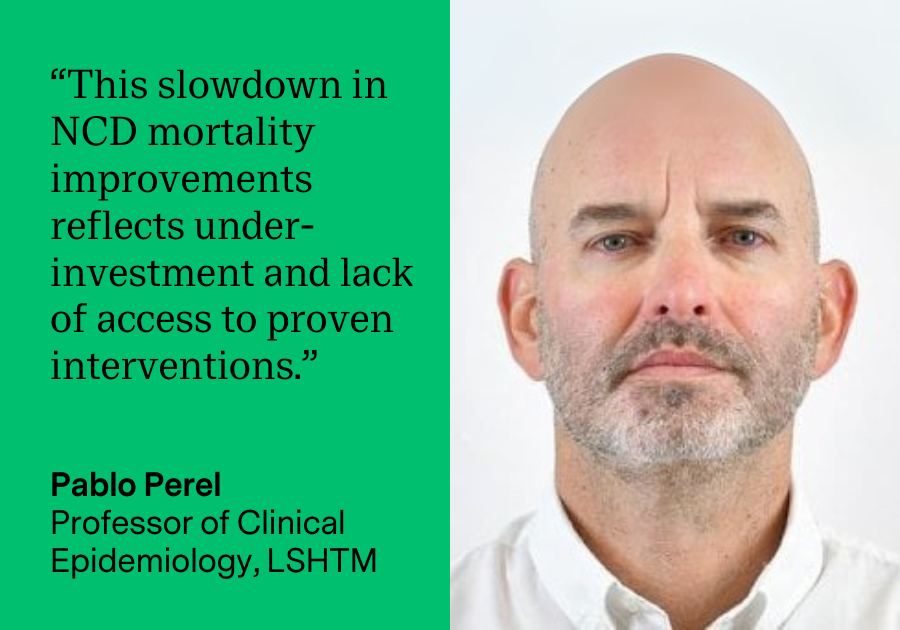
A new report published in The Lancet shows that deaths from NCDs, such as cardiovascular disease, diabetes and cancer, reduced in four of every five countries in the world between 2010 and 2019.
The study, conducted by 28 researchers including from the London School of Hygiene & Tropical Medicine (LSHTM), looked at the probability of dying from an NCD up to 80 years of age in 185 countries between 2010 and 2019. They found that improvements were smaller than in the previous decade.
Professor Pablo Perel, a co-author on the report from LSHTM, said:
“Although NCD deaths in most countries improved, progress has slowed or even reversed in many. The situation is particularly concerning in lower and middle-income countries. For example, NCD mortality increased in a few countries including Papua New Guinea and India, and countries in sub-Saharan Africa still face some of the highest risks of dying prematurely from an NCD.
“This slowdown reflects underinvestment and lack of access to proven interventions. What is needed now is renewed investment and implementation of programmes that expand access to effective diagnosis and treatment, alongside policies such as tobacco and alcohol control and healthy food promotion.”
This analysis shows that substantial global disparities in NCD deaths persisted in 2019. NCD deaths went down in all high-income western countries, with Denmark experiencing the biggest improvement and the USA experiencing the smallest. Among the largest countries in other regions, NCD deaths also declined for both sexes in China, Nigeria, Russia and Brazil, but deaths increased in India and Papua New Guinea.
The study is limited by the lack of reliable death registration in many countries, making it hard to track trends accurately. For this reason, the researchers only analysed cause-specific deaths in countries with high-quality data, which were mainly high-income countries and larger countries.
Continued improvements in NCD deaths were likely due to better treatments, wider use of medicines, improved hospital care, cancer screening, stronger tobacco and alcohol control policies, as well as economic growth and better living conditions in some regions.
Progress in circulatory diseases made the greatest contribution to reducing NCD deaths. Improvements in some cancers, including colorectal cancer, cervical cancer, breast cancer and prostate cancer, also contributed to a fall in deaths. Conversely, neuropsychiatric conditions and pancreatic and liver cancers increased, contributing to more NCD deaths in most countries compared with the previous decade.
Slower progress in reducing NCD mortality may be due to health systems reaching a plateau in treatment coverage, constrained funding after the 2008 recession, and a loss of momentum in drives for tobacco and alcohol control.
This study comes at a time of significant political attention on NCDs, following the United Nations high-level meetings (HLM) on the prevention and control of NCDs held in 2011, 2014 and 2018. Each meeting has led to numerous political pledges and global, national and regional plans on clinical and public health interventions to help reduce the health burden of NCDs. The findings from this study will be central to discussions at the 4th HLM at the United Nations Headquarters in New York on 25 September 2025.
If you enjoyed this article and would like to build a career in global health, we offer a range of MSc programmes covering health and data, infectious and tropical diseases, population health, and public health and policy.
Available on campus or online, including flexible study that works around your work and home life, be part of a global community at the UK's no.1 public health university.