Clean Hospital Day: Making the invisible, visible
6 October 2025 London School of Hygiene & Tropical Medicine London School of Hygiene & Tropical Medicine https://lshtm.ac.uk/themes/custom/lshtm/images/lshtm-logo-black.png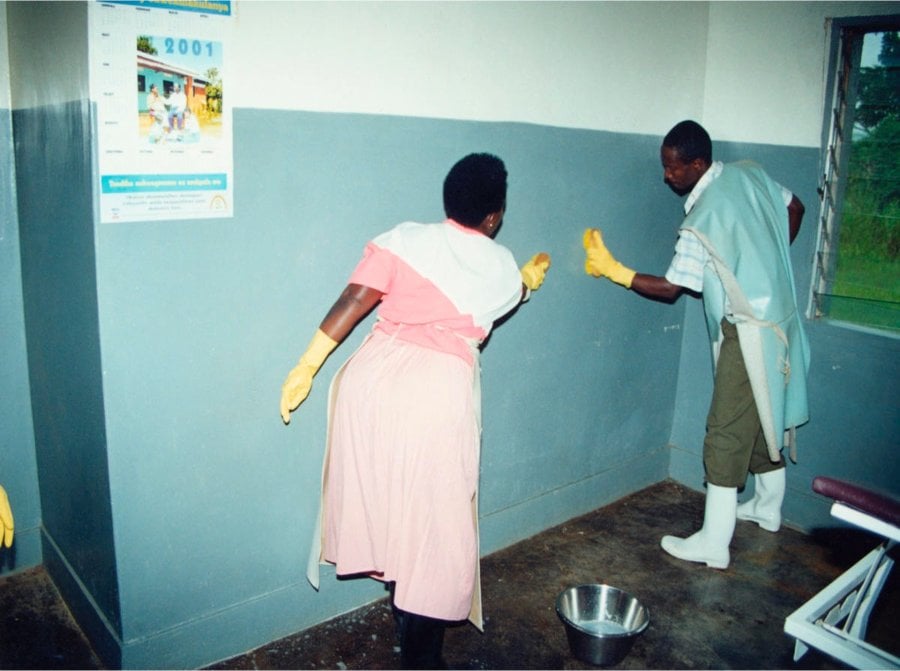
Clean Hospital Day is observed annually on October 20. This year, hosted by Clean Hospitals, under the theme “Human factors and collaborations", the annual event aims to raise awareness and foster engagement in healthcare environmental hygiene, which is crucial for preventing infection.
This global awareness-raising campaign was launched in 2019 to draw international attention to the need for a greater focus on environmental hygiene in healthcare and to underscore its importance in ensuring patient safety. It is a call to celebrate and empower all of the environmental service workers and management working to improve environmental hygiene every day.
Assistant professor Dr Giorgia Gon is an epidemiologist and behaviour change scientist whose work focuses on healthcare infection prevention and control in low- and middle-income countries. She teaches at LSHTM, where she co-organises the MSc module in Basic Epidemiology.
Dr Gon reminds us that infection prevention begins long before antibiotics are prescribed. Yet some of the most powerful defences are invisible.
Invisible Germs
Hospital surfaces can harbour resistant microbes for days or weeks. More than half of all antimicrobial-resistant infections are linked to health-care settings. In high-income countries,7% of patients acquire a healthcare-associated infection (HAI) while receiving care; in low- and middle-income countries, that figure rises to 15%. Only 1 in 15 countries currently meets all WHO minimum requirements for infection prevention and control (IPC).
Major outbreaks and epidemics in the last decade, including Ebola, cholera, and COVID-19, spread in hospital settings, also through environmental (surfaces, equipment) contamination.
When basic hygiene of the healthcare environment falters, AMR thrives.
Invisible Workforce
Cleaners are the frontline defence against HAIs and AMR. Their daily routines—cleaning beds, equipment, and high-touch areas—break critical transmission chains. Yet too often they are under-trained, under-paid, and under-recognised.
Investing in cleaners’ skills and status is a matter of safety for all patients, visitors, and health workers.
Invisible Budget
AMR already causes 79,000 deaths annually across OECD and EU/EEA countries and costs nearly USD 29 billion each year in treatment expenses alone. WHO and OECD modelling show that hand and environmental hygiene deliver some of the highest returns among AMR interventions.
Still, cleaning remains a marginal line in most hospital budgets.
What Should Be Done To Change This?
- Monitor progress: Data on environmental cleaning in health facilities remain patchy: in 2022, only 21 countries globally had sufficient information to report on their hospital environmental cleaning (JMP 2022 Report). Strengthening monitoring systems is essential to track progress and identify gaps.
- Train and empower: Explore WHO’s new training package for cleaning staff to strengthen capacity and standardise best practices at low cost across low- and middle-income countries (WHO 2024 Training Guide).
- Recognise and support cleaners: Cleaners are critical members of infection prevention teams. Recognising their expertise, improving working conditions, and investing in their professional development helps strengthen the foundation of safe and hygienic healthcare environments.
References
- The case for investment and action in infection prevention and control. WHO, 2024
- Benedetta A, MD et al. Burden of endemic health-care-associated infection in developing countries: systematic review and meta-analysis. The Lancet, 2011.
- G., Hutton et al. Financial and economic costs of healthcare-associated infections in Africa. J Hosp Infect, 2024
- Jonathan A. Otter PhD. Evidence that contaminated surfaces contribute to the transmission of hospital pathogens and an overview of strategies to address contaminated surfaces in hospital settings. American Journal of Infection Control
- Embracing a One Health framework to fight antimicrobial resistance. OECD report, 2023
- Cross S et al. An invisible workforce: the neglected role of cleaners in patient safety on maternity units. Global Health Action, 2019
- Progress on WASH in health care facilities 2000–2021: special focus on WASH and infection prevention and control (IPC)
- Environmental cleaning and infection prevention and control in health care facilities in low- and middle-income countries
If you enjoyed this article and would like to build a career in global health, we offer a range of MSc programmes covering health and data, infectious and tropical diseases, population health, and public health and policy.
Available on campus or online, including flexible study that works around your work and home life, be part of a global community at the UK's no.1 public health university.