CAMERA study strengthens school readiness for safer Asthma care in Uganda
20 November 2025 London School of Hygiene & Tropical Medicine London School of Hygiene & Tropical Medicine https://lshtm.ac.uk/themes/custom/lshtm/images/lshtm-logo-black.png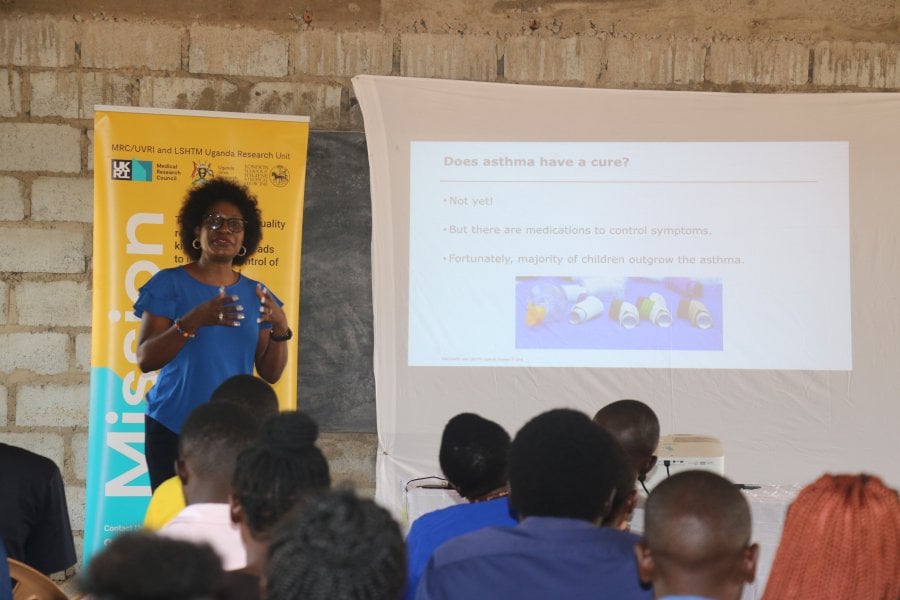
Asthma is increasingly recognised as a major contributor to respiratory illness among children in African settings, yet it remains poorly understood and frequently mismanaged. Findings from the Causes And MEchanisms foR non-atopic Asthma in children (CAMERA) study at the MRC/UVRI & LSHTM Uganda Research Unit show that many school-going children with asthma experience asthma attacks while at school, triggered by environmental exposures. There are delays in care in school environments where staff often lack accurate information or emergency protocols.
With schools acting as the daily setting for most of the children enrolled in CAMERA, the study team has identified school preparedness as a critical point in the pathway to improve asthma case. This gap, clearly observed through the study’s clinical assessments, parent interviews and school-based observations, prompted the team to share emerging evidence with the very institutions responsible for safeguarding learners.
The engagement at Entebbe Parents Secondary School was designed as a deliberate opportunity to ensure that findings from the study translate into improved responsiveness within schools, particularly in recognising early symptoms, providing emergency care and supporting students to manage their asthma safely.
More than 100 staff from participating schools, including nurses, matrons, patrons, health teachers, sports coaches, and headteachers, attended the session. For many it was the first time they were engaging directly with research insights about asthma and the contextual triggers common to school settings.
Dr. Harriet Mpairwe, Principal Investigator of the CAMERA study in Uganda, opened the session by sharing early insights from the ongoing research. She noted that when learners with asthma experience attacks at school, staff often lack clear guidance on how to respond promptly, resulting in potentially critical life-threatening delays. Policies requiring inhalers to be stored exclusively in sickbays frequently prevent timely access during emergencies. These insights, drawn from CAMERA’s ongoing assessments, form the basis for advocating more supportive school systems.
Using evidence from CAMERA and previous asthma studies at the Unit, the team illustrated how small but informed adjustments at school level can significantly reduce risks for children with asthma. A clinical officer on the study, Pius Twesigye, guided participants through best practices for managing asthma attacks and how to integrate asthma-sensitive approaches into everyday school routines, especially during sports, assemblies, and other high-intensity activities where attacks commonly occur.
A hands-on demonstration by the study’s Quality Control Nurse, Josephine Tumusiime, revealed one of the key insights the study has consistently surfaced; although school staff are usually first responders, many had never received formal guidance on correct inhaler technique. The practical demonstration became a turning point for participants, grounding technical steps in real scenarios faced by children in the study.

Discussions around medication storage highlighted another recurring issue uncovered by CAMERA; learners often experience delayed care because of restrictive school policies. The session created space for school leaders to reflect on these policies in light of research evidence and to consider adjustments that would both empower learners and improve safety.
By the end of the engagement, schools committed to revising internal procedures, improving emergency trays by adding salbutamol inhalers and spacers, and allowing responsible learners to access their inhalers while ensuring adult supervision, steps that directly respond to challenges documented in the study.
Voices from the engagement
Mrs. Mary Nakitende, a teacher at St. Joseph's Katabi Primary School shared,
“Understanding inhaler use practically has made all the difference. We now feel better placed to support our students in real-time during an asthma attack.”
Ms. Catherine Nakyagaba, a nurse at Entebbe Parents Secondary School added,
“Allowing students to carry their medication while we supervise them will address the delays we’ve been experiencing. We now plan to add a salbutamol inhaler and a spacer to our sickbay emergency tray. This will improve how we respond to emergencies.”
About CAMERA
Funded by the European Research Council and led by Professor Neil Pearce, Professor of Biostatistics and Epidemiology at the London School of Hygiene and Tropical Medicine, the CAMERA project is a global study exploring the causes and underlying mechanisms of non-atopic asthma (NAA) in children and adolescents across both high- and low-income settings. The study is analysing risk factors among more than 7,000 cases and conducting detailed clinical assessments with 160 participants at each of its sites, Uganda, Brazil, Ecuador, and New Zealand, to generate evidence that will strengthen the prevention and treatment of non-atopic asthma.
CAMERA is part of the Unit’s Non-Communicable Diseases (NCDs) theme, contributing knowledge to inform policies, systems and care pathways for children with asthma. Learn more about NCDs research at the Unit.
If you enjoyed this article and would like to build a career in global health, we offer a range of MSc programmes covering health and data, infectious and tropical diseases, population health, and public health and policy.
Available on campus or online, including flexible study that works around your work and home life, be part of a global community at the UK's no.1 public health university.