Out of the lab and under the lights
7 July 2026 London School of Hygiene & Tropical Medicine London School of Hygiene & Tropical Medicine https://lshtm.ac.uk/themes/custom/lshtm/images/lshtm-logo-black.png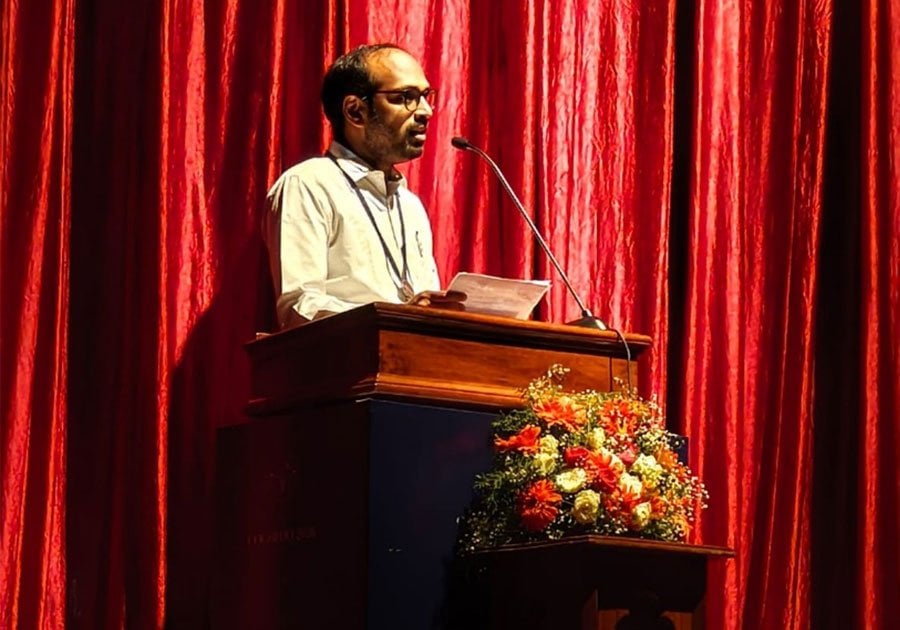
In May 2023, I travelled from Vellore, India, to the London School of Hygiene & Tropical Medicine (LSHTM). Although I was already pursuing my MSc in Epidemiology through LSHTM’s Distance Learning Programme under the Commonwealth Distance Learning Scholarship, this visit, supported by a Junior Training Fellowship from Christian Medical College (CMC) Vellore, gave me the opportunity to attend an additional module in Nutrition Programme Planning. Like many distance-learning students, I expected outstanding lectures and discussions, but my most memorable learning experience came not from a lecture hall, but from a theatre performance.
I watched a 75-minute monologue, which was organised as part of the infectious disease module, portraying the life of Father Damien, the Belgian priest who dedicated his life to caring for people with leprosy on the Hawaiian island of Molokai. As I sat in the audience, one question stayed with me: could theatre itself become a serious mode of medical education?
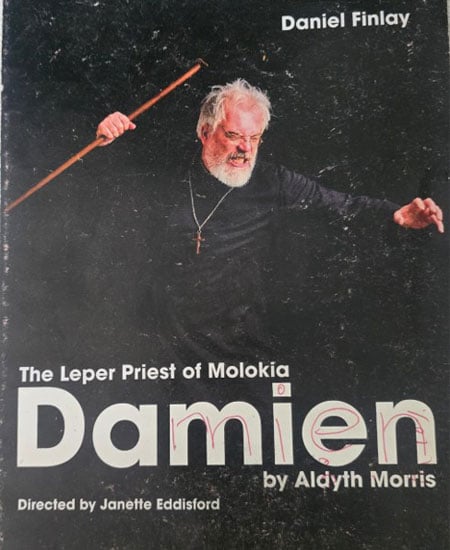
Returning to CMC Vellore, I could not stop thinking about what I had witnessed. Theatre has always been an important part of our institution’s culture, with students and faculty producing plays for College Day, Hostel Day, Easter celebrations and other events. However, these productions were viewed almost entirely as entertainment. Watching the monologue made me realise that theatre might become a powerful educational tool. The idea remained in the back of my mind for nearly two years until the right opportunity emerged.
In 2025, our institution MBBS students organised Cognitio 2025, a national undergraduate research conference. Although the conference attracted enthusiastic participation, relatively few delegates enrolled in the traditional research methodology workshop. Like many educators, we recognised a familiar problem: students often perceive research methods as difficult, abstract and intimidating. That experience brought back memories of Father Damien and prompted a simple question: if students love stories but avoid statistics, why not teach research through storytelling?
Together with a colleague, I began exploring whether epidemiology could be taught through theatre. Neither of us had written a play before, so we experimented with ideas, using ChatGPT as a brainstorming partner rather than a scriptwriter. We repeatedly refined scenes, rewrote dialogue, strengthened characters and incorporated feedback from senior colleagues to ensure both scientific accuracy and educational value. After many revisions, we developed a script that transformed epidemiological study designs into memorable characters.
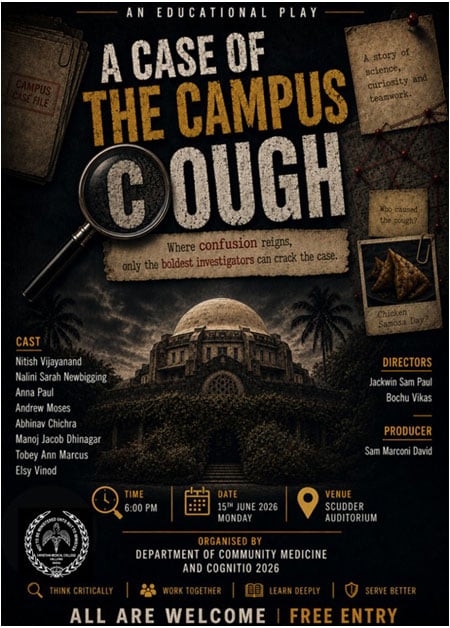
In June 2026, during Cognitio 2026, we staged A Case of the Campus Cough. Instead of presenting definitions on slides, the audience met Cross-sectional Cassy, Case-Control Carla, Captain Cohort, Professor Quasi, Dr. RCT and Meta Maharani. Through humour and storytelling, concepts that often seem dry in textbooks became memorable personalities with distinct strengths and limitations. The audience laughed, applauded and, most importantly, understood. Faculty commented that they had never seen research methodology taught in this way, while many students said they finally understood differences between study designs that had previously confused them and were inspired to learn more about epidemiology.
Looking back, I find it remarkable how educational ideas travel. A theatrical performance in London inspired an educator in southern India, lay dormant for two years, evolved through collaboration, AI-assisted creativity and countless revisions, and ultimately reached hundreds of students in a completely different setting. The experience reinforced an important lesson: while medical education often focuses on what we teach, equal attention should be given to how we teach. Theatre will never replace lectures, nor should it, but it offers a powerful way of introducing complex concepts by making learning engaging, memorable and emotionally meaningful.
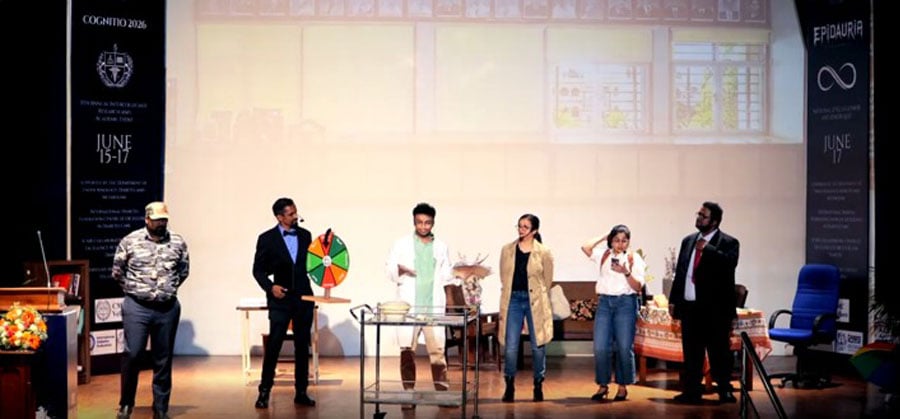
I remain deeply grateful to the Commonwealth Distance Learning Scholarship from LSHTM and the Junior Training Fellowship from CMC Vellore for making this journey possible. Sometimes we travel to acquire knowledge; sometimes we travel to discover new ways of sharing it. For me, the latter proved transformative. We have since recorded the play and hope it inspires other educators to explore storytelling and theatre in teaching research methodology. If it encourages even one teacher to rethink how research is taught, then the journey that began with a 75-minute monologue at LSHTM will have come full circle.
Author bio
Dr Sam Marconi David is an Associate Professor in the Department of Community Medicine at Christian Medical College, Vellore, India. He completed his MSc in Epidemiology through the LSHTM Distance Learning program as a Commonwealth Distance Learning Scholar. His interests include innovative teaching methods, Epidemiology and Public Health Nutrition.