Alumni Spotlight: Layla McCay
4 June 2026 London School of Hygiene & Tropical Medicine London School of Hygiene & Tropical Medicine https://lshtm.ac.uk/themes/custom/lshtm/images/lshtm-logo-black.png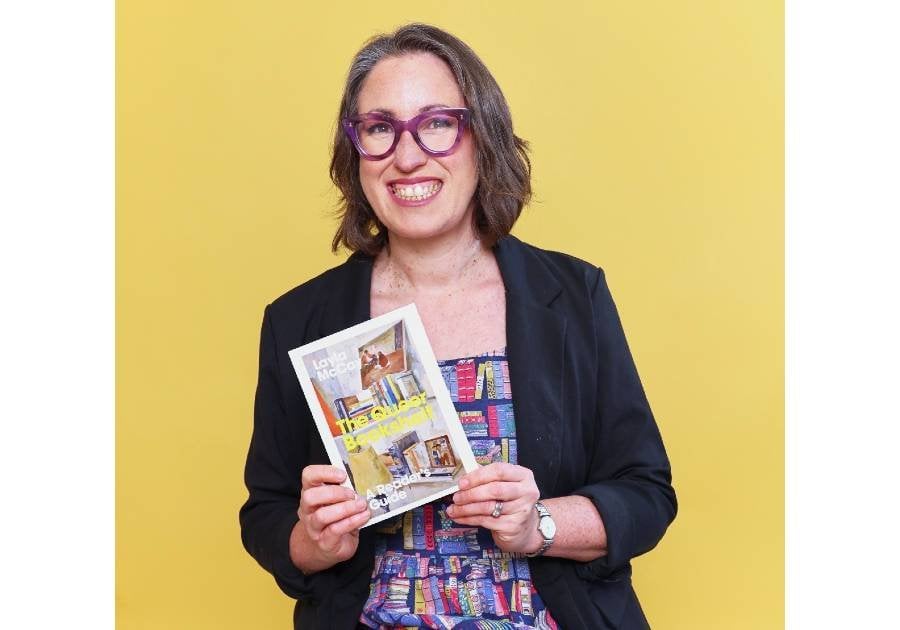
I sometimes feel I have two different personas. My colleagues and LinkedIn followers know me as a health policy director, busy having meetings with the Department of Health and Social Care and representing the NHS on the BBC. Meanwhile my Instagram followers know me as the author of an exciting new book, The Queer Bookshelf: a reader’s guide, a joyful exploration of the history, present and future of LGBTQ+ literature. And yet, my health policy career and my author career have links that stretch back to my time at LSHTM.
LSHTM was where I learned to turn my research into publishable writing. My master’s dissertation on international mental health policy became part of a paper in The Lancet. Then my further research culminated in the setting up of the Centre for Urban Design and Mental Health and I started writing chapters for textbooks on the topic, then I was asked to co-edit a book. And finally, a colleague and I sent in our own book proposal to Bloomsbury. That led to the publication of Restorative Cities: Urban Design for Mental Health and Wellbeing.
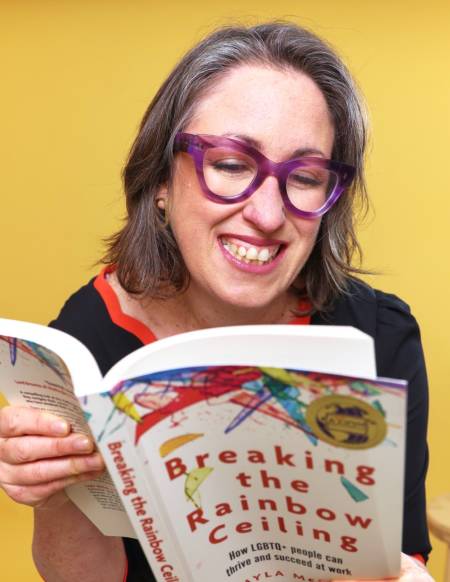
In that book, there’s a section on wider factors that influence the health and wellbeing of people with diverse characteristics. This topic interested me personally as a gay woman. Using the research skills I usually deploy on health policy topics, I went on to write a book about how being LGBTQ+ impacts people on the career ladder. Breaking the Rainbow Ceiling: How LGBTQ+ people can thrive and succeed at work was also published by Bloomsbury and it won an Axiom business book prize. The desk research and interviews I undertook while writing it made me even more interested in LGBTQ+ history. So, I decided to branch out from ‘work’ topics and use my research skills in a new way: to write a book about a personal passion.
I have always loved to read fiction. Novels comfort and enlighten us by showing us that other people have felt the way we do. They lift us above our own limited experiences and nurture empathy by letting us inhabit other people’s perspectives and understand ourselves as a citizen of the world in all its complexity. Reading expands our minds and grows our understanding of where society has been, why it developed as it has, and where it might be going. In these ways, novels are a fascinating complement to research papers and non-fiction books in imparting knowledge.
But when I was growing up gay, I did not have access to that understanding and knowledge. A UK law called Section 28, made it difficult for young people to access novels with LGBTQ+ themes. Many people growing up in other countries had similar restrictions, and it made us feel horribly alone. During the research for my last book, I learned that the invisibility of queer stories in our formative years could affect our self-esteem, confidence, wellbeing and aspirations, and our opinions about LGBTQ+ people – that impact can go on to negatively impact our life.
Of course, as adults, we have free access to books with LGBTQ+ themes if we choose to read them. But still, many people are unsure where to start. So, I wrote The Queer Bookshelf to illuminate books with LGBTQ+ themes that are significant from the perspective of culture, history or literature. Telling the story of LGBTQ+ literature provided a fascinating new lens on queer lives over millennia, all around the world. I realised that books like The Well of Loneliness by Radclyffe Hall and Giovanni’s Room by James Baldwin are only the tip of an iceberg of wonderful, complex, diverse stories and histories of people who today might describe themselves as LGBTQ+.
I did not imagine that the research skills and passion for the determinants of health that I developed at LSHTM would go on to contribute to two such different career strands. But health policy director and author are proving to be a surprisingly logical (and delightful) combination.
The Queer Bookshelf comes out on 4 June 2026 with Scribe.
Buy the book:
Come to one of Layla’s book events:
- 13 June 2026: Queer Britain Museum
- 6 July 2026: British Library
Follow Layla’s author career on Instagram: