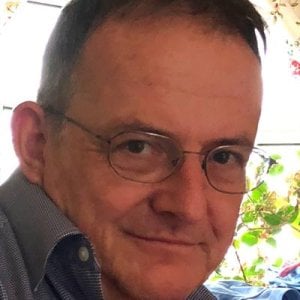
My expertise is on vector control for malaria and other mosquito-borne diseases. I consider myself one of the world's foremost malaria entomologists, at least amongst those of us who work on the interface between research and implementation. I have held the top job in my field: I went to WHO to accomplish a specific task, and having done so, I returned to research, where I can follow my own sense of what is important.
My early research, in the 1980s and 90s, contributed to the initial development and success of insecticide-treated nets. I have developed several novel techniques that are now accepted as the default standard technique. These include sampling methods and designs for experimental hut work.
I like multi-disciplinary work, because malaria is a multi-disciplinary phenomenon! So, as well as the practical and opportunistic research on interventions, I've also made some significant contributions to:
+. the basic biology on human infectiousness to mosquitoes
+ qualitative studies of what people think and do about mosquitoes
+. operational research on treated nets distributions systems,
+. risk assessment methods for pyrethroids on nets, etc.
As a consultant, I've worked for DFID, USAID, and WHO, mostly in the design and evaluation of malaria vector control programmes, and also the role of the private sector.
Between 2009 to 2011, I left academia and joined the Global Malaria Department of WHO, as Coordinator of the Vector Control Unit in Geneva. In this role, I initiated and led the development of the Global Plan for Insecticide Resistance Management in malaria vectors (GPIRM). I also helped to develop revised WHO systems for the assessment of new vector control technologies, i.e we designed the current VCAG.
Now back at LSHTM, I am working on the implementation of GPIRM and the question of what will stabilise the absence of malaria in highly receptive parts of Africa. As part of the latter, I am working with the CGIAR on the effects of agriculture on vector-borne disease.
Affiliations
Centres
Teaching
Over the years I've created a successful MSc, I've designed and run two different LSHTM modules, as well as the field course for the biological MScs. I think I've been running one or more modules since the 1990s!
I still do a substantial amount of MSc teaching, especially for the biological MScs (Medical Parasitology and Medical Entomology), the MSc One Health, the CID and the DTM&H.
From 2012 to 2014, with Prof R Kock of the Royal Veterinary College, I helped to set up and establish the new MSc One Health, which is run jointly with the RVC. I was Director of the programme on the LSHTM side until 2017.
I am primary supervisor for one PhD student at the moment, secondary supervisor for another.
Research
Mosquito biology and control, especially vector control for malaria.
My early research, in the 1980s and 90s, contributed to the initial development and success of insecticide-treated nets. I have developed several novel techniques that are now so standard and widely-used, no-one remembers who introduced them! Examples include the combination of a CDC-trap and a mosquito-net for sampling methods, designs for experimental hut work, and risk assessment methods for insecticides. My biggest contribution was in producing much of the evidence and arguments that have led to our current understanding of how treated nets work.
I like multi-disciplinary work, and in addition to the basic biological work on mosquitoes and anti-mosquito interventions, I've been involved in several qualitative studies, and operational research on treated nets including the design and analysis of national malaria surveys, etc.
Since my stint at WHO, I am back at LSHTM, I am working on two main lines of work.
The first is the implementation of GPIRM, and how to avoid losing the insecticide resistance arms race. It is clear we are locked in an arms race with the African vectors, and we cannot withdraw from it, because without sustained insecticidal suppression, it is likely that there would be catastrophic epidemics of resurgent malaria. On the other hand, we cannot keep up this level of intense insecticidal coverage for a hundred years. Moreover, at the moment, we are seemingly losing the race!
Hence, as well as working harder to not lose the arms race, we need an exit route. This means a plan for making the absence of malaria stable, in highly receptive parts of Africa, without insecticides. As part of the latter, I have working with CGIAR and Wellcome support on the role landscape change on malaria.
Selected Publications